
Sports Massage in Singapore
Information reviewed by: Dr Foo Gen Lin | Last updated:
Muscle tightness or soreness holding back your training? At Apex Sports Clinic, our sports massage therapist works on the muscles your activity works hardest, with treatment shaped around your training so you can keep moving comfortably.

MBBS (University of London) | MMed (Ortho) | FRCSEd (Ortho) | FAMS (Ortho)

What Is a Sports Massage?
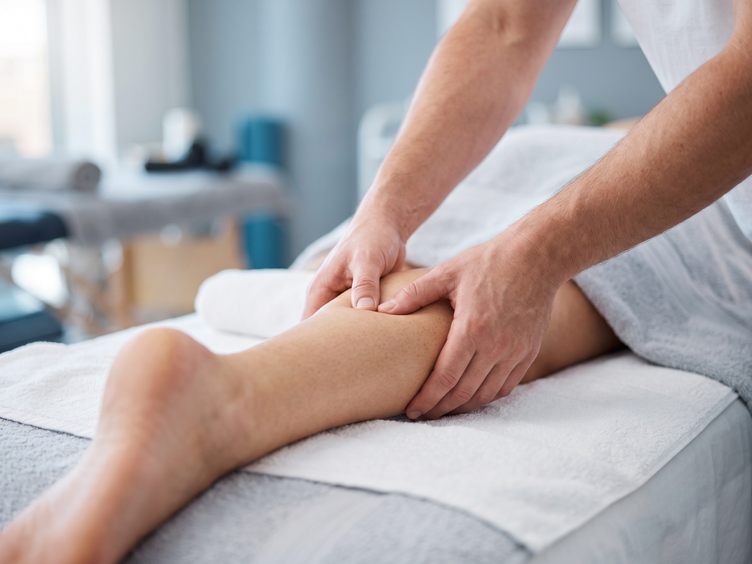
Sports massage is a form of hands-on soft tissue treatment that works on the
muscles, tendons, and fascia (the connective tissue that wraps around muscle) used during
physical activity. A trained therapist applies pressure, kneading, and stretching to areas
that feel tight, sore, or restricted, adjusting the depth and pace to the tissue being
treated.
Despite the name, sports massage is not only for competitive athletes.
Runners, gym-goers, weekend footballers, and people whose jobs keep them on their feet or
hunched at a desk all develop the same patterns of muscle tension.
What sets it apart is the focus: treatment targets the muscles your activity works hardest, rather
than following a fixed full-body routine.
The aim is practical. Sports massage looks to ease muscle tightness, improve how freely a joint
moves, and help you feel ready to train again sooner. It works alongside your training and
rehabilitation rather than replacing them.
How Does Sports Massage Work?
Sports massage works by applying pressure, kneading, and stretching to muscle and the connective
tissue around it, which can reduce the sensation of tightness and temporarily improve how freely a
joint moves.
A session usually draws on several techniques, chosen according to how the tissue responds:
- Effleurage – Long, gliding strokes at the start and end of a session to warm the tissue and settle it afterwards.
- Petrissage – Kneading, rolling, and squeezing of the muscle belly to work through general tightness.
- Trigger point release – Sustained pressure on a knot that hurts when pressed and may refer discomfort elsewhere.
- Assisted stretching – Your therapist moves the limb while you relax or gently resist, finishing work on a muscle group.
- Active Release Techniques (ART) – Pressure held on a muscle or tendon while you move the limb, for tissue that is sticking rather than simply tight.
Benefits of Sports Massage
Sports massage is most useful for reducing muscle soreness after hard training, easing the sensation
of tightness, and temporarily improving how far a joint moves.
Research points to modest, short-term
gains rather than lasting changes in strength or performance, so it is worth understanding
what it can reasonably offer:
Less Muscle Soreness After Hard Training
Treatment in the 24 to 48 hours after a demanding session is associated with a reduction in delayed-onset muscle soreness, which can make the following session more comfortable.
Short-Term Improvement in Range of Motion
Work on tight muscles and the tissue around them can temporarily increase how far a joint moves, with the effect generally measured in hours rather than days.
Reduced Sensation of Tightness and Stiffness
Many people report that a treated area feels looser and less guarded afterwards, even when the length of the muscle itself has changed little.
Relaxation and Easier Sleep
Some people find the drop in muscle tension helps them settle at night, though the evidence here is limited and the effect varies from person to person.
Regular Monitoring of Problem Areas
Seeing the same therapist through a training block means a change in a muscle or tendon may be picked up before it becomes painful enough to interrupt training.
Sports massage does not repair torn tissue, correct a strength imbalance, or resolve the training error behind the problem. Those need progressive strengthening work and, where pain persists, worsens, or limits what you can do, assessment by a physiotherapist or sports doctor.
Sports Massage at Apex Sports Clinic: What to Expect
At Apex Sports Clinic, sports massage is built around how much you train and the problem you booked
for, not a fixed routine applied to everyone.
A session is typically 60 minutes long and follows three stages:
1. Pre-Treatment Assessment
A review of your sport, weekly training, previous injuries, and the area giving you trouble, followed by checks on how the affected joints move and where the tissue feels restricted. This directs treatment to the muscles that need it rather than the ones that simply feel sore.
2. Targeted Treatment Session
The session generally starts with lighter strokes to warm the tissue, then moves to focused pressure and assisted stretching through the identified areas, with pressure checked against your comfort throughout. Towards the end, the movements that were restricted at the start are re-tested so you can feel what has changed.
3. Aftercare and Ongoing Review
Your therapist will guide you on what to do in the 24 hours afterwards and suggest an interval before your next session. If the same area keeps tightening up, the cause is reviewed rather than the treatment repeated.
We also provide physiotherapy, sports medicine, and orthopaedic care at the same clinic, so your care remains seamless. If the assessment points to a tendon, joint, or bone problem, imaging and specialist review are available here.
Meet Our Sports Massage Therapist

Certified Sports Massage Therapist (Sport Singapore)
Certified in Active Release Techniques (ART) and Functional Movement Screen (FMS)
Dip. Physical Education & Sports Science (NIE)
Languages: English and Mandarin
Jinella is a sports massage therapist and distance runner with a particular interest in
endurance sport.
Her sessions are shaped around what you are training for, whether that is a race ahead or a
niggle you are managing alongside rehabilitation.
She works closely with the physiotherapy, sports medicine, and orthopaedic team at Apex
Sports Clinic so treatment fits your wider recovery plan.
Sports Massage vs Deep Tissue and Relaxation Massage
The difference between sports massage, deep tissue massage, and relaxation massage lies in the goal of the session, which then shapes the pressure, the pace, and the areas the therapist works on.
| Massage Type | How It Works | Typical Use and Trade-Offs |
|---|---|---|
| Sports massage | Gliding strokes, kneading, focused pressure, and assisted stretching on the muscle groups your activity works hardest | Recovery between training sessions, easing tightness that limits movement, and preparation around an event. Often shorter and more localised than a full-body treatment |
| Deep tissue massage | Slower, firmer pressure reaching the deeper layers of muscle and surrounding fascia | Long-standing tightness or knots that lighter work has not shifted. Often uncomfortable during treatment, with soreness for a day or two afterwards |
| Relaxation (Swedish) massage | Lighter, flowing strokes at an even rhythm across the body | Stress relief and general relaxation. Not aimed at a specific muscle problem, so it may do little for a tight hamstring or a restricted shoulder |
In practice the categories overlap. Our therapist will often use deep tissue work on one part of the body while keeping the pressure lighter elsewhere, based on what the tissue feels like on the day. If you are unsure which suits you, describe the problem rather than requesting a type by name, and let the therapist choose the approach.
Common Conditions Sports Massage Can Help With
Sports massage is commonly used for delayed-onset muscle soreness, muscular lower back pain, hamstring and calf tightness, iliotibial band syndrome, neck and shoulder tension, and plantar fasciitis, alongside medical treatment and rehabilitation.
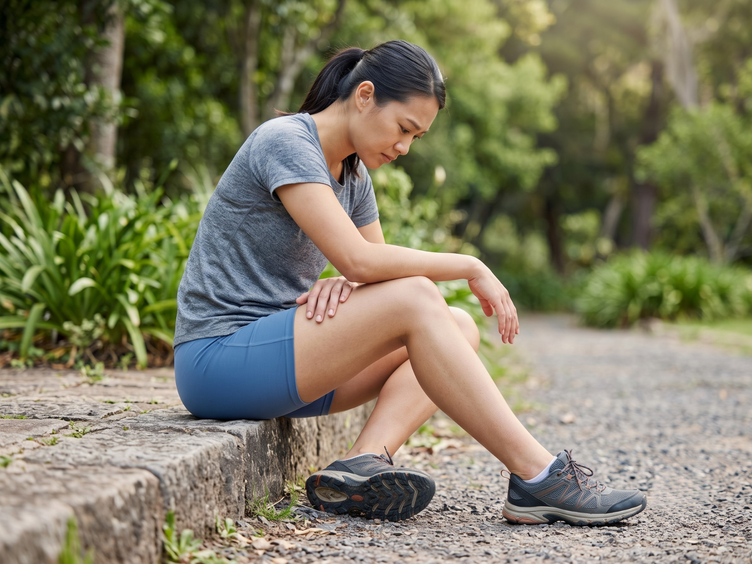
Delayed-Onset Muscle Soreness (DOMS)
Delayed-onset muscle soreness is the aching and tenderness that develops around 12 to 24 hours
after unfamiliar or unusually hard exercise, peaking at about 48 hours. It
follows microscopic damage to muscle fibres, particularly after downhill
running, heavy lifting, or a return to training after a break.
The muscles feel stiff and sore to touch, and full movement can be
uncomfortable.
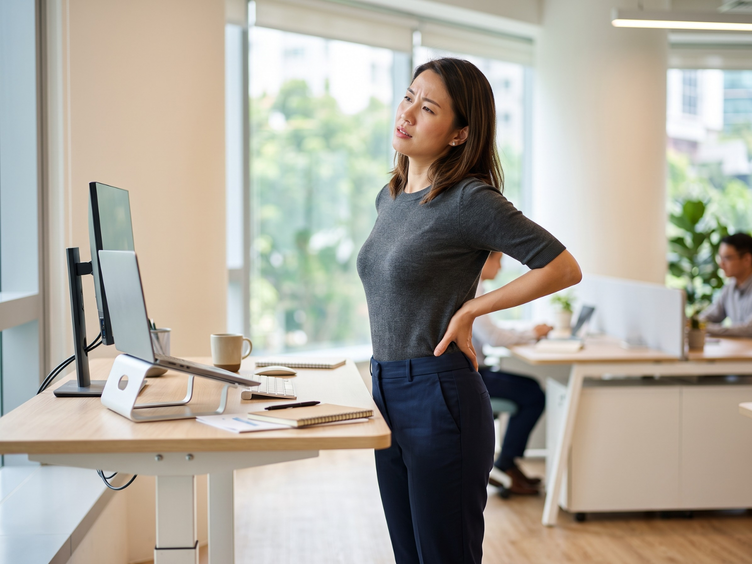
Lower Back Pain and Stiffness
Lower back pain
from muscular tightness is one of the most common reasons people
book a sports massage. It often builds gradually through long hours of
sitting, repeated lifting, heavy squatting and deadlifting, or rotational
sports such as golf and tennis.
The pain tends to sit across the lower back, feels worse after periods in
one position, and eases with movement.
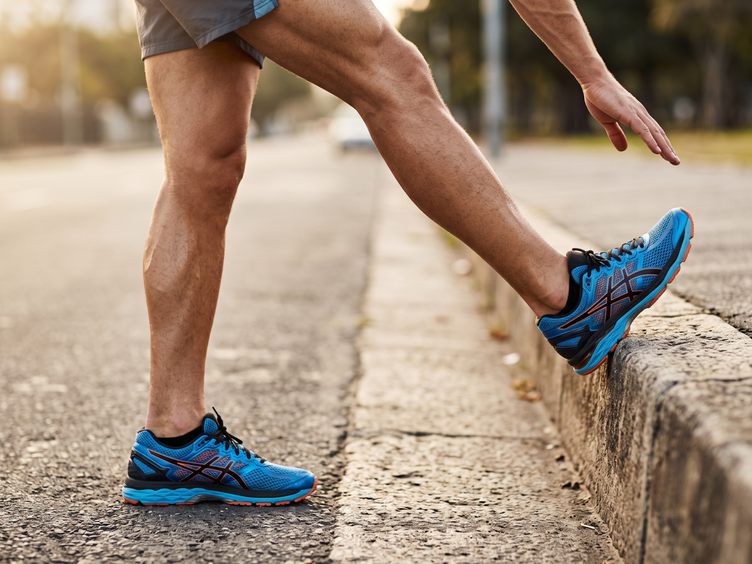
Hamstring and Calf Tightness
Tight hamstrings and calves are common in runners, footballers, and anyone
who trains with a lot of sprinting or jumping. The muscles feel short and
restricted, stretching gives only brief relief, and
the tightness can limit stride length.
Left unaddressed, a persistently tight calf or hamstring increases the strain on
the Achilles tendon and the muscle itself.
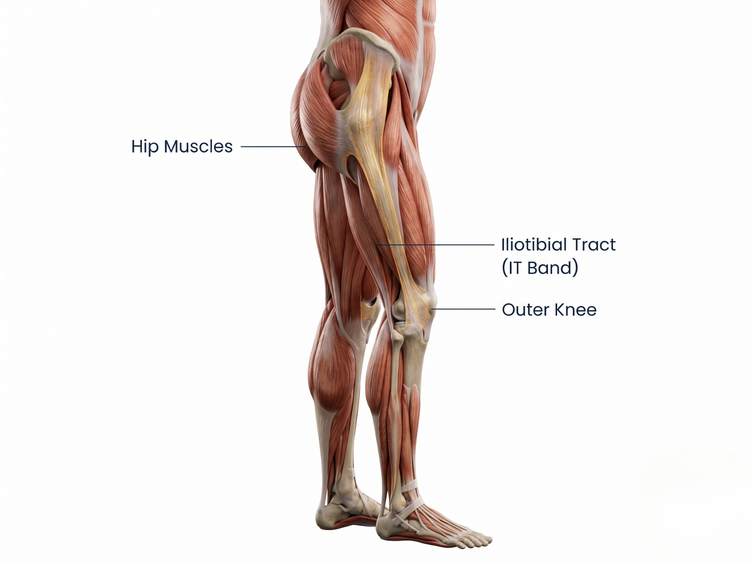
Iliotibial Band Syndrome and Knee Pain
Iliotibial band
syndrome causes pain on the outer side of the knee, typically in
runners and cyclists increasing their distance. The iliotibial band is a thick strip of
connective tissue running from the hip to just below the knee, and
tightness in the hip muscles that attach to it is often part of the picture.
The pain usually appears at a predictable point in a run, then settles with
rest.
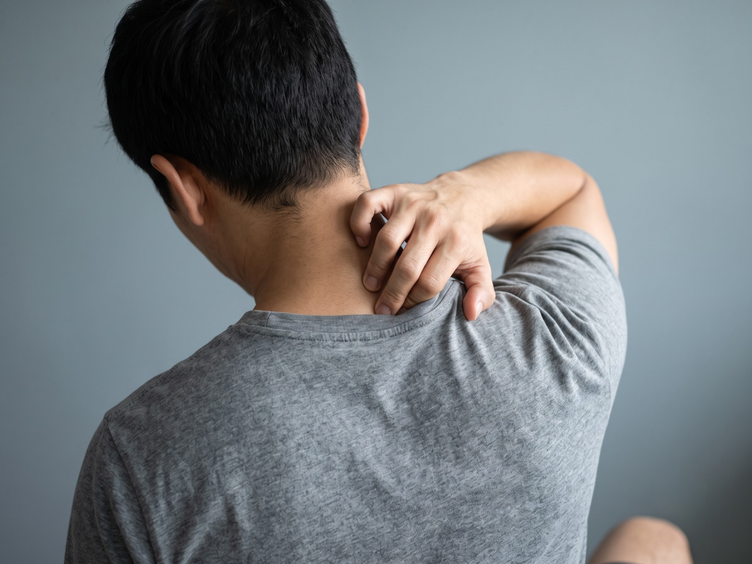
Neck and Shoulder Tension
Neck and shoulder tension shows up as aching across the upper trapezius (the
muscle running from the neck to the shoulder), tightness at the base of the
skull, and a restricted turn of the head.
It is common in swimmers, racquet sports players, climbers, and desk-based
workers, and it frequently comes with tension-type
headaches.
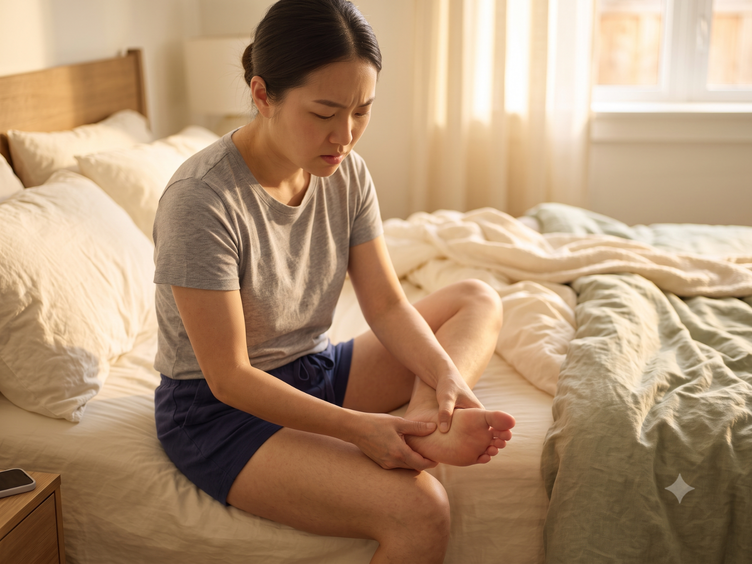
Plantar Fasciitis and Heel Pain
Plantar
fasciitis is irritation of the plantar fascia, the thick band of
tissue running along the sole of the foot.
It causes sharp heel pain that is
at its worst with the first steps in the morning or after sitting, and it is
often linked to a rapid increase in running or time spent on your feet.
 Training through muscle tightness or recovering from a heavy stretch of training? Book a session with our sports massage therapist
for treatment shaped around your training and your goals.
Training through muscle tightness or recovering from a heavy stretch of training? Book a session with our sports massage therapist
for treatment shaped around your training and your goals.
When to Book a Sports Massage: Before, After, or Between Training
Sports massage can be booked before an event, in the days after one, between training periods, or alongside rehabilitation, and the timing changes what the session is for.
- Before an event – A lighter session in the days beforehand, kept light in pressure. Firmer pressure within 48 hours of racing can leave you sore and is generally avoided.
- After an event or hard session – A gentler treatment in the 24 to 48 hours afterwards, aimed at soreness and stiffness rather than working through knots.
- Between training periods – The most common use, and where deeper work fits best. Book on a rest day or before an easy one so the tissue has time to settle.
- Alongside rehabilitation – Scheduled around your rehabilitation sessions to manage tightness, rather than in place of them.
How often depends on how much you train. Someone training most days may benefit from a session every two to four weeks, while lighter or recreational training rarely calls for more than an occasional session when a specific area tightens up.
Does Sports Massage Hurt?
Sports massage can feel uncomfortable when your therapist works on a tight or sensitive area, but
the pressure should stay at a level you can breathe through. If you find yourself bracing, say so
during the session and it will be eased.
Most reactions afterwards are mild and short-lived:
- Soreness for 24 to 48 hours – Similar to the ache after hard training, and more likely after firmer pressure.
- Tiredness or a heavy-limbed feeling – Common in the hours afterwards, usually gone by the next morning.
- Mild bruising – Occasional, more likely over bony areas or in people who bruise easily.
- Temporary redness or warmth over the treated area – Settles within a few hours.
- Headache or light-headedness – Less common, and more likely after work on the neck and shoulders.
Tell your therapist before your session if any of these apply:
- A recent or suspected fracture, or a new injury with significant swelling and bruising
- Open wounds, active skin infections, or a rash over the area to be treated
- A bleeding disorder, or treatment with blood-thinning medication
- A known or suspected blood clot in the leg
- Ongoing treatment for cancer, or an unexplained lump in the area
If you have pain, swelling, redness, or warmth in one calf, seek medical attention before booking a massage, as these can be signs of a blood clot.
Cost of Sports Massage in Singapore
At Apex Sports Clinic, our prices for sports massage and related services are as follows:
| Treatment & Service | Estimated Cost (SGD)^* |
|---|---|
| Sports Massage / Conditioning | $160 per 60-minute session |
| Other Non-Invasive Treatments | |
| Physiotherapy | $212.55 per 45-minute session |
| Physiotherapy (Home Visit) | $272.50 per 45-minute session |
| Shockwave Therapy | From $100 per session |
| Gait Analysis | From $200 per session |
| Diagnostic Services | |
| Ultrasound Imaging | From $100 |
| X-Ray | From $100 |
| MRI Scan | From $1,000 |
^Last updated: 2026-08-11
*Prices listed above are estimates and may vary depending on the complexity of the condition,
type of procedure, and other clinical considerations.
A consultation is not required to book a standalone sports massage session. For treatments or services not listed above, please contact us to enquire further.
Sports massage works on muscle tightness and soreness, one part of recovery rather than the whole of it. Alongside strengthening work, it can help patients train more consistently and stay comfortable between training sessions.
Dr Foo Gen Lin
Find Sports Massage Near Me
Apex Novena
Why Do Patients Choose Apex Sports Clinic?
Sports Doctor in Singapore: Personalised & Affordable Care
One-Stop Sports Clinic
We provide comprehensive care in one clinic, from consultation, imaging, and injections through to physiotherapy, sports massage, and surgery when needed.
Keyhole Surgery Expertise
We specialise in arthroscopic keyhole surgery to treat sports injuries with precision and minimal tissue disruption, supporting faster recovery and restored joint function.
Specialist in Sports Injury Management
We combine evidence-based injury management with a proactive approach to maintaining your body's strength and function, so you can recover fully and perform at your peak.
Patient Journey
1 . Schedule Your Appointment

2 . Expert Diagnosis & Consultation

3 . Customised Treatment Plan

Schedule an Appointment

Our Insurance Partners




Frequently Asked Questions (FAQs)
Pain after a sports massage is usually short-lived soreness, similar to the ache after hard training, settling within 24 to 48 hours. Firmer pressure on a tight area makes it more likely, and mild bruising or tiredness can occur alongside it. Tell your therapist how the area felt so pressure can be adjusted next time. Sharp or worsening pain that lasts beyond a few days is less typical and worth assessing, as it may point to an underlying muscle or tendon problem.
Lower back pain caused by muscular tightness is one of the most common reasons people book a sports massage. Work on the muscles either side of the spine, the glutes, and the hip flexors can reduce stiffness and often makes bending and rotating easier afterwards. Back pain has many possible sources, so if the pain travels down the leg, worsens, or does not improve with movement, consider an assessment by a physiotherapist or sports doctor instead.
Knee pain linked to muscle tightness, such as iliotibial band syndrome, may respond to sports massage, though treatment usually targets the hip muscles rather than the painful outer knee itself. Pain coming from the joint surfaces, cartilage, or ligaments is unlikely to change with massage. A knee that swells, gives way, locks, or wakes you at night points to a joint problem, which a sports doctor or orthopaedic specialist is better placed to assess.
Sports massage suits muscular tightness, general soreness, and recovery between training, when you can still move and train normally. Physiotherapy suits pain that limits what you can do, an injury that has not improved after a week or two, weakness or instability, or a problem that keeps returning in the same place. Many people use both, with massage managing tightness while physiotherapy addresses the cause.
Keep moving gently in the hours after a sports massage and expect some soreness for a day or two. Heavy training or deep stretching immediately afterwards can add to that soreness, so a lighter day is generally more comfortable. Your therapist may suggest an interval before your next session.
Training the day after a sports massage is often possible, though it depends on how firm the pressure was and how sore the area feels. A lighter session tends to be more comfortable than heavy lifting or a hard run. Firm pressure close to a race is generally avoided for the same reason. Mention any key session planned that week so your therapist can adjust accordingly.
Sports massage is generally avoided over a recent or suspected fracture, a new injury with significant swelling and bruising, open wounds, skin infections, or a rash. Tell your therapist beforehand if you have a bleeding disorder, take blood-thinning medication, are under treatment for cancer, or have an unexplained lump. Pain, swelling, redness, or warmth in one calf needs medical attention promptly, as these can be signs of a blood clot.
Sports massage is not usually covered by health insurance in Singapore, as it tends to be classified as a wellness service rather than medical treatment. Some corporate or extended benefit plans include it, and physiotherapy delivered by a registered physiotherapist is more often claimable. Checking directly with your insurer or employer benefits provider is the most reliable way to confirm what applies to you.
The difference lies in the goal of the session. A full body or relaxation massage typically works across the whole body at an even rhythm, aimed at stress relief rather than a specific muscle problem. Sports massage targets the muscles your activity works hardest, using firmer, more focused pressure and assisted stretching to ease tightness that limits movement. Sessions are often shorter and more localised as a result.
Sports massage rates in Singapore vary by clinic, therapist qualifications, and session length, with clinic-based treatment generally costing more than standalone massage studios. At Apex Sports Clinic, a 60-minute session is $160. We also provide physiotherapy, sports medicine, and orthopaedic care at the same clinic, so further assessment and treatment can be arranged if needed.
Sports massage can be useful for reducing muscle soreness after hard training, easing the sensation of tightness, and temporarily improving how far a joint moves. Research points to modest, short-term gains rather than lasting changes in strength or performance. It does not repair torn tissue or correct a strength imbalance, so it works best alongside training and treatment rather than in place of them.
Clothing is usually removed from the area being treated, and you are covered by a towel throughout with only that region exposed. Loose shorts and a sports top work well if you prefer to stay partly dressed, particularly for work on the legs or shoulders. Tell your therapist what you are comfortable with at the start of the session and the approach can be adjusted.
Neither is better overall; they suit different purposes. Sports massage uses focused pressure and assisted stretching on the muscles your activity works hardest, aimed at a specific area of tightness or soreness. Thai massage combines assisted stretching with pressure along the body in a more general, whole-body sequence, usually performed clothed on a mat. For a particular tight muscle or a recovery goal tied to training, sports massage is more targeted.
Frequency depends on how much you train. Someone training most days may find a session every two to four weeks useful, while lighter or recreational training rarely calls for more than an occasional session when a specific area tightens up. Booking around your training, on a rest day or before an easy one, tends to be more comfortable. Your therapist can advise on a suitable interval based on your training and how the area responds.
Avoid heavy training, deep stretching, and a hot sauna or bath in the hours immediately after a sports massage, as these can add to the soreness that often follows. Gentle movement is preferable to sitting still for long periods, and a lighter training day usually feels better than a hard one. Your therapist can advise on what to do in the 24 hours afterwards based on the work done in your session.
Sports massage is commonly grouped into four types: pre-event, post-event, maintenance between training, and rehabilitative work alongside injury recovery. The techniques overlap across all four, including effleurage, petrissage, trigger point release, and assisted stretching. What changes is the depth, duration, and purpose, with pre-event work kept lighter and maintenance sessions allowing for deeper treatment.
Muscle knots do not pop, despite the sensation sometimes described during treatment. A knot is a tight, tender band of muscle rather than a physical lump that can be broken apart, and any clicking felt during a massage usually comes from a nearby joint or tendon. What changes is the tenderness and the feeling of tightness, which often eases before the muscle itself has changed much.
Sports massage in Singapore is available at standalone massage studios, physiotherapy practices, and sports medicine clinics. What differs is the therapist's training and whether an assessment forms part of the session. At Apex Sports Clinic, a 60-minute sports massage session is $160. We also provide physiotherapy, sports medicine, and orthopaedic care at the same clinic, so further assessment and treatment can be arranged if needed.