
Sports Physiotherapy in Singapore
Information reviewed by: Dr Foo Gen Lin | Last updated:
Sidelined by a sports injury? At Apex Sports Clinic, we treat the injured tissue and the training habits behind it, with rehabilitation built around your sport so you can return to training with confidence.

MBBS (University of London) | MMed (Ortho) | FRCSEd (Ortho) | FAMS (Ortho)

What Is Sports Physiotherapy?
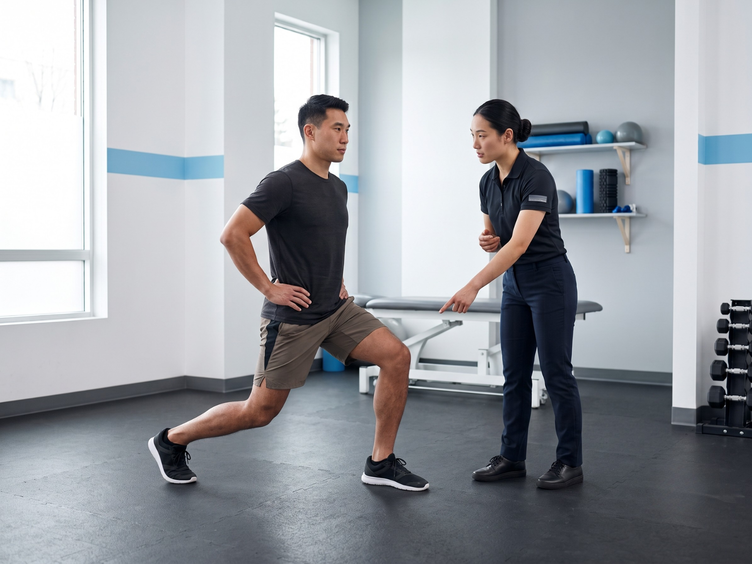
Sports physiotherapy is a branch of physiotherapy focused on assessing, treating,
and rehabilitating injuries caused by sport, exercise, and physical training.
The difference between sports physiotherapy and general physiotherapy lies in the end goal.
General physiotherapy aims to restore comfortable everyday movement, such as climbing stairs
or reaching overhead without pain.
Sports physiotherapy carries that further, because a return to sport asks the body to
sprint, pivot, jump, and absorb impact repeatedly. Rehabilitation therefore
continues past the point where pain settles, building the strength, power, and
tissue tolerance your sport demands.
This applies to more than competitive athletes. Recreational runners, weekend footballers, gym-goers, hikers, and anyone training regularly can develop the same overuse and impact injuries, and benefit from the same approach.
Sports Physiotherapy at Apex Sports Clinic
At Apex Sports Clinic, we treat sports injuries by looking at both the injured tissue and the
training habits or technique that placed it under strain, rather than the symptoms alone.
Here is what your treatment journey will look like:
1. Sports Injury Assessment
We review your injury history, training routine, and symptoms, then carry out a physical examination and movement analysis to identify the source of the problem. Where a structural injury is suspected, imaging such as an X-ray, ultrasound, or MRI can be arranged on site.
2. Rehabilitation Plan Built Around Your Sport
Your programme is shaped around your injury, training demands, and competition schedule, typically combining exercise therapy, manual treatment, and guidance on adjusting your training load. If further medical review is needed, we coordinate with our orthopaedic and sports medicine team.
3. Progressive Return to Training and Sport
We reassess at each visit and progress your programme as your strength and tolerance improve, moving from basic rehabilitation exercises through to sport-specific drills before you return to full training.
Meet Our Physiotherapist
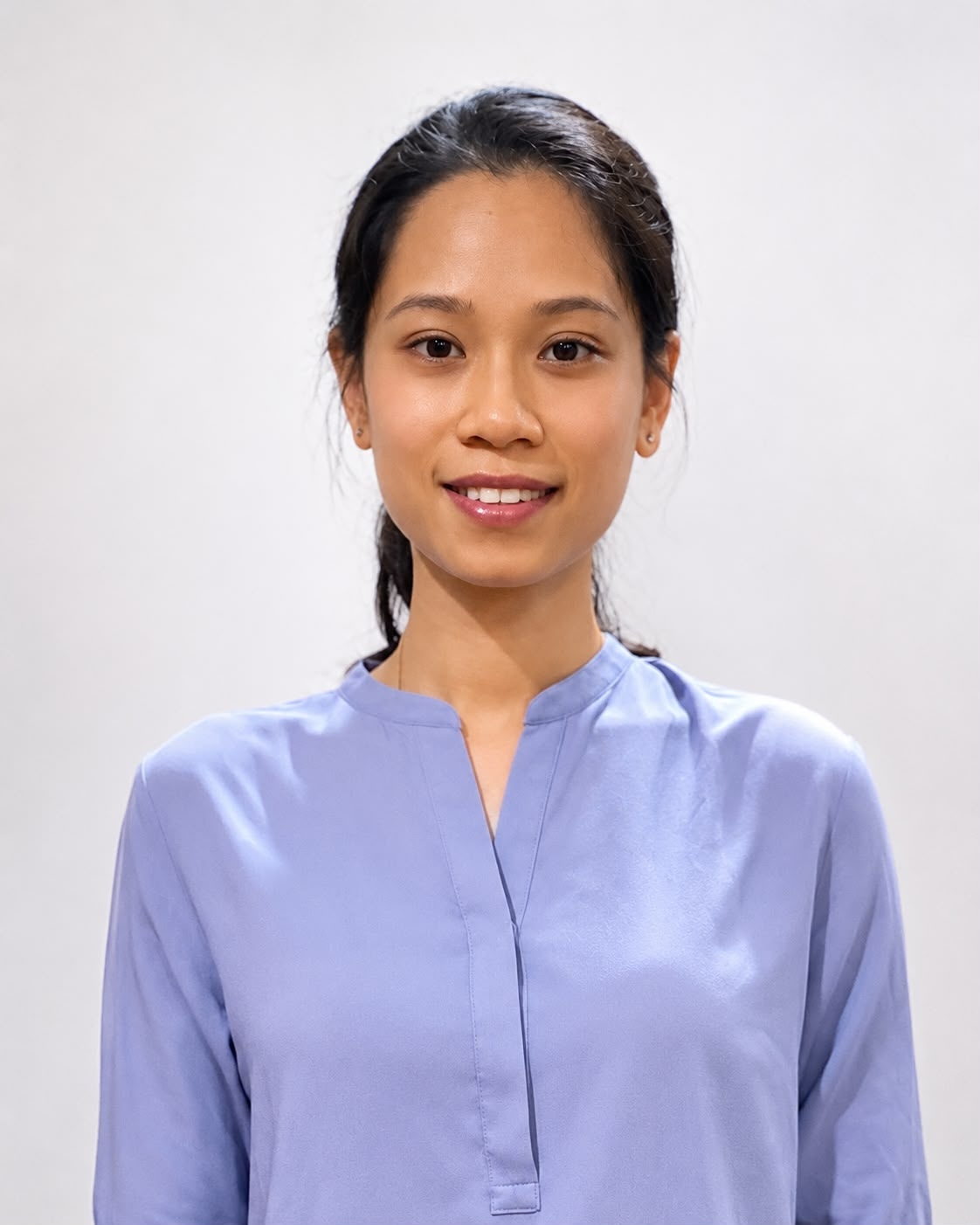
BSc (Physiotherapy) (Hons I), Curtin University
Fully Registered Physiotherapist (AHPC, Singapore)
Languages: English and Mandarin
Sarita is a senior physiotherapist who treats musculoskeletal injuries across all ages and
activity levels.
She focuses on identifying the root cause of symptoms rather than treating pain alone, with
a particular interest in post-operative rehabilitation and exercise-based therapy.
Working alongside the orthopaedic and sports medicine team at Apex Sports Clinic, she helps
patients recover and return confidently to the activities they enjoy.
Common Sports Injuries Treated with Physiotherapy
Sports physiotherapy manages injuries to muscles, tendons, ligaments, and joints, particularly those caused by sudden strain, repeated overload, or a return to training that outpaced the body's recovery. The conditions below are among the most frequently seen.
Ankle Sprains
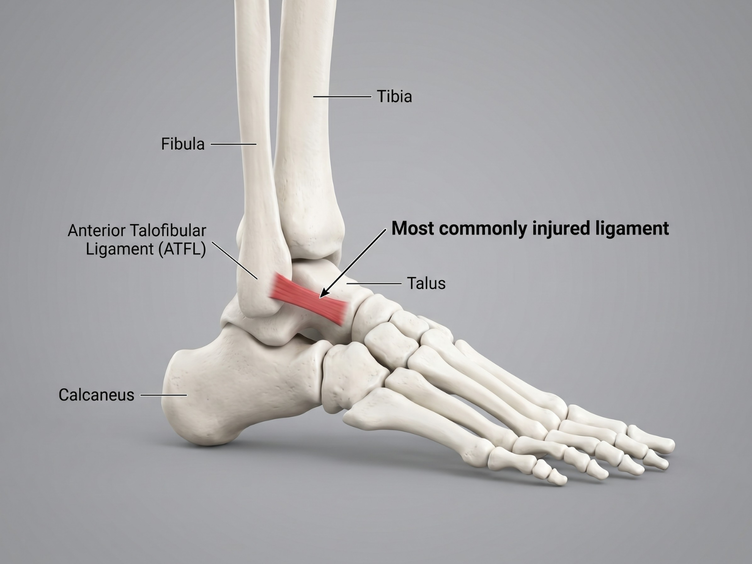
An ankle sprain is
a stretch or tear of the ligaments supporting the ankle, usually caused by
rolling the foot inwards during running, landing, or a change of direction.
It causes pain, swelling, and bruising around the outer ankle, and often a
period of unsteadiness afterwards.
Commonly seen in: Basketball, netball, football,
volleyball, badminton, and trail running.
Hamstring and Calf Strains
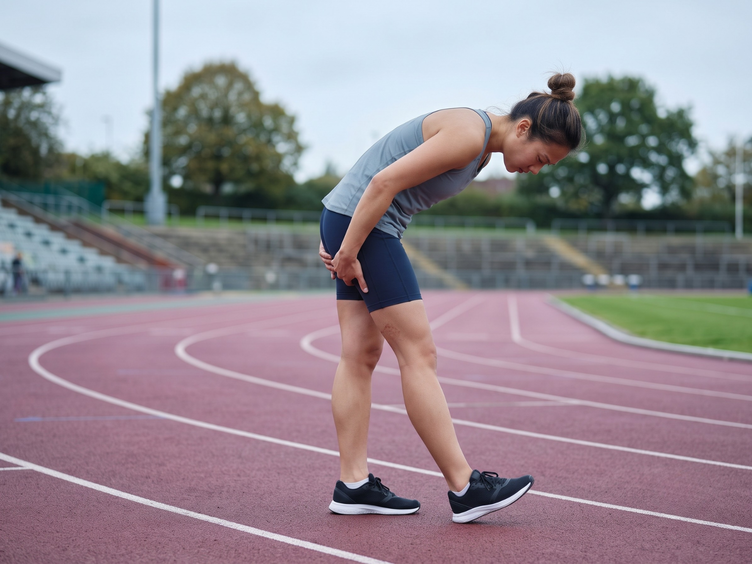
A muscle strain is a tear within the muscle fibres, ranging from a few
fibres to a substantial rupture. Hamstring and calf strains commonly happen
during sprinting or
explosive acceleration, causing sudden pain at the back of the thigh
or lower leg that makes it difficult to continue.
Commonly seen in: Football, rugby, touch rugby, sprinting
and track events, hockey, and tennis.
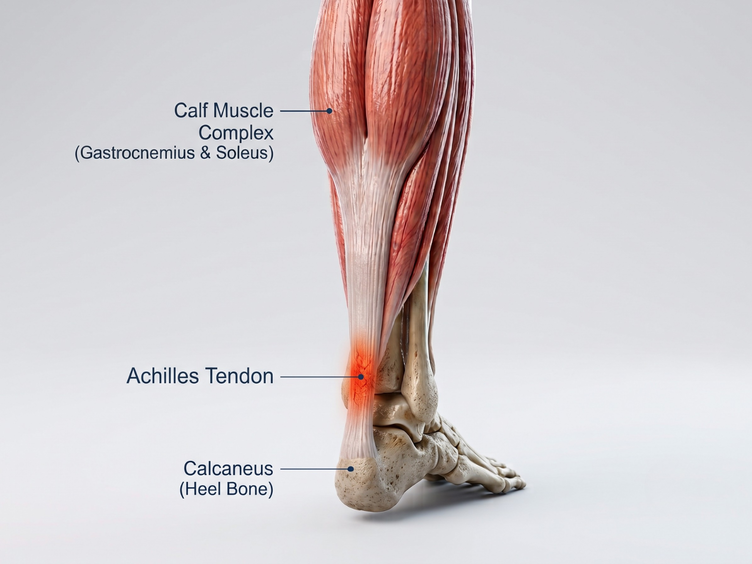
Achilles Tendinopathy
Achilles tendinopathy is
irritation and degeneration of the Achilles tendon, the thick cord
connecting the calf muscles to the heel bone. It causes pain and stiffness
at the back of the heel that is often worse in the
morning or at the start of a run, and it commonly affects runners
and those in jumping sports.
Commonly seen in: Distance running, basketball, badminton,
volleyball, and dance.
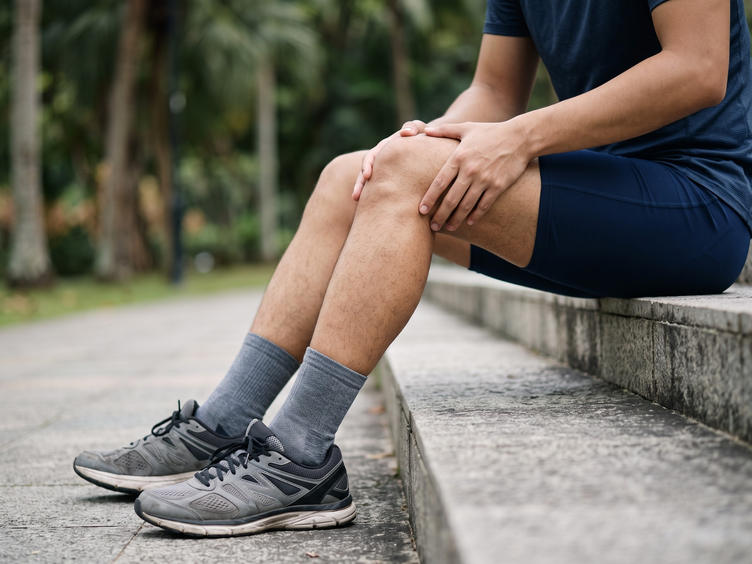
Runner's Knee (Patellofemoral Pain Syndrome)
Patellofemoral pain syndrome is a dull ache around or
behind the kneecap, linked to how the kneecap tracks within its groove as
the knee bends. It typically flares during running, squatting,
stair climbing, or after long periods of sitting.
Commonly seen in: Running, cycling, hiking, football, and
gym training involving squats or lunges.
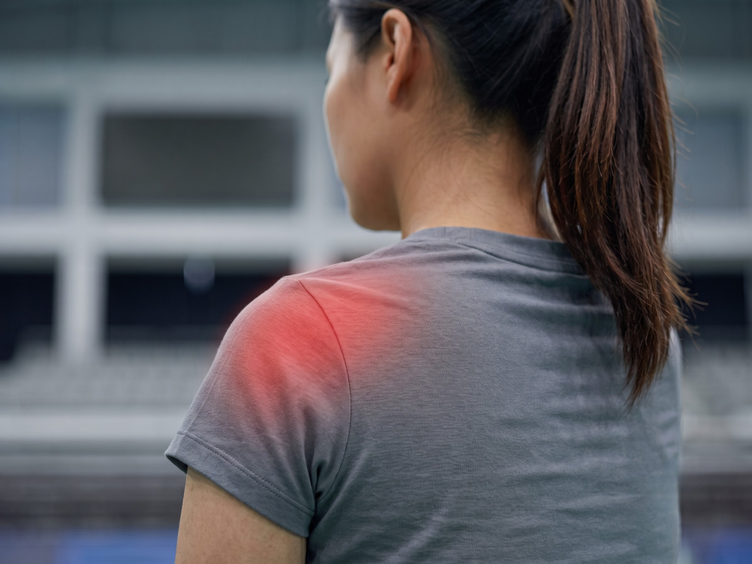
Rotator Cuff and Shoulder Injuries
The rotator
cuff is a group of four muscles and tendons that hold the shoulder
joint in place and control overhead movement. Injuries range from tendon
irritation to partial and complete
tears, and are common in swimming, racquet sports, and overhead
throwing.
Commonly seen in: Swimming, badminton, tennis, volleyball,
dragon boat, and overhead weightlifting.
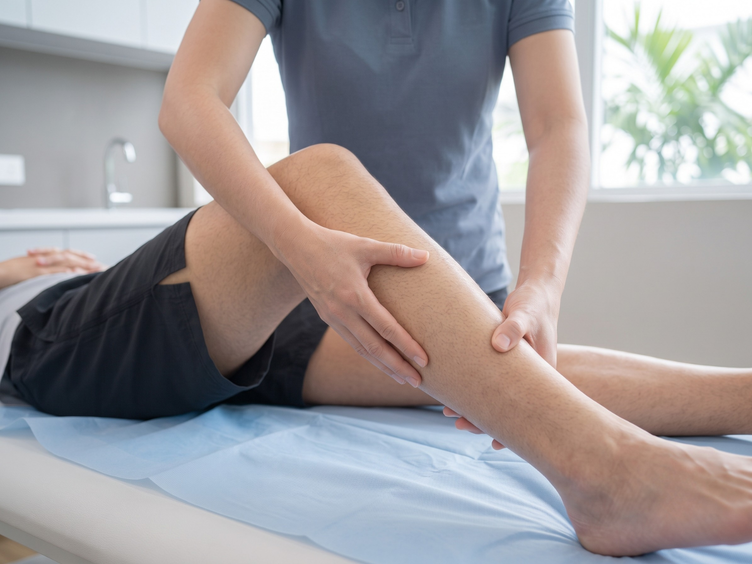
Shin Splints and Bone Stress Injuries
Shin splints describe pain along the inner shin from overloaded muscle and
bone tissue, usually following a rapid increase in
running volume or a change in surface or footwear. Left unaddressed,
ongoing bone overload can progress to a stress
fracture, which is a small crack in the bone.
Commonly seen in: Running, particularly during marathon training,
along with football, basketball, dance, and route marches during national
service.
Post-Surgical Sports Rehabilitation
Sports surgery, including anterior cruciate ligament
(ACL) reconstruction, meniscus repair, Achilles tendon
repair, and shoulder
stabilisation, requires structured rehabilitation to rebuild
movement, strength, and confidence in the joint. Without it, stiffness and
weakness can limit what the operation achieves.
Commonly seen in: Football, basketball, netball, rugby, and
badminton, where pivoting, landing, and contact place high demand on the
knee and shoulder.
 Recovering from a sports injury? Book a consultation
with our physiotherapist for an assessment and a rehabilitation plan built around your sport, so
you can return to training with confidence.
Recovering from a sports injury? Book a consultation
with our physiotherapist for an assessment and a rehabilitation plan built around your sport, so
you can return to training with confidence.
Sports Physiotherapy Treatment Techniques
Sports physiotherapy treatment is built around exercise, with hands-on and supporting
techniques used to ease symptoms so you can keep training through your rehabilitation.
These supporting methods are generally used alongside exercise rather than in place of it. Which
ones apply depends on your injury and how it responds.
Exercise and Strength Rehabilitation
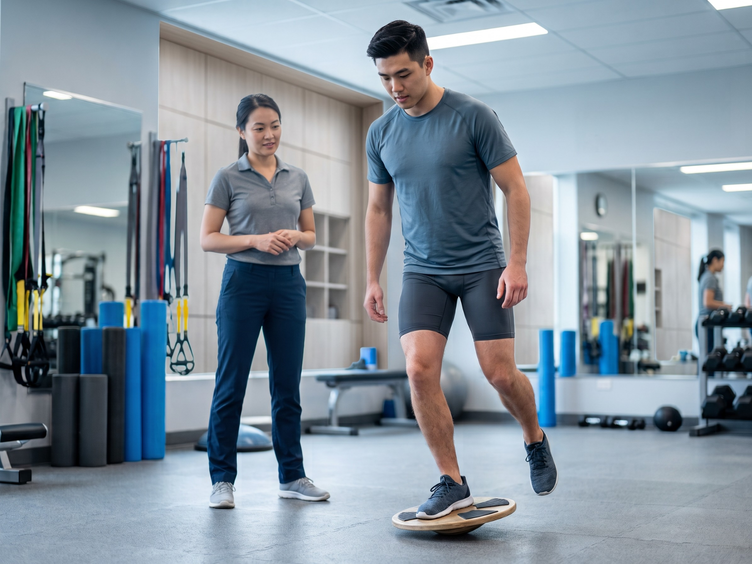
Exercise therapy is the structured strengthening of injured tissue and the muscles
supporting it, with the difficulty increased in stages as your tolerance
improves. Exercises begin with basic strengthening and progress to power and impact work
such as jumping, sprinting, and changes of direction.
This forms the core of sports rehabilitation because tendons, muscles, and bone generally
grow stronger in response to being worked, and that strength is what allows the tissue to
handle the demands of your sport again.
Manual Therapy
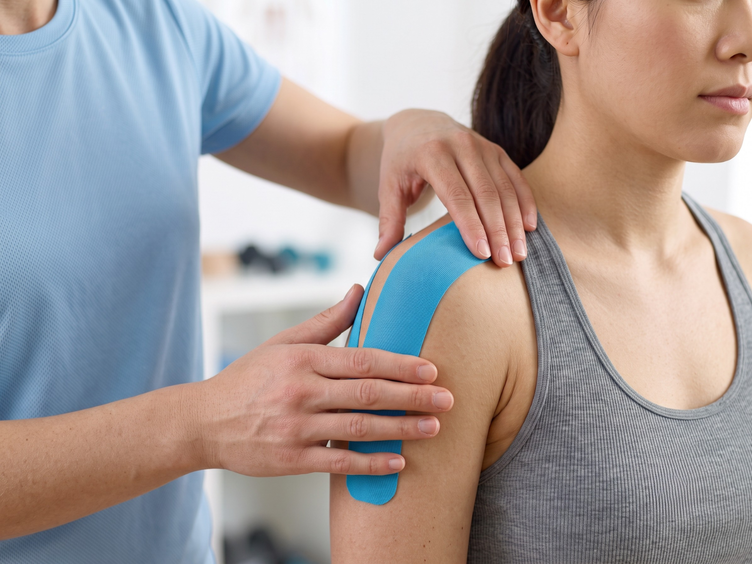
Manual therapy is hands-on treatment using joint mobilisation and soft tissue techniques to ease stiffness and improve range of movement. It is typically used to make movement more comfortable in the early stages, when pain or restriction limits what you can do in your exercise programme.
Sports Massage
Sports massage is targeted soft tissue work used to reduce muscle tightness and support recovery between training sessions. Athletes commonly use it during heavy training blocks or in the days after competition, and many report feeling looser and less sore afterwards.
Movement and Technique Retraining
Movement retraining involves correcting how you run, land, change direction, or lift to
reduce repeated stress on the injured area. Your movement is analysed during
assessment, and drills and verbal cues are then used to change the pattern.
Small technique adjustments can make a noticeable difference to how much stress a given tissue
absorbs each session.
Taping and Bracing
Taping and bracing provide external support to an injured joint, reducing strain during early rehabilitation or a return to training. They are short-term measures used while strength is being rebuilt, and are usually phased out as the joint regains control on its own.
Shockwave Therapy
Shockwave therapy is a non-invasive treatment that applies pressure waves to injured tissue through
the skin to reduce pain and stimulate healing in
tendons that have not responded to exercise.
It is used for persistent tendon conditions such as Achilles tendinopathy, patellar tendinopathy, and
plantar fasciitis, and is generally
considered as an addition to an exercise programme rather than a first option.
Dry Needling
Dry needling is the insertion of fine needles into tight bands within a muscle, known as trigger
points, to reduce tension and local discomfort. The needle prompts a brief involuntary twitch, which is thought to help the tight band
release and to alter how the nerves in the area signal pain.
It is often applied to the calf, hip, or shoulder muscles when tightness limits movement, and is
combined with stretching and strengthening so the change is maintained.
Sports Physiotherapist, Sports Doctor, or Orthopaedic Specialist?
A sports physiotherapist is the usual starting point for most sports injuries, with a sports doctor or orthopaedic specialist involved when the diagnosis is unclear or the injury appears structural. In many cases, all three work together on the same injury.
- Sports physiotherapist: Suitable for most muscle, tendon, and joint injuries where you can still bear weight and move the limb. No referral is needed to see a physiotherapist privately in Singapore.
- Sports doctor: Appropriate when the diagnosis is unclear, when imaging or an injection is being considered, or when an injury has not improved with rehabilitation.
- Orthopaedic specialist: Involved when a fracture, dislocation, or complete tear such as an ACL or Achilles rupture is suspected, or when surgery is being considered.
If you are unsure which applies to your injury, a physiotherapy assessment is a reasonable place to start. At Apex Sports Clinic, physiotherapy, sports medicine, orthopaedic care, and imaging are available on site, so a doctor's review can be arranged within the same clinic, keeping your care seamless.
When to Seek Medical Assessment for a Sports Injury
Seek medical assessment when a sports injury causes significant pain or swelling at the time it
happens, or when a milder injury has not improved with rest and reduced activity.
Consider seeing a doctor or physiotherapist if you notice any of the following:
- Pain that persists beyond a week or returns each time you train
- Swelling, bruising, or difficulty putting weight through the limb
- A pop or snap felt at the moment of injury, particularly at the knee or the back of the ankle
- A joint that gives way, locks, or feels unstable
- Loss of movement or strength that is not recovering
- Pain that wakes you at night or is present at rest
Seek same-day medical care if the limb looks visibly deformed, if you cannot put any weight on it at all, or if the area becomes numb, cold, or loses sensation, as these can indicate a fracture, dislocation, or a problem with the blood or nerve supply.
Cost of Sports Physiotherapy in Singapore
At Apex Sports Clinic, we provide sports physiotherapy alongside orthopaedic and sports medicine services, so further assessment can be arranged if your injury requires it. Our fees are as follows:
| Treatment & Service | Estimated Cost (SGD)^* |
|---|---|
| Consultation & Assessment | |
| Physiotherapy | $212.55 per 45-minute session |
| Physiotherapy (Home Visit) | $272.50 per 45-minute session |
| Diagnostic Services | |
| X-Ray | From $100 |
| MRI Scan | From $1,000 |
| Ultrasound Imaging | From $100 |
| Gait Analysis | From $200 per session |
| Non-Invasive Treatments | |
| Sports Massage / Conditioning | From $160 per session |
| Shockwave Therapy | From $100 per session |
| Bracing / Casting / Splinting | From $300 |
| Injection-Based Treatments | |
| Corticosteroid Injection | From $250 per injection |
| Platelet-Rich Plasma (PRP) Treatment | From $1,000 per injection |
| Ultrasound Guidance for Injections (in addition to cost of injection) | From $150 |
^Last updated: 2026-08-11
*Prices listed above are estimates and may vary depending on the complexity of the condition,
type of procedure, and other clinical considerations.
For treatments or services not listed above, please contact us to enquire further.
Sports physiotherapy addresses both the injured tissue and the training habits behind the injury, which is why it plays a central role in recovery. For most patients, it offers a structured path back to their sport rather than a wait for symptoms to settle.
Dr Foo Gen Lin
Find Sports Physiotherapy Near Me
Apex Novena
Why Do Patients Choose Apex Sports Clinic?
Sports Doctor in Singapore: Personalised & Affordable Care
One-Stop Sports Clinic
We provide comprehensive care in one clinic, from consultation, imaging, and injections through to physiotherapy, sports massage, and surgery when needed.
Keyhole Surgery Expertise
We specialise in arthroscopic keyhole surgery to treat sports injuries with precision and minimal tissue disruption, supporting faster recovery and restored joint function.
Specialist in Sports Injury Management
We combine evidence-based injury management with a proactive approach to maintaining your body's strength and function, so you can recover fully and perform at your peak.
Patient Journey
1 . Schedule Your Appointment

2 . Expert Diagnosis & Consultation

3 . Customised Treatment Plan

Schedule an Appointment

Our Insurance Partners




Frequently Asked Questions (FAQs)
Sports physiotherapy typically involves several sessions rather than one, with the number depending on the injury, its severity, and how far you intend to return towards competitive sport. A minor strain may settle within a few visits, while post-surgical rehabilitation can run for several months. An initial assessment usually gives a clearer estimate of the likely course once your injury has been examined.
Recovery from a sports injury ranges from a couple of weeks for a mild strain to nine months or longer after anterior cruciate ligament (ACL) reconstruction. Return to sport is generally guided by strength and movement testing rather than time alone, since tissue can feel comfortable well before it tolerates sprinting or contact. If recovery is taking longer than expected, a reassessment can help clarify what is holding it back.
Sports massage is soft tissue work used to reduce muscle tightness and support recovery between training sessions, while sports physiotherapy is a broader service covering assessment, diagnosis, and structured rehabilitation of an injury. Massage is often used within a physiotherapy programme, but it does not address the strength and technique problems behind most sports injuries. If pain keeps returning after massage, an assessment may identify what is driving it.
Whether you can keep training depends on the injury, its severity, and how far along your recovery is. Some injuries allow modified activity throughout, while a bone stress injury or a recent repair may need a period of reduced activity first. Discussing your training schedule at your assessment allows the programme to be built around what you can safely continue.
Coverage for sports physiotherapy in Singapore varies by policy. Some integrated shield plans and corporate or personal accident policies include outpatient physiotherapy, often requiring a doctor's referral and a set claim limit, while MediSave generally does not cover outpatient physiotherapy. Checking with your insurer before booking, and asking our clinic for an itemised receipt, will clarify what you can claim.
Wear comfortable, loose clothing that allows the injured area to be examined and moved, such as shorts for a knee or ankle problem and a vest or loose t-shirt for a shoulder. Bringing the shoes you train in is also useful, since footwear and wear patterns often give useful information about running injuries.
Physiotherapy may reduce injury risk through strength work, movement retraining, and guidance on how quickly training is increased, and structured programmes of this kind are widely used in sport. It cannot rule out injury, particularly in contact sports where collisions play a part. If you have had the same injury more than once, an assessment can help identify what keeps contributing to it.
The difference between a physiotherapist and a sports physiotherapist lies in the end point of treatment rather than the qualification. General physiotherapy restores comfortable everyday movement, such as climbing stairs without pain. Sports physiotherapy continues past that point, rebuilding the strength, power, and tissue tolerance needed to sprint, pivot, and absorb impact repeatedly. Both hold the same registration in Singapore, with sports physiotherapists working mainly with sport and training injuries.
Physiotherapy in Singapore generally costs between $100 and $250 per session at private clinics, with home visits priced higher. At Apex Sports Clinic, physiotherapy is $212.55 for a 45-minute session and $272.50 for a home visit. Most injuries need several sessions rather than one, so it is worth asking about the likely number at your first appointment.
Physiotherapists in Singapore are registered with the Allied Health Professions Council and are trained to assess, diagnose, and treat injuries, whereas "sports therapist" is not a protected title here and covers a wide range of training backgrounds. For an injury involving pain, swelling, or loss of function, a registered physiotherapist is the safer starting point, since diagnosis comes before any treatment plan.
Physiotherapy does not cure leg pain as such, since the term covers many different problems ranging from muscle strains and shin splints to nerve irritation and circulation issues. Treatment can often help once the source is identified, particularly for muscle, tendon, and joint causes. Because the underlying cause determines what helps, having the pain assessed is the useful first step.
A sports physiotherapist assesses, diagnoses, and rehabilitates injuries caused by sport, exercise, and training. The work involves examining how the injury happened, treating the injured tissue through exercise and hands-on techniques, and addressing the training habits or technique behind it. Rehabilitation then progresses through sport-specific drills until you can meet the demands of your activity again.
Occupational therapy and physiotherapy address different needs rather than competing, so neither is better in general terms. Physiotherapy focuses on movement, strength, and pain, which is why it is used for sports injuries. Occupational therapy focuses on daily tasks and function, such as returning to work or managing at home after illness or surgery. Which suits you depends on what you are trying to regain.
Weekly physiotherapy suits many injuries, particularly once you are managing exercises independently between sessions. More frequent visits are sometimes used in the early stages or after surgery, while later stages often move to fortnightly reviews. Much of the progress comes from the exercises done between appointments, so session frequency matters less than consistency with the programme.
Physiotherapists are trained to assess ligament injuries through clinical testing and can identify when a tear is likely, including at the knee and ankle. Confirming the extent of a tear usually requires imaging such as an MRI, which needs a doctor's referral. If a joint gives way, swells quickly, or feels unstable, it is worth having it examined promptly so imaging can be arranged if needed.