
Latarjet Procedure: For Recurrent Shoulder Dislocation
Information reviewed by: Dr Foo Gen Lin | Last updated:
Shoulder dislocating again and again? At Apex Sports Clinic, we measure how much bone the socket has lost before recommending surgery, so the stabilisation option we suggest matches what your shoulder actually needs.

MBBS (University of London) | MMed (Ortho) | FRCSEd (Ortho) | FAMS (Ortho)

What Is the Latarjet Procedure?
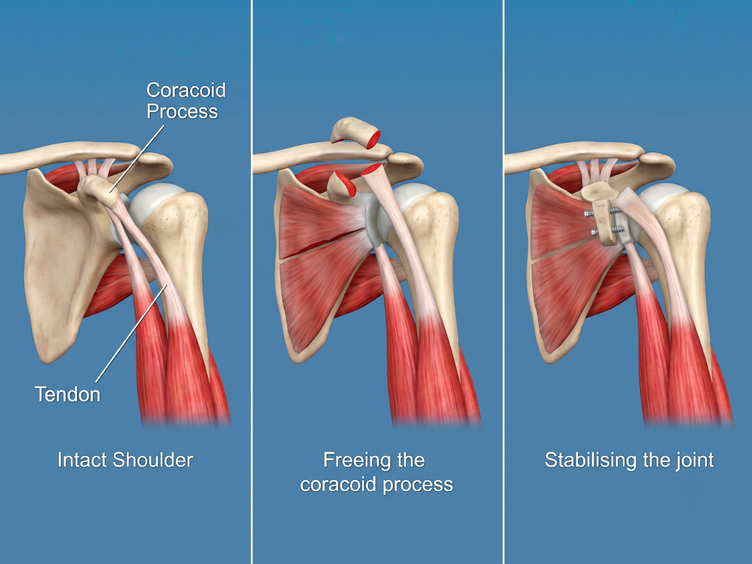
The Latarjet procedure, also called Latarjet shoulder surgery or coracoid transfer, is a
shoulder stabilisation operation that moves a small piece of bone from the shoulder
blade to the front of the shoulder socket to stop the joint dislocating again.
It belongs to a group of operations known as bony reconstructions, which rebuild the socket
itself rather than repairing the soft tissue around it.
That difference matters when you are considering treatment options. Soft tissue repairs work
by reattaching or tightening the structures that hold the shoulder in place, and they depend
on those structures healing well. A bony reconstruction changes the shape of the joint
instead, so it does not rely on damaged tissue to do the holding.
How Does the Latarjet Procedure Work?
The Latarjet procedure works by rebuilding the front of the shoulder socket and adding a tendon
strap across the joint in the same operation.
It is carried out under general anaesthesia, often combined with a nerve block for pain relief, and usually takes about
one and a half to two hours. Most patients stay in hospital for one to two nights afterwards.
1. Accessing the Joint
An incision is made at the front of the shoulder, and the joint is reached through the gap between the deltoid and chest muscles rather than by cutting through them.
2. Harvesting the Coracoid
The coracoid process, a hook-shaped projection at the front of the shoulder blade, is cut free with the conjoint tendon (the shared tendon of the biceps short head and coracobrachialis) still attached to its tip.
3. Transferring and Fixing the Graft
The graft is passed through a horizontal split in the subscapularis muscle, positioned flush against the front rim of the socket, and held with one or two screws.
4. Repairing the Capsule and Closing
The joint capsule is reattached over the graft, the shoulder is moved through its range to confirm it no longer slips, and the wound is closed in layers.
Stability comes from three effects working together, often referred to as the triple blocking effect. The graft restores bone at the socket rim, the conjoint tendon forms a sling that tightens across the front of the joint when the arm is raised and rotated outwards, and the repaired capsule adds a further layer of restraint.
When Is the Latarjet Procedure Considered?
The Latarjet procedure is generally considered when the shoulder keeps dislocating and the
underlying problem involves missing or damaged bone.
Because the operation restores the socket rather than the ligaments, it suits instability that
tightening alone cannot solve.
Recurrent Anterior Shoulder Dislocation
Recurrent anterior
shoulder dislocation means the head of the upper arm bone (humerus) repeatedly slips
forwards out of the socket. Each dislocation stretches the
ligaments and labrum further, so the next one takes less force.
Some patients reach the point where the shoulder gives
way while reaching behind the head or turning over in bed.
Glenoid Bone Loss
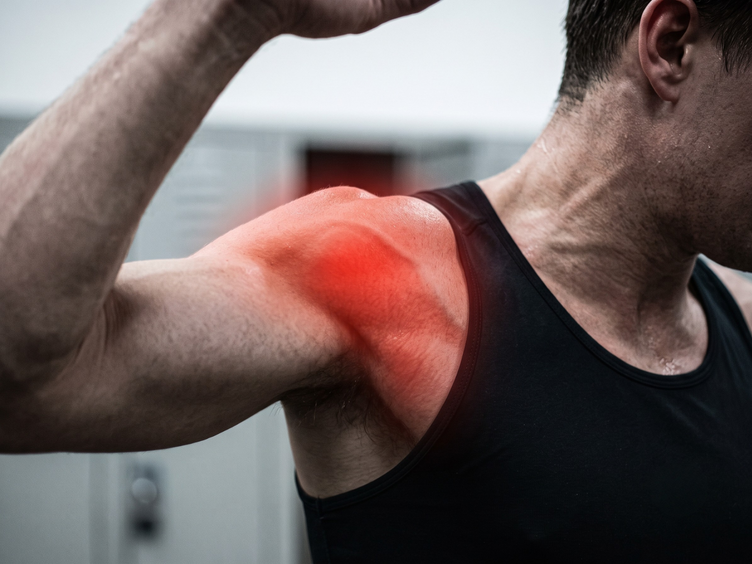
Glenoid bone loss describes wear or fracture along the front rim of the shoulder socket (glenoid), usually from repeated dislocations grinding the edge away. Once the loss passes roughly 15 to 20 per cent of the socket width, the socket has lost enough of its containing edge that instability tends to continue.
Engaging Hill-Sachs Lesion
A Hill-Sachs lesion is a dent in the back of the humeral head, created when the bone strikes the rim of the socket during a dislocation. It becomes engaging when that dent catches on the socket edge as you lift and rotate your arm, slipping the shoulder out again. Patients often describe a specific arm position they have learned to avoid.
Instability After Previous Shoulder Surgery
Some patients continue to dislocate after an earlier operation, most commonly a Bankart repair that reattached the labrum. This usually points to bone loss that was underestimated the first time, or to demands on the shoulder that a soft tissue repair could not meet. A CT scan is generally needed before planning further treatment.
Shoulder Instability in Collision and Contact Athletes
Rugby, football, judo and wrestling expose the shoulder to repeated forced movement at the extremes of its range. Athletes in these sports have higher rates of repeat dislocation after soft tissue repair, even with modest bone loss, because the loads that caused the first dislocation return every season.
Shoulder Instability with Joint Hypermobility
Generalised joint hypermobility means the ligaments throughout the body are naturally loose, so the shoulder capsule stretches more easily and instability can develop after minor trauma or none at all. Rehabilitation is generally tried first, with a Latarjet considered where bone loss is also present or instability continues.
 If your shoulder has dislocated more than once, or keeps feeling as though it is about to give
way, book a consultation with our shoulder specialist to
find out how much bone loss is involved and which stabilisation option fits your shoulder.
If your shoulder has dislocated more than once, or keeps feeling as though it is about to give
way, book a consultation with our shoulder specialist to
find out how much bone loss is involved and which stabilisation option fits your shoulder.
Open vs Arthroscopic Latarjet Procedure
The Latarjet procedure can be performed as open surgery through a single incision, or arthroscopically as minimally invasive keyhole surgery through several small ports. Both approaches move the same bone to the same place; what differs is how the joint is reached.
Open Latarjet Procedure
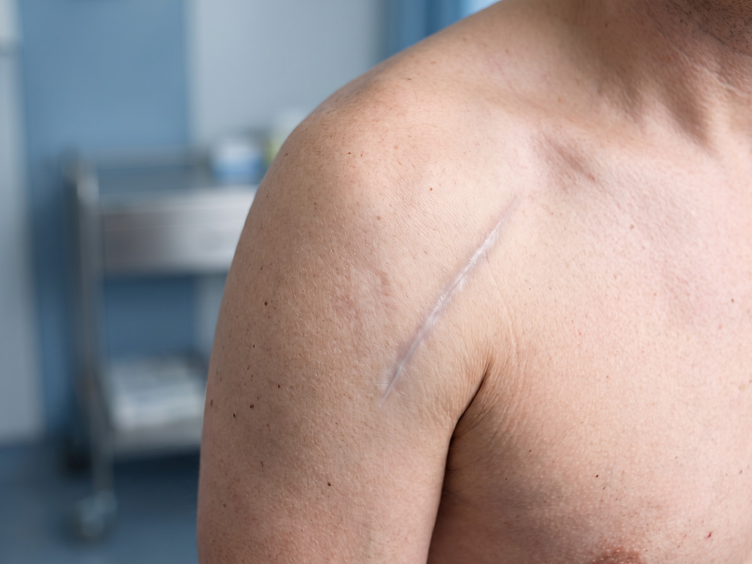
The open Latarjet procedure uses a single incision of roughly 5 to 7 centimetres at the front of the shoulder, allowing the graft to be seen and handled directly. This makes graft position easier to judge, which matters because a graft sitting too far in or too far out can cause problems later. The trade-off is the scar it leaves and, in some patients, more stiffness in the early weeks.
Arthroscopic Latarjet Procedure
The arthroscopic Latarjet procedure is the minimally invasive alternative, passing a camera and instruments through several small ports instead of opening the front of the shoulder. It leaves smaller scars and allows other damage inside the joint to be treated at the same time, though it is technically demanding and takes longer to perform.
Latarjet Procedure vs Bankart Repair and the Bristow Procedure
The Latarjet procedure, Bankart repair and Bristow procedure all treat a shoulder that keeps dislocating, but they differ in what they rebuild.
| Procedure | What It Involves | Typically Considered For |
|---|---|---|
| Latarjet procedure | Transfers the whole coracoid process with the conjoint tendon attached, fixed to the socket with screws | Glenoid bone loss above roughly 15 to 20 per cent, instability after previous surgery, or collision sport |
| Bankart repair | Reattaches the torn labrum to the socket rim with suture anchors, usually arthroscopically | First-time or early recurrent dislocation with little or no bone loss |
| Bristow procedure | Transfers only the tip of the coracoid, usually with a single point of fixation | Largely superseded by the Latarjet in current practice |
Latarjet Procedure Recovery and Rehabilitation Protocol
Recovery after the Latarjet procedure follows a staged protocol depending on how long the bone graft takes to unite with the socket. Until it does, the shoulder cannot take weight or resistance. Most patients progress through four phases:
| Phase | Recovery Focus |
|---|---|
| Phase 1 (0 to 3 weeks) |
|
| Phase 2 (3 to 6 weeks) |
|
| Phase 3 (6 weeks to 3 months) |
|
| Phase 4 (3 to 6 months) |
|
Timelines vary with your healing, your job and the sport you are returning to, so check with your surgeon and physiotherapist on your own recovery timeline.
Potential Side Effects and Risks of the Latarjet Procedure
Like any shoulder operation, the Latarjet procedure carries potential side effects and complications. Many are temporary and settle during rehabilitation:
- Shoulder stiffness – Some loss of outward rotation is common early on. Most returns with physiotherapy, though a small permanent reduction can remain.
- Nerve or hardware irritation – The musculocutaneous and axillary nerves run close to the surgical field, so temporary numbness or weakness can occur, with permanent injury uncommon. The screws holding the graft can also cause discomfort or catch, and are sometimes removed in a second, smaller procedure.
- Graft problems – The transferred bone may fail to unite fully with the socket or lose some of its volume over time, which does not always cause symptoms. A graft sitting too far into the joint can wear the cartilage over the years, which is why placement is checked during surgery.
- Recurrent instability – Reported rates of further dislocation are low, though the shoulder can become unstable again after a significant new injury.
- Infection – Uncommon, and treated with antibiotics or, rarely, further surgery.
How Much Does the Latarjet Procedure Cost in Singapore?
At Apex Sports Clinic, we assess whether non-surgical management is appropriate before recommending stabilisation surgery. Where the Latarjet procedure is indicated, the estimated costs are as follows:
| Treatment & Services | Estimated Cost (SGD)^* |
|---|---|
| Consultation & Assessment | |
| Initial Consultation | From $200 |
| Follow-Up Consultation | From $150 |
| Second Opinion Consultation | From $200 |
| Surgical Procedures | |
| Shoulder Stabilisation Surgery (Latarjet Procedure) | From $10,000 |
| Shoulder Stabilisation Surgery (Bankart Repair) | From $10,000 |
| Shoulder Labral (SLAP) Tear Repair | From $10,000 |
| Diagnostic Services | |
| MRI Scan | From $1,000 |
| X-Ray | From $100 |
| Non-Surgical Treatments | |
| Casting / Sling | From $300 |
| Physiotherapy | $212.55 per 45-min session |
| Physiotherapy (Home Visit) | $272.50 per 45-min session |
^Last updated: 2026-09-01
*Prices listed above are estimates and may vary depending on the complexity of the condition, type
of procedure, and other clinical considerations.
The surgical estimate covers the procedure itself. Hospital stay, implants and consumables are charged separately, as are pre-surgical imaging, follow-up consultations and physiotherapy.
Shoulder stabilisation surgery is MediSave-claimable in Singapore, and your Integrated Shield Plan may cover a further portion of the cost. It is best to check with your insurer on what your policy covers.
The Latarjet procedure is generally considered when the socket has lost bone, because that shoulder needs the socket rebuilt rather than the soft tissue tightened. For patients who have dislocated repeatedly, restoring that bone is what gives them the confidence to reach overhead again.
Dr Foo Gen Lin
Find a Shoulder Specialist Near Me
Apex Novena
Why Do Patients Choose Apex Sports Clinic?
Sports Doctor in Singapore: Personalised & Affordable Care
One-Stop Sports Clinic
We provide comprehensive care in one clinic, from consultation, imaging, and injections through to physiotherapy, sports massage, and surgery when needed.
Keyhole Surgery Expertise
We specialise in arthroscopic keyhole surgery to treat sports injuries with precision and minimal tissue disruption, supporting faster recovery and restored joint function.
Specialist in Sports Injury Management
We combine evidence-based injury management with a proactive approach to maintaining your body's strength and function, so you can recover fully and perform at your peak.
Patient Journey
1 . Schedule Your Appointment

2 . Expert Diagnosis & Consultation

3 . Customised Treatment Plan

Schedule an Appointment

Our Insurance Partners




Frequently Asked Questions (FAQs)
The Latarjet procedure was described in 1954 by Michel Latarjet, a French surgeon working in Lyon. A related variation transferring a smaller piece of the coracoid was later described by Arthur Helfet and became known as the Bristow procedure, which is why the two are sometimes grouped together as Bristow-Latarjet despite being separate operations.
Shoulder stabilisation surgery, including the Latarjet procedure, is MediSave-claimable in Singapore, with the claimable amount depending on the surgical table the operation falls under. An Integrated Shield Plan may cover a further portion of the cost. Since coverage varies by policy and by ward or hospital type, it is best to check with your insurer beforehand.
Pain after the Latarjet procedure is usually most noticeable in the first few days, when the incision and the bone work are both settling. A nerve block given during surgery numbs the shoulder for the first several hours, after which prescribed pain relief, cold therapy and resting the arm in a sling can help keep discomfort manageable. Most patients find it eases considerably by the second or third week.
Whether the Latarjet procedure suits you depends on how much bone the socket has lost and how much the instability affects daily life. Reported rates of repeat dislocation after the operation are low, though it is a larger procedure with a graft that must heal. If your shoulder has dislocated repeatedly, having the bone loss measured on a CT scan is the step that clarifies whether stabilisation surgery is worth considering.
Lifting is generally avoided for the first six weeks after a Latarjet procedure, since the graft needs time to unite with the socket. Light everyday tasks resume from around three to six weeks, with strengthening introduced after that and heavier lifting usually deferred until graft union is confirmed, commonly at around three months. Before returning to lifting at work or in the gym, check with your surgeon and physiotherapist on what weight your shoulder is ready for.
Complications after the Latarjet procedure are uncommon, though the operation carries more risk than a soft tissue repair because it involves moving and fixing bone. Recognised problems include some loss of outward rotation, irritation from the screws, temporary numbness where nerves run close to the surgical field, and incomplete graft union. If you are considering stabilisation surgery, it is worth going through these risks with your surgeon alongside how much bone your socket has lost and what your shoulder needs to do.
Pain after shoulder surgery varies more by the individual than by the operation, though procedures involving bone work or rotator cuff repair tend to be reported as more uncomfortable early on than simpler keyhole procedures. Nerve blocks, prescribed pain relief and a structured rehabilitation plan keep discomfort manageable in most cases.
The Latarjet procedure can be performed either as open surgery through a single incision at the front of the shoulder, or arthroscopically as keyhole surgery through several small ports. Both approaches transfer the same piece of bone to the same position, and reported rates of repeat dislocation are broadly similar. The approach usually depends on how much bone the socket has lost and whether there is other damage inside the joint to treat at the same time.
The Latarjet procedure usually takes about one and a half to two hours, with the arthroscopic approach tending to take longer than the open one. Most patients stay in hospital for one to two nights afterwards, mainly for pain relief once the nerve block wears off and to start using the sling correctly before going home.
The open Latarjet procedure leaves a single scar of roughly 5 to 7 centimetres at the front of the shoulder, which typically fades over 12 to 18 months. The arthroscopic approach leaves several much smaller port scars instead. Healing of the scar depends on your skin type and how well the wound settles after surgery.
Failure after a Latarjet procedure usually means the graft has not united with the socket, has partly resorbed, or the shoulder has become unstable again. Assessment starts with a CT scan to see how much bone remains at the socket rim. Further options can include revision surgery using a bone graft from elsewhere, such as the iliac crest. Your surgeon will discuss the risk of failure in your case and what the options would be before you decide on surgery.
Further dislocation after a Latarjet procedure is possible, though reported rates are low. It becomes more likely after a significant new injury, or where the graft has not united fully with the socket. Returning to contact sport before clearance also raises the risk, which is why you are typically cleared to play only once scans show the bone has healed, not once the shoulder feels ready.
The Latarjet procedure is generally carried out under general anaesthesia, so you are asleep throughout. A nerve block is often given alongside it to numb the shoulder and reduce pain in the hours afterwards. Regional anaesthesia alone is uncommon for this operation because of the bone work involved. If being put to sleep concerns you, it is best to discuss with your surgeon the options and what to expect before the day of surgery.