
Home Physiotherapy in Singapore
Information reviewed by: Dr Foo Gen Lin | Last updated:
Finding it hard to get to a clinic after surgery, a stroke or an injury? At Apex Sports Clinic, our physiotherapists provide home physiotherapy services, so you can recover and move confidently at home.

MBBS (University of London) | MMed (Ortho) | FRCSEd (Ortho) | FAMS (Ortho)

What Is Home Physiotherapy?
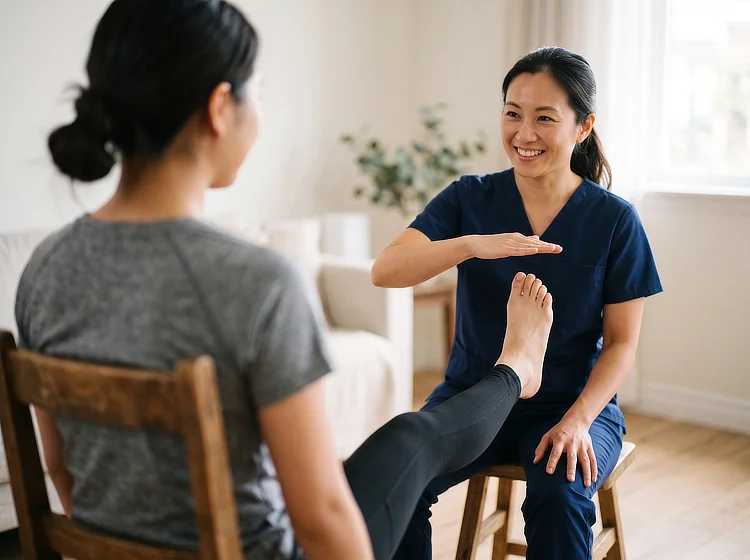
At Apex Sports Clinic, we offer physiotherapy at home, so you can receive treatment in
comfort and convenience when travelling to our clinic is difficult. Home
physiotherapy is also known as home-based physiotherapy, home care physiotherapy or a
physiotherapy home visit.
A home session can include the same assessment, hands-on treatment and exercises as a
session at our clinic. The main difference is the setting. Our physiotherapists can see how
you manage everyday movements in your own home, such as getting out of bed, standing up from
a chair or climbing stairs, and tailor exercises to your space and routine.
Home Physiotherapy with Apex Sports Clinic
1. Same Physiotherapists, at Home or in Clinic
The physiotherapists who treat patients at our clinic also provide home visits, so you receive the same assessment and treatment in your own home.
2. No Travel Surcharge
Each home visit is charged per 45-minute session, with no additional charge for the physiotherapist's travel.
3. Multidisciplinary Team
At Apex Sports Clinic, we are a multidisciplinary team of physiotherapists, sports medicine doctors and orthopaedic specialists, so a doctor can review your condition at our clinic if further assessment is needed.
Who Is Home Physiotherapy Suitable For?
Home physiotherapy is suitable for people whose age, recovery or pain makes travelling to a clinic difficult, including:
Physiotherapy for the elderly at home usually focuses on leg strength, balance and walking. Exercises like these can lower the risk of falls and make daily activities, such as getting up from a chair, easier to manage.
Walking and climbing stairs can be difficult for the first few weeks after a joint replacement, fracture surgery or other bone and joint surgery. Home physiotherapy allows rehabilitation to start before travelling is comfortable.
A stroke can weaken one side of the body and affect balance. Physiotherapy at home focuses on the movements you need every day, such as standing up, walking and using the affected arm, in the place where you use them.
Pain like this can make a journey by car or public transport difficult. Treatment at home can ease the pain and restore movement until a clinic visit becomes manageable.
 Unsure whether home physiotherapy is suitable for you or a family member? Book a consultation at our clinic or at home for
a treatment plan built around your condition and daily routine.
Meet Our Physiotherapists

BSc (Physiotherapy) (Hons I), Curtin University
Fully Registered Physiotherapist (AHPC, Singapore)
Languages: English and Mandarin
Sarita is a senior physiotherapist who treats musculoskeletal injuries across all ages and activity
levels.
She focuses on identifying the root cause of symptoms rather than treating pain alone, with a
particular interest in post-operative rehabilitation and exercise-based therapy.
Working alongside the orthopaedic and sports medicine team at Apex Sports Clinic, she helps
patients recover and return confidently to the activities they enjoy.

BSc (Physiotherapy), Curtin University
Fully Registered Physiotherapist (AHPC, Singapore)
Languages: English and Mandarin
Anna-Belle is a physiotherapist who treats sports injuries and persistent musculoskeletal pain, and
guides patients through rehabilitation after surgery.
She combines manual therapy, exercise and progressive strengthening, with a particular interest in
ankle conditions, frozen shoulder and post-operative rehabilitation.
Having experienced back pain and recurrent ankle sprains herself, she explains each injury clearly
and gives patients practical strategies to manage it as they return to exercise and sport.
What Happens During a Physiotherapy Home Visit?
Each physiotherapy home visit is a 45-minute session of treatment and exercises, and the first visit starts with an assessment if you have not already been assessed at our clinic:
1. Assessment (If You Are New to Us)
A review of your condition, medical history and goals, followed by checks of your pain, strength, joint movement and balance.
2. Treatment
Treatment depends on your condition and any recommendations from our doctors or specialists. It may include massage, gentle movement of stiff joints, and exercises to rebuild strength and balance using simple equipment such as resistance bands.
3. Home Exercise Programme
You may be given a set of exercises to do between visits, chosen to fit your home and daily routine. It is important to do them regularly as advised, as they build on the treatment from each session.
4. Follow-Up Visits
At subsequent visits, your physiotherapist reviews your progress and adjusts your exercises as you improve. The number of visits depends on your condition and goals, and you can continue at our clinic once travelling becomes easier.
Home physiotherapy lets patients start their rehabilitation with our clinic's own physiotherapists, even when travelling to us is still difficult. Building strength and confidence at home can help them return to their daily activities and stay independent.
Dr Foo Gen Lin
Home Physiotherapy Cost in Singapore
At Apex Sports Clinic, we offer private home physiotherapy and physiotherapy at our clinic, with prices as follows:
| Treatment & Service | Estimated Cost (SGD)* |
|---|---|
| Physiotherapy (Home Visit) | $272.50 per 45-minute session |
| Physiotherapy (At Our Clinic) | $212.55 per 45-minute session |
| Doctor Consultations | |
| Initial Consultation | From $200 |
| Follow-Up Consultation | From $150 |
*Prices listed above are estimates and may vary depending on the complexity of the condition, type of procedure, and other clinical considerations.
Where Is Apex Sports Clinic Located?
Apex Novena
Why Do Patients Choose Apex Sports Clinic?
Sports Doctor in Singapore: Personalised & Affordable Care
One-Stop Sports Clinic
We provide comprehensive care in one clinic, from consultation, imaging, and injections through to physiotherapy, sports massage, and surgery when needed.
Keyhole Surgery Expertise
We specialise in arthroscopic keyhole surgery to treat sports injuries with precision and minimal tissue disruption, supporting faster recovery and restored joint function.
Specialist in Sports Injury Management
We combine evidence-based injury management with a proactive approach to maintaining your body's strength and function, so you can recover fully and perform at your peak.
Patient Journey
1 . Schedule Your Appointment

2 . Expert Diagnosis & Consultation

3 . Customised Treatment Plan

Schedule an Appointment

Our Insurance Partners




Frequently Asked Questions (FAQs)
The main advantages of home physiotherapy are that no travel is needed and that treatment takes place where daily movements happen, such as getting out of bed or using the stairs. Exercises can also be chosen to fit the space and furniture at home. The disadvantages are a higher cost per session than at a clinic and less equipment, as treatments such as shockwave therapy and gait analysis (an assessment of how a person walks) are usually only available at a clinic. Despite this, many people still find home physiotherapy worthwhile when travelling to a clinic is difficult.
Physiotherapy exercises at home should be done as your physiotherapist has shown and advised, including the number of repetitions and how much effort to put in. Doing them at a set time each day can make them easier to keep up. Slow, controlled movements make it easier to hold each position as shown. A sturdy chair or wall nearby during balance exercises can reduce the risk of falling. Sharp pain, swelling or dizziness during an exercise is a reason to stop and check with your physiotherapist before continuing.
A doctor's referral is not usually needed for private home physiotherapy, as patients can book a physiotherapist directly. At Apex Sports Clinic, no referral is required for home visits. Contact us to arrange a consultation at our clinic or at home. A referral is generally needed for subsidised physiotherapy at public hospitals and polyclinics, and some insurance policies or employer medical benefits ask for one before they reimburse the cost. If you plan to make a claim, it is worth checking your policy's terms before the first session.
Physiotherapy is often the first-line treatment for leg pain, meaning the first treatment usually tried, and for more serious or complex conditions it is usually one part of a wider treatment plan. Pain from muscle strains, tendon problems, knee osteoarthritis (wear of the cartilage that cushions the joint) or sciatica (pain from an irritated nerve in the lower back) commonly improves with exercises and hands-on treatment. This wider plan may also include rest, pain medication, injections or surgery, depending on the cause. Leg pain caused by narrowed arteries, a blood clot or a fracture needs medical treatment first, and physiotherapy may help with recovery afterwards.
Yes, physical therapy, or physiotherapy, can be done at home through home visits by a physiotherapist. At Apex Sports Clinic, our physiotherapists offer home visits with the same assessment, hands-on treatment and exercises as a session at our clinic. Patients who attend sessions at a clinic are also usually given exercises to continue at home. Doing them between sessions can help maintain the progress made at each visit and rebuild strength and movement. It is best to discuss with a physiotherapist whether home visits or clinic sessions suit you, based on your condition and how easily you can travel.
Private physiotherapy is often worth paying for when quick access, a choice of physiotherapist or treatment at home matters more than cost. Subsidised physiotherapy is available at public hospitals and polyclinics, usually with a doctor's referral, but the wait for an appointment can be longer. Private physiotherapy can generally be booked directly without a referral, and some private clinics also offer home visits. At Apex Sports Clinic, our physiotherapy is $212.55 per 45-minute session at our clinic and $272.50 per 45-minute home visit, with no additional travel charge.
Home physical therapy exercises are commonly done two to seven days a week, depending on the type of exercise and the condition. Gentle stretches and exercises that keep a joint moving are often done daily, and sometimes several times a day after surgery. Strengthening exercises are often done two or three times a week, with a rest day in between so the muscles can recover. If you have been given a home exercise programme, always follow the schedule your physiotherapist sets, and ask them about adjusting it if the exercises increase your pain.