
Physiotherapy for Knee Pain in Singapore
Information reviewed by: Dr Foo Gen Lin | Last updated:
Struggling with knee pain when you walk, bend, or kneel? At Apex Sports Clinic, we identify what is causing your discomfort and build a treatment plan around it, often starting with physiotherapy, to relieve your pain and help you move with confidence again.

MBBS (University of London) | MMed (Ortho) | FRCSEd (Ortho) | FAMS (Ortho)

How Physiotherapy Helps Relieve Knee Pain
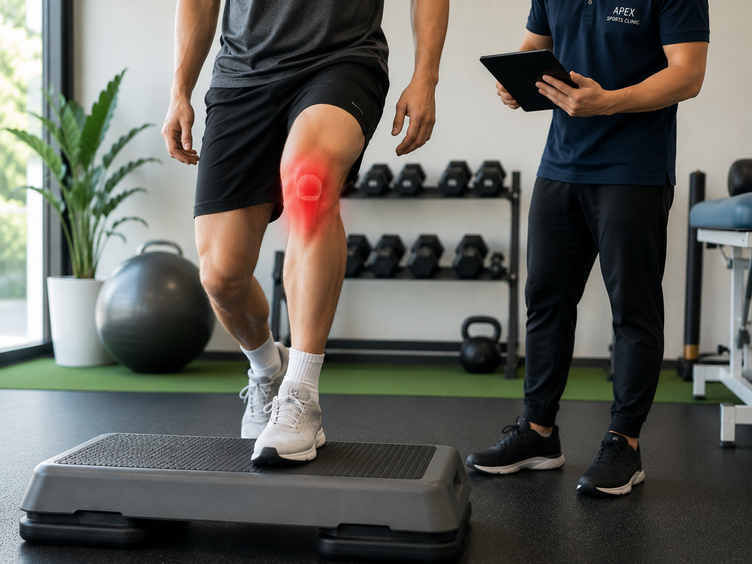
Physiotherapy helps relieve knee pain by strengthening the
muscles that support the joint, improving how the knee moves, and reducing the
strain placed on irritated or damaged tissue. Rather than masking pain, it addresses
the underlying mechanics that often cause it, which is why it is widely used as
a first-line treatment for many knee problems.
When the muscles around your knee are weak or imbalanced, the joint takes on more strain
than it is built to handle. Over time, this can aggravate cartilage, tendons, and ligaments.
A physiotherapist works to correct this by building strength in the quadriceps, hamstrings, and hip muscles, restoring flexibility, and retraining movement patterns so the knee functions with less stress. The aim is relief now and protection later. Many people notice less pain and easier movement within a few weeks, while the strength built through a structured programme can lower the chance of it returning.
Physiotherapy for Knee Pain at Apex Sports Clinic
At Apex Sports Clinic, we start by identifying what is driving your knee pain, then shape a
treatment plan around your condition, activity level, and recovery goals, usually beginning with
physiotherapy.
Here is what your journey looks like:
1. Comprehensive Knee Assessment
We review your medical history, symptoms, and daily activity, then carry out a physical examination and movement analysis to pinpoint the source of your knee pain. If a structural problem is suspected, imaging such as an X-ray, ultrasound, or MRI is arranged.
2. Personalised Rehabilitation Plan
Your programme is tailored to you, typically combining exercises, hands-on treatment, and activity guidance, with additional options such as shockwave therapy where appropriate. If further medical review is needed, we can coordinate with our orthopaedic knee specialist to ensure a seamless treatment journey.
3. Ongoing Support and Progress Review
We track your progress at each visit and adjust the programme as your knee improves, supporting a steady return to work, exercise, or sport.
Meet Our Physiotherapist

BSc (Physiotherapy) (Hons I), Curtin University
Fully Registered Physiotherapist (AHPC, Singapore)
Languages: English and Mandarin
Sarita is a senior physiotherapist who treats musculoskeletal injuries
across all ages and activity levels.
She focuses on identifying the root cause of symptoms rather than treating pain alone,
with a particular interest in post-operative rehabilitation and exercise-based therapy.
Working alongside the orthopaedic and sports medicine team at Apex Sports Clinic, she
helps patients recover and return confidently to the activities they enjoy.
Common Knee Pain Conditions We Manage with Physiotherapy
Physiotherapy can treat a wide range of knee conditions, particularly those linked to overuse, muscle imbalance, or wear in the joint. It is typically most effective for conditions where movement, strength, and load management play a central role in recovery.
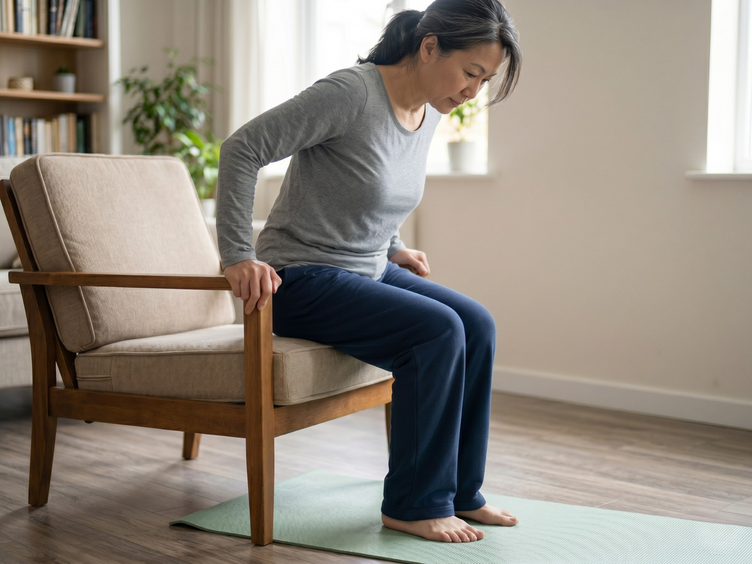
Knee Osteoarthritis
Osteoarthritis is the gradual breakdown of the cartilage that
cushions the knee joint, often related to ageing, previous injury, or repeated joint
stress. It typically causes stiffness, aching, and reduced mobility that worsen
after rest or activity.
Symptoms tend to develop slowly and may come and go before
becoming more constant, and many people find the knee feels stiffest first thing in the
morning or after long periods of sitting.
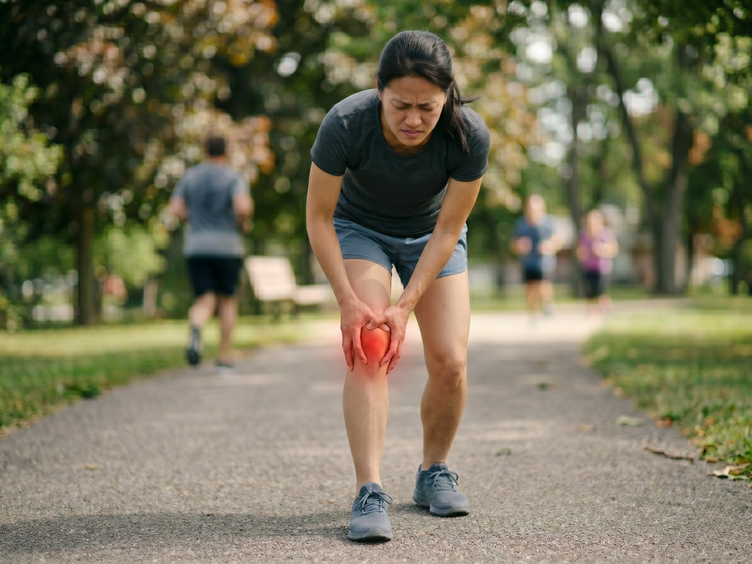
Patellofemoral Pain Syndrome (Runner's Knee)
Patellofemoral
pain syndrome causes a dull ache around or behind the kneecap, usually from
poor tracking of the kneecap within its groove. It often flares during squatting,
stair climbing, or long periods of sitting.
The condition is common among runners
and active people, though it can also affect those who are less active, particularly
when thigh or hip muscles are
weak.
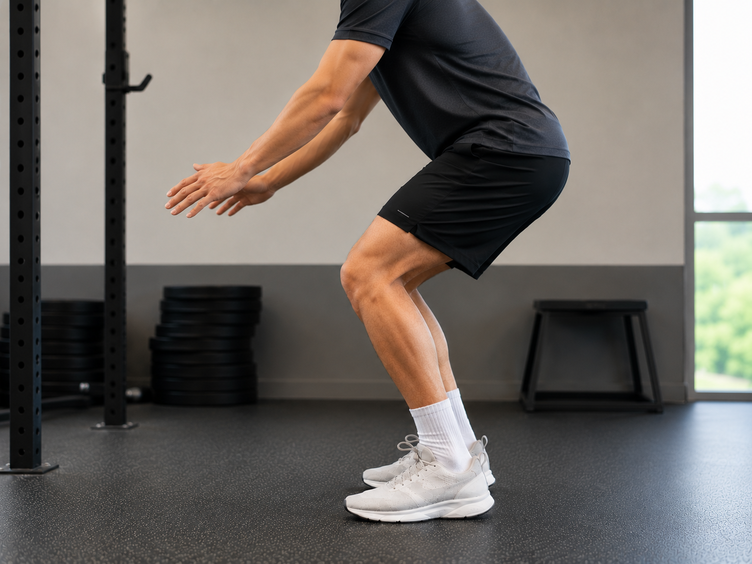
Patellar Tendinopathy (Jumper's Knee)
Patellar
tendinopathy is irritation or degeneration of the tendon just below the
kneecap, common in people who run, jump, or play sports with repeated loading. It
causes localised pain at the front of the knee that worsens under load.
The pain often eases with warming up but returns afterwards, and it can become
more persistent if the tendon is repeatedly stressed without adequate recovery.
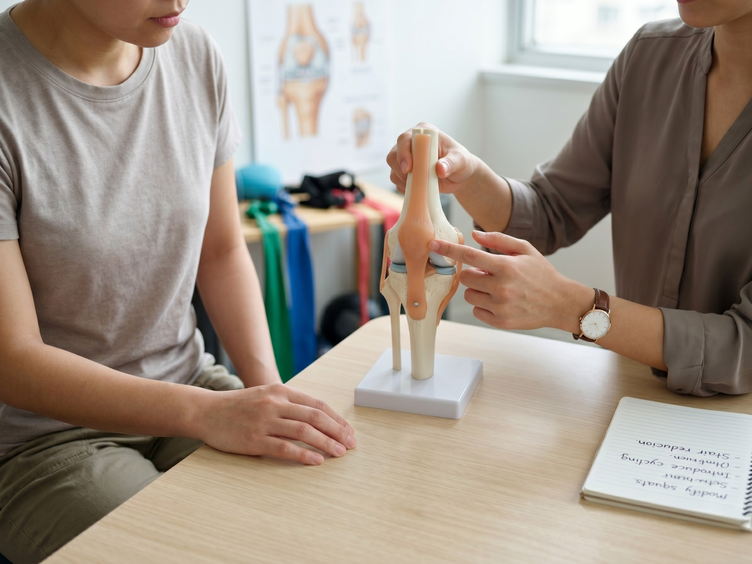
Meniscus and Ligament Injuries
The meniscus is a
C-shaped pad of cartilage that cushions the knee, and the ligaments stabilise it.
Tears or sprains often follow twisting, pivoting, or sudden impact, and can cause
pain, swelling, and a sense of instability.
Some injuries happen during sport or a fall, while others develop gradually as
the cartilage weakens with age, and the knee may catch, lock, or give way
depending on the type and extent of the damage.
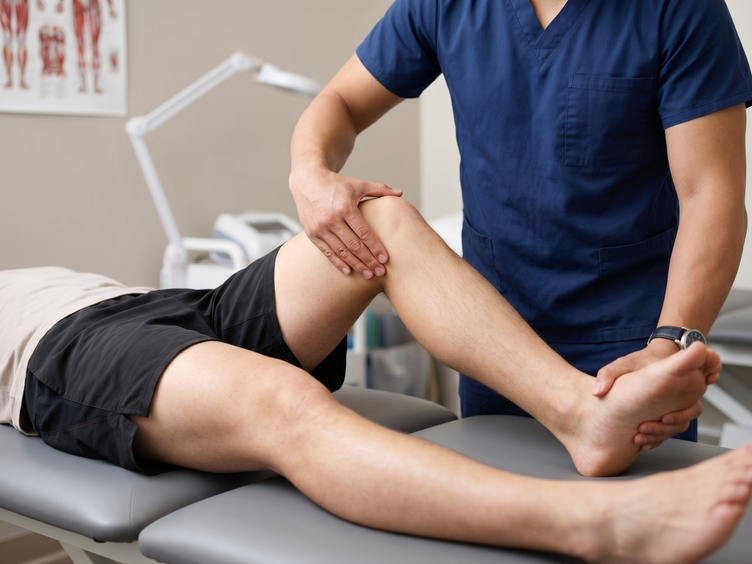
Post-Surgical Rehabilitation
Knee surgery, including procedures such as arthroscopy, anterior cruciate
ligament (ACL) reconstruction, meniscus repair, and
knee replacement
surgery, requires structured rehabilitation to recover movement and
strength. Without it, stiffness and weakness can limit the result of the operation.
Rehabilitation needs vary with the procedure and the individual, and a structured
plan helps restore confidence in the knee as well as physical function.
Knee Pain and Related Symptoms
Knee pain symptoms vary with the cause, and where the pain sits often points towards what is
behind it.
Pain at the front of the knee, around or behind the kneecap, is commonly
linked to patellofemoral pain or tendon irritation, while pain on the inner or outer side, or deep
within the joint, more often relates to cartilage, meniscus, or ligament problems.
Alongside pain, you may notice:
- Stiffness after rest or first thing in the morning
- Swelling, warmth, or a feeling of tightness in the joint
- Discomfort that worsens with stairs, squatting, kneeling, or prolonged sitting
- Reduced ability to fully straighten or bend the knee
- Weakness, or a sense that the knee is not fully supporting you
Some symptoms point towards a possible structural problem that may require medical assessment before starting rehabilitation. Seek a doctor's review if your knee locks, gives way, cannot bear weight, or is significantly swollen after an injury, as these may indicate damage that needs diagnosis first.
 Struggling with knee pain? Book a consultation with
our friendly physiotherapist for an assessment and a treatment plan to help you get back to your
activities comfortably.
Struggling with knee pain? Book a consultation with
our friendly physiotherapist for an assessment and a treatment plan to help you get back to your
activities comfortably.
Physiotherapy Treatment Options for Knee Pain
Physiotherapy for knee pain combines several treatment approaches, typically built aroundexercise
and supported by hands-on techniques, movement guidance, and external aids where
needed.
Which approaches are used depends on your condition, and the plan is adjusted as your knee responds
to treatment.
Education and Activity Modification
Education and activity modification involves understanding what aggravates your knee and adjusting
how you move, work, and train accordingly. This is often the first step in managing knee pain.
Guidance on activity levels, footwear, and daily habits helps settle symptoms and creates the
conditions for other treatments to work.
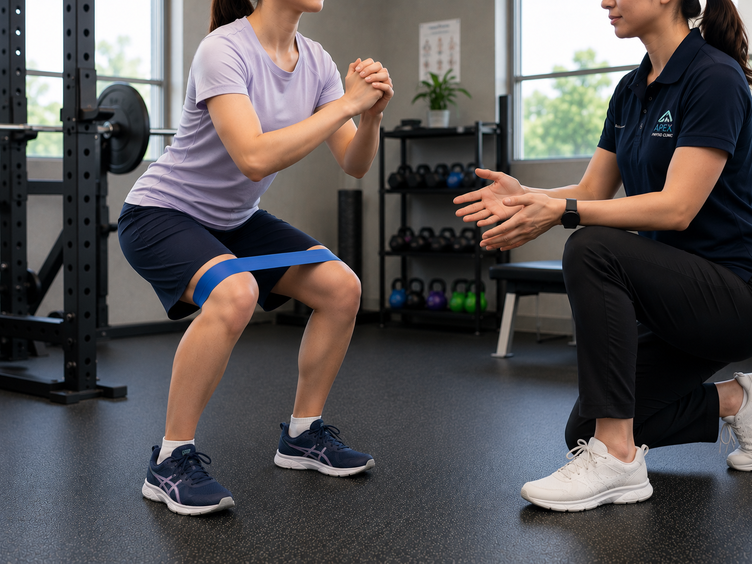
Exercise Therapy
Exercise therapy is the structured use of strengthening
and mobility exercises to support the knee. It forms the core of most knee
programmes and is where lasting progress usually comes from.
By targeting the quadriceps, hamstrings, and hip muscles that support the joint, it builds
the strength and control needed to handle daily movement with less stress.
Manual Therapy
Manual therapy is hands-on treatment using joint mobilisation and soft tissue techniques to ease stiffness and improve range of motion. It is typically used alongside exercise rather than on its own. Easing stiffness in this way can help the knee move more freely as strength is rebuilt.
Gait and Movement Retraining
Gait and movement retraining is the process of correcting how you walk, squat, or land to reduce uneven stress through the knee. How you move plays a large part in how the joint is loaded day to day. Small changes to these habits can take pressure off irritated tissue and lower the chance of the pain returning.
Taping and Bracing
Taping and bracing are external supports that stabilise the knee and reduce strain during activity and recovery. They are often used during flare-ups or while strength is being rebuilt. These are usually short-term measures that complement strengthening, not replacements for it.
Shockwave Therapy
Shockwave therapy is a treatment that delivers energy pulses to affected tissue and, for some tendon-related conditions, may support healing alongside exercise. It is typically considered when symptoms have not settled with exercise alone. It is generally regarded as an add-on to an active programme rather than a standalone treatment.
When to Seek Medical Evaluation for Knee Pain
You should seek assessment for knee pain when it is ongoing, limits your activities, or
follows a minor strain that has not settled with rest.
Consider seeking medical assessment if you notice any of the following:
- Knee pain that lasts more than a week or keeps returning
- Stiffness or reduced movement that affects daily activities
- Pain during specific movements such as squatting, climbing stairs, or kneeling
- Weakness or a sense that the knee is not fully supported
Early assessment often leads to a quicker recovery and prevents a minor issue from becoming long-term.
Cost of Physiotherapy Services for Knee Pain
At Apex Sports Clinic, we provide physiotherapy for knee pain, with orthopaedic specialist services available when additional evaluation or treatment is needed. The fees for our services are as follows:
| Treatment & Service | Estimated Cost (SGD)^* |
|---|---|
| Consultation & Assessment | |
| Physiotherapy | $212.55 per 45-minute session |
| Physiotherapy (Home Visit) | $272.50 per 45-minute session |
| Diagnostic Services | |
| X-Ray | From $100 |
| MRI Scan | From $1,000 |
| Ultrasound Imaging | From $100 |
| Gait Analysis | From $200 per session |
| Non-Invasive Treatments | |
| Sports Massage / Conditioning | From $160 per session |
| Shockwave Therapy | From $100 per session |
| Bracing / Casting / Splinting | From $300 |
^Last updated: 2026-08-19
*Prices listed above are estimates and may vary depending on the complexity of the condition,
type of procedure, and other clinical considerations.
For treatments or services not listed above, please contact us to enquire further.
Physiotherapy plays a central role in managing knee pain because it targets the strength and movement patterns behind many knee problems. For many patients, it offers a way to relieve pain and restore function without surgery.
Dr Foo Gen Lin
Book a Physiotherapy or Orthopaedic Consultation for Knee Pain
Apex Novena
Why Do Patients Choose Apex Sports Clinic?
Sports Doctor in Singapore: Personalised & Affordable Care
One-Stop Sports Clinic
We provide comprehensive care in one clinic, from consultation, imaging, and injections through to physiotherapy, sports massage, and surgery when needed.
Keyhole Surgery Expertise
We specialise in arthroscopic keyhole surgery to treat sports injuries with precision and minimal tissue disruption, supporting faster recovery and restored joint function.
Specialist in Sports Injury Management
We combine evidence-based injury management with a proactive approach to maintaining your body's strength and function, so you can recover fully and perform at your peak.
Patient Journey
1 . Schedule Your Appointment

2 . Expert Diagnosis & Consultation

3 . Customised Treatment Plan

Schedule an Appointment

Our Insurance Partners




Frequently Asked Questions (FAQs)
For knee pain, a physiotherapist will assess how your knee moves, identify the underlying causes and contributing factors behind your symptoms, and create a rehabilitation plan tailored to your condition. Treatment often includes strengthening exercises, movement retraining, hands-on therapy, and advice on daily activities to help reduce strain on the knee and improve function.
A doctor or physiotherapist may both play a role in managing knee pain, depending on the cause of your symptoms. Physiotherapy is commonly used to improve strength, movement, and function, while doctors can diagnose knee conditions, arrange investigations when needed, and recommend appropriate treatment options. If you are unsure where to start, a doctor can assess your knee and advise whether physiotherapy is likely to help.
Physiotherapy can often improve or resolve knee pain caused by movement problems, muscle weakness, tendon irritation, or certain joint conditions, but recovery outcomes depend on the underlying cause. Some conditions require ongoing management rather than a permanent cure, and treatment is usually aimed at reducing symptoms, improving function, and supporting long-term knee health.
Physiotherapy can help reduce knee pain for many conditions by improving strength, flexibility, and movement patterns that may be contributing to stress on the joint. It is often used as a first-line treatment for knee pain, although the extent of improvement depends on the underlying condition and some problems may require a combination of approaches. Many people notice gradual improvement as rehabilitation progresses, particularly when exercises and activity modifications are followed consistently.
Physiotherapy exercises for knee pain can often be performed at home once you have been shown how to do them correctly by your physiotherapist. A home exercise programme is commonly used alongside clinic-based treatment, although the exercises should be matched to your condition and current stage of recovery. If you are experiencing knee pain, it is important to ensure the exercises are appropriate for any underlying conditions or injuries, as unsuitable exercises may aggravate symptoms.
A physiotherapist can often help with knee pain by identifying contributing factors such as muscle weakness, stiffness, movement habits, or tendon irritation and addressing them through rehabilitation. Physiotherapy is commonly used for conditions including knee osteoarthritis, runner's knee, tendon injuries, and recovery after knee surgery. Treatment is typically aimed at reducing symptoms, improving function, and helping you return to daily activities with greater confidence.
There is no single physiotherapy treatment that suits every type of knee pain. Exercise therapy is often the foundation of treatment, while approaches such as manual therapy, movement retraining, taping, or shockwave therapy may be added depending on the underlying condition and your individual needs. A physiotherapy assessment can help determine which combination of treatments is most appropriate for your situation.
Physiotherapy session costs in Singapore vary depending on the clinic, the therapist's experience, and the treatments provided during the appointment. At Apex Sports Clinic, we charge $212.55 for a 45-minute physiotherapy session and $272.50 for a 45-minute home visit. We are also on the panels of selected insurers and healthcare networks, including Alliance Medinet, Fullerton Health, iXchange, IHP, MHC, Prudential, Great Eastern, and Raffles Health Insurance.
Fruit does not directly strengthen knee ligaments, but fruits rich in vitamin C, such as oranges, kiwi fruit, strawberries, and guava, support collagen production, which is an important component of ligaments and other connective tissues. A balanced diet that includes a variety of fruits and vegetables is generally more beneficial than focusing on any single food.
Red flags in knee pain include an inability to bear weight, significant swelling after an injury, locking of the knee, a feeling that the knee is giving way, severe pain, or signs of infection such as redness, warmth, and fever. If any of these symptoms occur, prompt medical assessment is recommended to identify whether a more serious injury or condition is present.
Knee physiotherapy duration varies depending on the condition, its severity, and your recovery goals. Some people notice improvement within a few weeks, while more complex problems such as ligament injuries or post-surgical rehabilitation may require several months of treatment. If progress is slower than expected, reviewing the diagnosis and treatment plan can help clarify the next steps.
You should consider seeing a physiotherapist for knee pain if your symptoms persist, keep returning, affect daily activities, or limit exercise and sport. It can also be helpful if you notice stiffness, weakness, reduced movement, or discomfort during activities such as walking, climbing stairs, squatting, or kneeling. Early assessment can help identify factors contributing to the pain and guide appropriate rehabilitation before symptoms become more persistent.
There is no single mistake that makes all knee conditions worse, as the cause of knee pain varies between individuals. However, repeatedly pushing through significant pain without understanding what is causing it can aggravate symptoms and delay recovery. Depending on the situation, it may help to temporarily reduce or avoid activities that worsen the pain. If symptoms persist despite rest or activity modification, consider having them assessed by a doctor.
Signs of a serious knee problem can include severe swelling, inability to bear weight, significant instability, locking of the joint, marked loss of movement, or pain following a major injury. These symptoms may indicate damage to structures within the knee and should be assessed promptly to determine whether further investigation or treatment is needed.
Knee joint lubrication is produced naturally within the joint and cannot be directly increased through a specific food, supplement, or home remedy. Regular movement, appropriate exercise, staying hydrated, and maintaining a healthy body weight may support overall joint health and help the knee move more comfortably. For some knee conditions, treatments such as hyaluronic acid (gel) injections may be used to supplement the lubricating properties of the fluid within the joint.
No single food has been proven to worsen all types of knee pain, but diets high in heavily processed foods, sugary drinks, and excess calories may contribute to inflammation and weight gain, which can place additional strain on the knee joint. Focusing on a balanced diet is generally more helpful than avoiding any one food.
Knee pain relief depends on the underlying cause, and there is rarely a single treatment that provides immediate and lasting improvement. Rest, activity modification, and other measures may help settle symptoms in the short term. For longer-term improvement, physiotherapy is often used to address factors such as muscle weakness, stiffness, and movement patterns that may be contributing to the pain. If knee pain persists or keeps returning, it is worth having it assessed to identify the cause and appropriate treatment options.