
Epidural Steroid Injection: For Back and Neck Pain
Information reviewed by: Dr Foo Gen Lin | Last updated:
Dealing with persistent back or neck pain caused by nerve compression? Dr Foo provides epidural steroid injections to deliver targeted relief and support your recovery among other treatments.

MBBS (University of London) | MMed (Ortho) | FRCSEd (Ortho) | FAMS (Ortho)

What Is an Epidural Steroid Injection?
An epidural steroid injection (ESI) is a non-surgical spinal procedure that delivers corticosteroid medication directly into the epidural space of the spine to reduce inflammation and ease pain caused by compressed or irritated nerve roots.

The epidural space lies between the protective membrane covering the spinal cord, known as
the dura, and the vertebral bones. By placing
medication directly into this area, an ESI targets the source of nerve irritation more
precisely than oral medication.
The injection usually contains a corticosteroid and a local anaesthetic. The steroid reduces
inflammation around affected nerve roots, while the anaesthetic may provide temporary pain
relief.
Together, they help ease symptoms such as lower back pain, sciatica, neck pain, or arm pain
caused by nerve compression.
Types of Epidural Steroid Injections
There are three main approaches, each suited to different spinal regions and conditions:
- Interlaminar epidural injection — the most commonly used approach, where the needle is inserted between two vertebrae into the epidural space. It delivers medication over a broader area and is frequently used for lumbar and cervical conditions.
- Transforaminal epidural injection — a more targeted approach where the needle is guided to a specific nerve root through the neural foramen, the opening where the nerve exits the spine. This may be preferred when a single nerve root is identified as the source of pain.
- Caudal epidural injection — Performed through the sacral hiatus near the tailbone. It is typically used for lower lumbar conditions and may be considered when interlaminar access is difficult, such as after prior spinal surgery.
What Conditions Can Epidural Injections Treat?
Epidural steroid injections are used to manage pain caused by spinal nerve compression or irritation. They are commonly considered when conservative treatments such as rest, physiotherapy, and oral anti-inflammatory medications have not provided sufficient relief.
Sciatica
Sciatica refers to pain that radiates along the sciatic nerve, typically from the lower back
through the buttock and down one leg. It is usually caused by a herniated disc or bone spur
pressing on a nerve root in the lumbar spine.
How epidural injections may help: A transforaminal or interlaminar injection
targets the inflamed nerve root responsible for the radiating leg pain, reducing swelling and
easing symptoms. For milder cases, simple strategies such as gentle exercises and posture correction may also help manage ongoing discomfort.
Herniated or Slipped Disc
A herniated
disc occurs when the soft inner material of a spinal disc pushes through a tear in
its outer layer and presses on a nearby nerve. This can cause pain, numbness, or weakness in
the back, leg, or arm depending on which part of the spine is affected.
How epidural injections may help: The corticosteroid reduces inflammation
around the compressed nerve root, helping to relieve pain and improve function while the
disc heals or the body adapts.
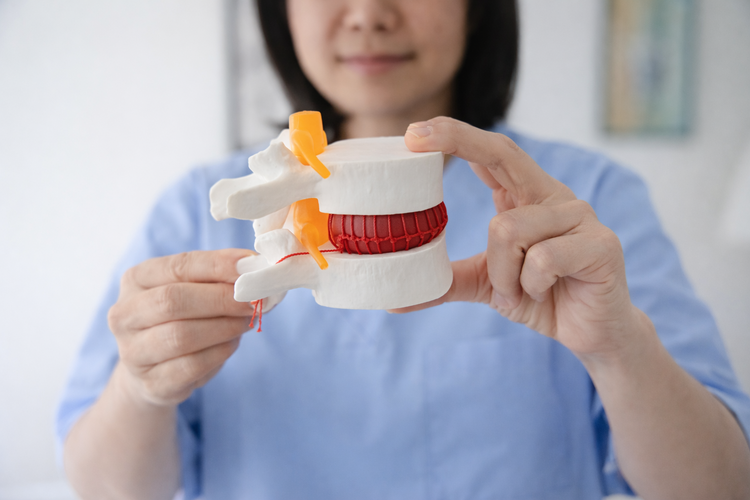
Spinal Stenosis
Spinal stenosis is a narrowing of the
spinal canal that puts pressure on the spinal cord and nerve roots. It most commonly affects the
lumbar or cervical spine and tends to develop gradually with age.
How epidural injections may help: By reducing inflammation within the narrowed
canal, the injection can relieve pressure on the affected nerves and improve comfort,
particularly during walking and standing.
Cervical Radiculopathy (Neck Nerve Pain)
Cervical radiculopathy occurs when a nerve in the neck
becomes compressed or irritated, often at the C5–C6 or C6–C7 levels. This can cause pain,
tingling, or weakness that radiates into the shoulder, arm, or hand.
How epidural injections may help: A cervical epidural injection delivers
anti-inflammatory medication around the affected nerve root, helping to reduce swelling and
relieve arm and hand symptoms.
 Experiencing persistent back pain, sciatica, or neck
pain with numbness or tingling? Consult our
spine specialists
for a thorough evaluation and personalised treatment plan.
Experiencing persistent back pain, sciatica, or neck
pain with numbness or tingling? Consult our
spine specialists
for a thorough evaluation and personalised treatment plan.
What to Expect During an Epidural Injection

An epidural steroid injection is a minimally invasive procedure performed
under fluoroscopy (live X-ray) to guide accurate needle placement.
During the procedure:
- You will lie face down or sit leaning forward, depending on the injection site.
- The skin is cleaned and numbed with a local anaesthetic.
- A thin needle is guided into the epidural space using live X-ray imaging. Contrast dye may be used to confirm correct positioning.
- The corticosteroid and local anaesthetic are slowly injected. You may feel brief pressure or mild tingling during this step.
The procedure typically takes about 15 to 30 minutes, followed by a short
observation period.
Most patients return home on the same day. Temporary numbness or weakness in the arms or legs
may occur due to the local anaesthetic and usually resolves within a few hours. You may be
advised to rest and avoid driving for the remainder of the day, and to avoid strenuous activity
for 24 to 48 hours.
Pain relief from the steroid component typically takes 2 to 7 days to take full
effect. If the local anaesthetic provides immediate but temporary relief, this can help confirm
that the correct nerve was targeted.
How Long Does an Epidural Injection Last?
Pain relief from an epidural steroid injection typically lasts several weeks to a
few months, although the duration varies between individuals. Some patients
experience longer relief, especially when the injection is combined with physiotherapy
and activity modification.
If the first injection provides partial but meaningful relief, a repeat injection may be
considered after an appropriate interval, usually 2 to 4 weeks.
The goal is not to cure the underlying condition but to reduce
inflammation and create a window for rehabilitation, allowing you to
participate more effectively in physiotherapy and recovery.

Potential Side Effects and Risks
Epidural steroid injections are widely used and generally well tolerated, but like
any medical procedure, they carry some risks. Side effects are usually mild and temporary.
Common side effects include:
- Temporary pain at the injection site for 1 to 2 days
- Short-lived numbness or weakness in the arms or legs due to the local anaesthetic
- Mild headache
- Facial flushing or a sensation of warmth
Less common side effects include temporary elevation of blood sugar, short-term
insomnia or mood changes, and mild fluid retention. Rare but serious risks include
infection, nerve injury, and allergic reaction to the injected medication.
Repeated corticosteroid injections are usually limited, often to no more than 3 to 4 per year in the
same area, as cumulative steroid exposure may affect bone density and surrounding soft tissues over
time.
Disclaimer: This is not a comprehensive list of all possible side effects or risks. You should discuss the potential benefits and risks in detail with your specialist, based on your individual condition and medical history.
Epidural Injection vs Other Pain Management Options
An epidural steroid injection is one of several treatment options for managing spine-related back
and neck pain caused by nerve compression.
The most suitable approach depends on the source and severity of your pain, how long
symptoms have persisted, and your response to conservative treatment.
| Treatment | How It Works | Duration of Relief | Considerations |
|---|---|---|---|
| Non-Surgical Treatment | |||
| Epidural Steroid Injection | Corticosteroid delivered into the epidural space to reduce inflammation around spinal nerves | Weeks to months; may be repeated up to 3 to 4 times per year | Non-surgical; suitable for nerve-related back, neck, and leg pain |
| Oral Medication | Anti-inflammatory drugs, analgesics, or nerve pain medication taken by mouth | Hours to weeks | Non-invasive; may not adequately relieve significant nerve compression |
| Selective Nerve Root Block | Local anaesthetic and steroid injected around a specific nerve root under imaging guidance | Days to weeks | Often used diagnostically to confirm the pain source |
| Cortisone Injection (Joint) | Corticosteroid injected into a joint or soft tissue to reduce localised inflammation | Weeks to months | Suitable for joint or tendon conditions; not designed for spinal nerve compression |
| Radiofrequency Ablation (RFA) | Radiofrequency energy is used to disrupt pain signals from small facet joint nerves | 6 months to over a year in selected patients | Used for chronic facet joint pain confirmed by diagnostic blocks; not suitable for disc-related nerve compression |
| Physiotherapy | Targeted exercises and manual therapy to improve strength, flexibility, and spinal mechanics | Gradual improvement over weeks to months | Often used as a complementary treatment; improves strength and movement but does not provide immediate pain relief and requires active participation |
| Surgical Intervention | |||
| Nucleoplasty | Radiofrequency energy used to reduce disc material pressing on a nerve | Months to years | Minimally invasive surgical procedure for selected contained disc herniations |
| Spine Surgery | Surgical decompression or stabilisation of the affected spinal segment | Long-term relief in selected cases | Considered for severe, progressive, or persistent symptoms not responding to non-surgical care |
Epidural Injection Cost in Singapore
At Apex Sports Clinic, we provide a range of pain management options as part of a comprehensive treatment plan to support your recovery and functional improvement. Our prices are as follows:
| Treatment | Estimated Cost (SGD) |
|---|---|
| Consultation & Assessment | |
| Initial Consultation | From $200 |
| Follow-Up Consultation | From $150 |
| Injection-Based Treatments | |
| Epidural Steroid Injection | From $3,000 |
| Cortisone Injection | From $250 per injection |
| Non-Invasive Treatments | |
| Physiotherapy | $212.55 per 45-min session |
| Physiotherapy (Home Visit) | $272.50 per 45-min session |
MediSave may be used for selected approved spine procedures, including epidural steroid injections, subject to your diagnosis and eligibility under Ministry of Health guidelines. For more information on MediSave claims and eligibility, please contact our clinic for assistance.
Epidural steroid injections may provide relief for nerve-related spine pain when conservative treatment is insufficient. We assess each case carefully to ensure it is appropriate and aligned with your overall treatment plan.
Dr Foo Gen Lin
Find an Orthopaedic Specialist in Singapore
Apex Novena
Why Do Patients Choose Apex Sports Clinic?
Sports Doctor in Singapore: Personalised & Affordable Care
One-Stop Sports Clinic
We provide comprehensive care in one clinic, from consultation, imaging, and injections through to physiotherapy, sports massage, and surgery when needed.
Keyhole Surgery Expertise
We specialise in arthroscopic keyhole surgery to treat sports injuries with precision and minimal tissue disruption, supporting faster recovery and restored joint function.
Specialist in Sports Injury Management
We combine evidence-based injury management with a proactive approach to maintaining your body's strength and function, so you can recover fully and perform at your peak.
Patient Journey
1 . Schedule Your Appointment

2 . Expert Diagnosis & Consultation

3 . Customised Treatment Plan

Schedule an Appointment

Our Insurance Partners




Frequently Asked Questions (FAQs)
No, an epidural steroid injection is not the same as a standard cortisone injection. An epidural steroid injection delivers corticosteroid medication into the epidural space around spinal nerves to treat nerve compression, while a cortisone injection is usually placed directly into a joint or soft tissue to reduce local inflammation. The location and intended purpose of the injection differ depending on the underlying condition.
Most guidelines recommend limiting epidural steroid injections to about three to four per year in the same spinal region. This helps reduce the risk of cumulative corticosteroid exposure, which may affect bone density and surrounding tissues over time. The exact number depends on your diagnosis, response to previous injections, and overall health, so it is advisable to discuss a personalised plan with your orthopaedic specialist.
Epidural steroid injections are generally associated with mild discomfort rather than significant pain. The skin is numbed with a local anaesthetic, and you may feel brief pressure or tingling during the injection. Some patients experience temporary soreness at the injection site for one to two days. If you are concerned about discomfort during the procedure, it is best to discuss this with your orthopaedic specialist beforehand.
Yes, epidural steroid injections may help relieve sciatica caused by inflammation or compression of a lumbar nerve root. By delivering corticosteroid medication directly around the affected nerve, the injection aims to reduce swelling and ease radiating leg pain. Relief may last from weeks to months, depending on the underlying cause.
Before an epidural injection, you may be advised to stop certain medications, particularly blood thinners, depending on your medical history. Inform your specialist about any medical conditions, allergies, or current medications. Instructions may vary based on your health status and whether sedation is planned, so always follow the specific guidance provided by your treating doctor.
You should typically avoid strenuous exercise on the day of the epidural injection and typically for 24 to 48 hours afterwards. Light activities may resume once any temporary numbness or weakness has resolved. Gradual return to exercise is often encouraged as part of rehabilitation. If you experience worsening pain or new symptoms after activity, it is advisable to consult your specialist for prompt evaluation.
An epidural steroid injection is used to relieve back or neck pain caused by inflammation or compression of spinal nerves. It is commonly considered for conditions such as sciatica, herniated discs, spinal stenosis, and cervical radiculopathy when conservative treatment has not provided sufficient relief. The goal is to reduce nerve inflammation and create a window for rehabilitation rather than to cure the underlying condition.
The risks of an epidural steroid injection include temporary pain at the injection site, numbness, mild headache, and facial flushing. Less commonly, patients may experience elevated blood sugar or short-term mood changes. Rare but serious risks include infection, nerve injury, or allergic reaction. Your specialist will review your medical history and discuss whether the potential benefits outweigh the risks in your specific case.
Epidural injections are generally not very painful, as the skin is numbed with a local anaesthetic before the procedure. You may feel brief pressure or tingling during the injection and mild soreness afterwards. Most discomfort is temporary and resolves within a few days. If you are anxious about pain, it is advisable to discuss your concerns with your specialist beforehand.
If epidural injections do not provide sufficient relief, the next step depends on the underlying diagnosis and severity of symptoms. Options may include further imaging, alternative injections, radiofrequency ablation for facet joint pain, or surgical evaluation in selected cases. It is best to discuss with your spine specialist to determine the most appropriate treatment plan based on your response to epidural injections.
There is no single best injection for back pain, as the most suitable option depends on the underlying cause. Epidural steroid injections are commonly used for nerve-related pain such as sciatica, while facet joint, sacroiliac joint, medial branch, or trigger point injections may be considered for joint or muscle-related pain. It is best to discuss with your specialist, who can recommend the most appropriate approach based on your symptoms, diagnosis, and medical history.
Epidural steroid injections may not be suitable for individuals with active infection, uncontrolled bleeding disorders, certain allergies to the medications used, or poorly controlled diabetes. Caution may also be required for patients on blood-thinning medication. Your specialist will review your medical history and current medications to determine whether the procedure is appropriate.
Yes, most patients can walk after an epidural steroid injection once any temporary numbness or weakness has resolved. Light walking is generally acceptable, but strenuous activity should be avoided for 24 to 48 hours. You should also avoid driving on the day of the procedure. If you experience persistent weakness, worsening pain, or new symptoms, it is advisable to seek medical attention promptly.