
Trigger Finger: Causes, Symptoms, and Treatment
Information reviewed by: Dr Foo Gen Lin | Last updated:
Experiencing finger stiffness or locking? Dr Foo Gen Lin provides detailed assessment of trigger finger and offers personalised treatment to help restore normal hand function and comfort.

MBBS (University of London) | MMed (Ortho) | FRCSEd (Ortho) | FAMS (Ortho)

What Is Trigger Finger?
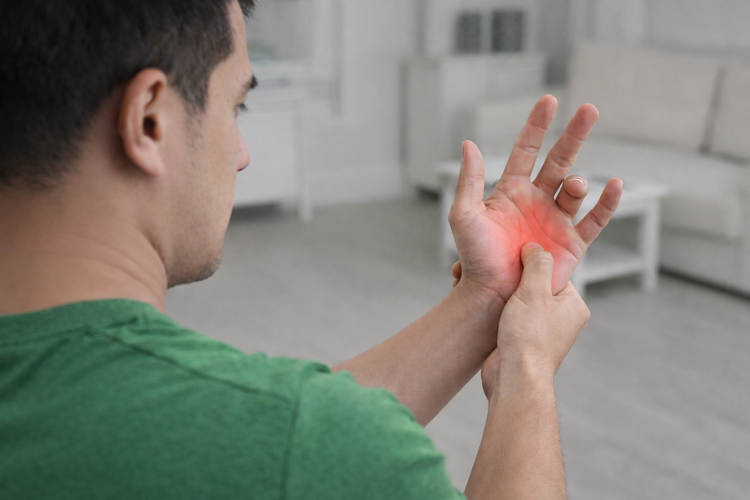
Trigger finger is a condition where a finger or thumb gets stuck in a bent position and may
straighten with a snap or click, similar to pulling and releasing a trigger. It occurs due
to stenosing tenosynovitis, a condition in which the flexor tendon sheath
becomes narrowed, affecting smooth finger movement.
Each finger has flexor tendons that run through a series of small tunnels called tendon sheaths. These sheaths are secured by
bands of tissue known as pulleys. When narrowing occurs at the A1 pulley,
the tendon cannot glide smoothly, leading to catching or locking.
Trigger finger most commonly affects the ring finger and thumb (trigger thumb), but it can occur in any finger. It can develop in one or more fingers at the same time, and may affect one or both hands.
What Causes Trigger Finger?
Trigger finger is caused by inflammation or thickening of the flexor tendon sheath,
which narrows the space the tendon needs to move freely.
This irritation can result from a combination of factors, including:
- Repetitive gripping or grasping motions from activities such as prolonged tool use, racquet sports, or musical instruments
- Medical conditions such as diabetes, rheumatoid arthritis, and gout, which increase the likelihood of tendon inflammation
- Hormonal changes during menopause or pregnancy, which may contribute to soft tissue swelling
- Previous hand injuries or surgery that caused scarring or swelling near the tendon sheath
Trigger finger is more common in women and typically affects adults between 40 and 60 years of age. People whose work or hobbies involve sustained or forceful gripping are also at higher risk.
Trigger Finger Symptoms
The main symptoms of trigger finger include stiffness, clicking, and a catching or locking sensation when bending or straightening the affected finger. Symptoms typically develop gradually and tend to be worse in the morning or after periods of inactivity. Common signs include:
- Stiffness in the finger, particularly when waking up
- A clicking or popping sound when moving the finger
- Pain when gripping or bending the finger
- Locking of the finger in a bent position followed by sudden snapping straight
- A tender lump or nodule at the base of the finger on the palm side
- In more advanced cases, the finger may become stuck in a bent position and require assistance from the other hand to straighten
If left untreated, ongoing inflammation and thickening of the tendon sheath can increasingly restrict tendon movement, and over time this reduced motion may lead to permanent joint stiffness.
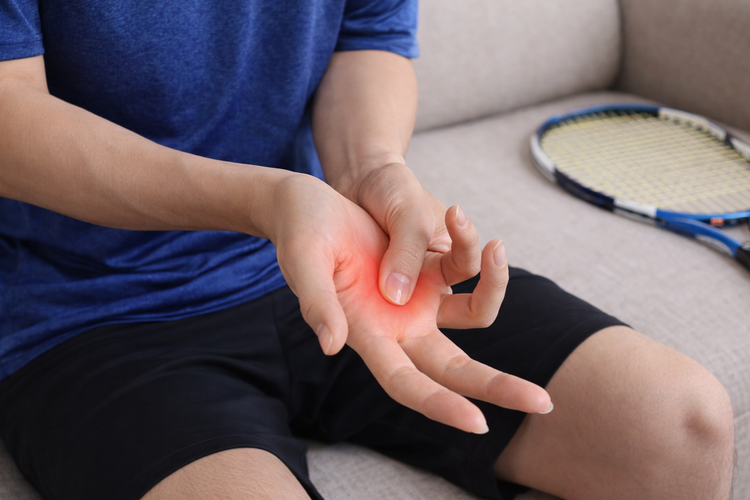
Trigger Finger Grades
Trigger finger is classified into four grades based on severity, which helps guide treatment decisions.
| Grade | Signs and Symptoms |
|---|---|
| Grade 1 (Pre-triggering) |
|
| Grade 2 (Active triggering) |
|
| Grade 3 (Locked triggering) |
|
| Grade 4 (Fixed contracture) |
|
Earlier grades often respond to non-surgical treatment such as splinting or corticosteroid injections, while Grades 3 and 4 are more likely to require surgical release.
 Is your finger catching or locking when you bend it, affecting your daily
activities? Consult our
hand specialists for a thorough
assessment and personalised treatment options to help restore hand function.
Is your finger catching or locking when you bend it, affecting your daily
activities? Consult our
hand specialists for a thorough
assessment and personalised treatment options to help restore hand function.
How Is Trigger Finger Diagnosed?
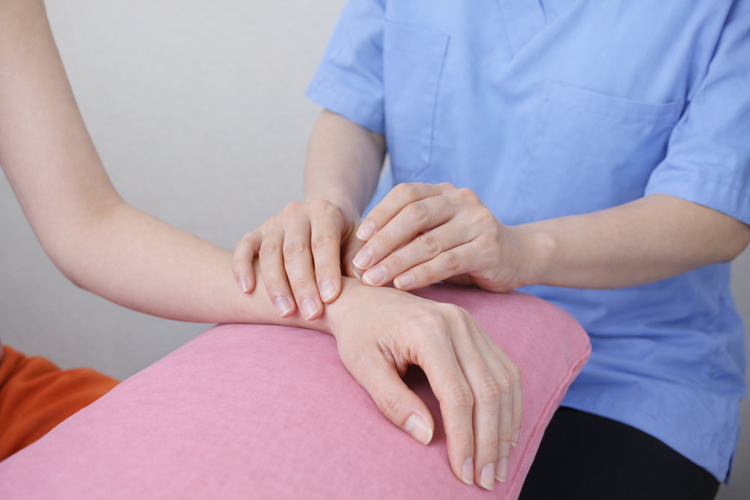
Trigger finger is diagnosed through a clinical examination of the hand, and imaging is not required in most cases. The evaluation typically includes:
- A review of symptoms and medical history, including the onset of catching or locking and any aggravating activities
- Palpation of the base of the affected finger to check for a tender nodule
- Observation of finger movement during opening and closing of the hand to assess triggering or locking
- Assessment of range of motion and degree of stiffness
In some cases, ultrasound imaging may be used to visualise thickening of the tendon sheath or to exclude other conditions such as De Quervain's tenosynovitis or carpal tunnel syndrome, which can present with similar hand and wrist symptoms.
How Is Trigger Finger Treated?
Treatment for trigger finger depends on the severity of symptoms and how long they have been present. Milder cases are usually managed with non-surgical methods, while persistent or locked fingers may require surgery.
| Treatment | Description |
|---|---|
| Non-Surgical Treatment | |
| Rest and Activity Modification | Avoiding repetitive gripping or forceful hand use reduces strain on the inflamed tendon and allows the tendon sheath time to settle. Adjusting how tools or objects are held may help prevent symptoms from worsening. |
| Splinting | A splint worn at night keeps the finger in a straight position and prevents it from curling during sleep. This may reduce morning stiffness and allows the tendon sheath to rest. |
| Anti-Inflammatory Medication | Oral non-steroidal anti-inflammatory drugs (NSAIDs) help relieve pain and reduce swelling around the tendon sheath. They do not address the underlying narrowing but may provide temporary symptom relief. |
| Cortisone Injection | An anti-inflammatory injection delivered into the tendon sheath to reduce swelling and improve tendon gliding. Repeated injections per finger are usually limited due to the potential risk of tendon weakening. |
| Physiotherapy | Guided stretching and range-of-motion exercises help maintain finger flexibility, reduce stiffness, and support recovery. |
| Surgical Intervention | |
| Open Trigger Finger Release | A minor procedure involving a small incision at the base of the affected finger to release the narrowed A1 pulley. This increases the space around the tendon and allows it to move more freely. |
| Percutaneous Release | A minimally invasive technique in which a needle is used to release the constricted pulley without a formal incision. It may be suitable for selected fingers but is less commonly performed for the thumb due to the proximity of nerves. |
How to Prevent Trigger Finger
Trigger finger may not always be preventable, but you can reduce your risk by minimising repetitive strain on the hands and fingers.
- Avoid prolonged forceful gripping where possible, and use ergonomic tools with padded or wider handles to distribute pressure more evenly
- Take regular breaks during activities that involve sustained gripping, such as typing, gardening, or using hand tools
- Manage underlying conditions such as diabetes and rheumatoid arthritis, which increase the risk of tendon inflammation
- Stretch your fingers and hands before and after repetitive tasks to maintain tendon flexibility
If you notice early symptoms such as finger stiffness or mild clicking, rest the hand and seek assessment before the condition progresses.
Trigger finger is a common hand condition that responds well to treatment when addressed early. For many patients, a combination of splinting and injection can resolve symptoms and help them return to their daily activities comfortably.
Dr Foo Gen Lin
Find a Hand Specialist in Singapore
Apex Novena
Why Do Patients Choose Apex Sports Clinic?
Sports Doctor in Singapore: Personalised & Affordable Care
One-Stop Sports Clinic
We provide comprehensive care in one clinic, from consultation, imaging, and injections through to physiotherapy, sports massage, and surgery when needed.
Keyhole Surgery Expertise
We specialise in arthroscopic keyhole surgery to treat sports injuries with precision and minimal tissue disruption, supporting faster recovery and restored joint function.
Specialist in Sports Injury Management
We combine evidence-based injury management with a proactive approach to maintaining your body's strength and function, so you can recover fully and perform at your peak.
Patient Journey
1 . Schedule Your Appointment

2 . Expert Diagnosis & Consultation

3 . Customised Treatment Plan

Schedule an Appointment

Our Insurance Partners




Frequently Asked Questions (FAQs)
Trigger finger can sometimes improve on its own, particularly in mild cases with occasional stiffness or clicking. Reducing repetitive gripping and allowing the tendon sheath to settle may lead to gradual improvement over weeks to months. However, persistent locking or worsening stiffness is less likely to resolve without treatment. If the finger becomes increasingly painful, stiff, or stuck in a bent position, it is best to seek medical evaluation and treatment.
The duration of trigger finger varies depending on its severity and underlying causes. Mild cases may improve over several weeks to months with activity modification or splinting, while more advanced locking can persist for many months if untreated. In some individuals, symptoms gradually worsen over time. Early management may reduce the risk of long-term stiffness or permanent joint restriction.
A cortisone injection for trigger finger typically begins to reduce pain and locking within a few days, although full improvement may take one to two weeks. It works by reducing inflammation around the tendon sheath. Some individuals experience substantial relief after one injection, while others may notice partial or temporary improvement. Repeated injections are usually limited per finger due to the potential risk of tendon weakening.
Trigger finger surgery is usually performed under local anaesthesia, so discomfort during the procedure is generally limited. After the operation, mild pain, swelling, or tenderness at the incision site can occur for several days. These symptoms are commonly manageable with simple pain relief and gradual finger movement. Discussing expected discomfort and recovery with your hand specialist or surgeon can help clarify what to expect.
Trigger finger is commonly referred to in Chinese as "扳机指" (bān jī zhǐ), which literally translates to "trigger finger." It may also be called "弹响指" (tán xiǎng zhǐ) or "狭窄性腱鞘炎" (xiá zhǎi xìng jiàn qiào yán), meaning stenosing tenosynovitis. These terms describe the catching or locking of a finger due to narrowing of the tendon sheath. The condition most often affects the thumb or ring finger and can involve one or multiple fingers.
Trigger finger surgery usually takes about 10 to 20 minutes and is commonly performed as a day procedure under local anaesthesia. While the operation itself is brief, recovery involves wound healing and gradual return of finger movement over several weeks. The overall timeline for resuming normal activities varies depending on the individual and the type of work performed.
Trigger finger can recur after treatment, depending on the method used and individual risk factors. Recurrence is generally less common after surgical release than after non-surgical treatments such as injections. Factors such as diabetes, persistent tendon thickening, or ongoing repetitive hand strain may increase the likelihood of recurrence. Triggering may also develop in a different finger over time.
Trigger finger affects a flexor tendon in the finger, causing catching or locking, while carpal tunnel syndrome involves compression of the median nerve at the wrist, leading to numbness, tingling, and weakness. The two conditions involve different structures and symptoms. One is not inherently worse than the other, as severity depends on functional impact and progression.
Trigger finger is often worse in the morning because the finger remains in a flexed or still position during sleep, allowing stiffness and swelling around the tendon sheath to build up. Reduced movement overnight can make the tendon less able to glide smoothly when first used. Gentle stretching and gradual movement may ease stiffness, but you should seek medical assessment if you experience persistent morning locking.
Trigger finger can affect more than one finger, either at the same time or sequentially. It commonly involves the ring finger or thumb, but any finger may be affected. People with diabetes, inflammatory arthritis, or repetitive hand strain may have a higher likelihood of multiple digits being involved.
Trigger finger is associated with diabetes, particularly when blood glucose levels are not well controlled. Persistently elevated glucose can alter collagen and connective tissue, leading to tendon thickening and reduced flexibility, which increases the risk of tendon sheath narrowing and triggering. People with diabetes are also more likely to have multiple fingers affected and may experience recurrence after treatment. Good glucose control may help reduce musculoskeletal complications.
Trigger finger may require surgery if non-surgical treatments do not relieve persistent pain or locking, or if the finger becomes fixed in a bent position. Surgery is more commonly considered in advanced grades where active straightening is not possible. If you are experiencing persistent or worsening symptoms such as frequent locking, inability to fully straighten the finger, increasing stiffness, or functional limitation in daily activities, it is advisable to consult a doctor or hand specialist for evaluation.
The main reason for trigger finger is narrowing and thickening of the flexor tendon sheath at the A1 pulley, which interferes with smooth tendon movement. This can result from repetitive gripping, underlying conditions such as diabetes or rheumatoid arthritis, hormonal changes, or local tendon inflammation. Often, several contributing factors are involved rather than a single cause.
There is no strong evidence that a specific vitamin deficiency directly causes trigger finger. While general tendon health can be influenced by overall nutrition, trigger finger is primarily related to mechanical tendon narrowing and inflammation rather than a lack of a particular vitamin. If hand symptoms occur alongside broader health concerns such as fatigue or neuropathy, medical evaluation may help identify any underlying deficiencies.
Conditions that can be mistaken for trigger finger include De Quervain's tenosynovitis, flexor tendon injuries, early hand osteoarthritis, and Dupuytren's contracture. These conditions may cause pain, stiffness, or difficulty moving the finger but involve different structures. Nerve conditions such as carpal tunnel syndrome may also cause hand discomfort without true locking. If symptoms are unclear, progressively worsening, or involve numbness, it is best to seek medical evaluation for a clear diagnosis.
Mild trigger finger with occasional stiffness may be monitored initially, especially if symptoms are not interfering with daily function. However, persistent locking or increasing stiffness can lead to reduced range of motion over time. Leaving more advanced cases untreated may increase the risk of permanent joint restriction.
Massage alone is unlikely to resolve trigger finger because the condition involves narrowing of the tendon sheath rather than simple muscle tightness. Gentle massage and stretching may temporarily ease stiffness or discomfort, but they do not address the underlying mechanical restriction. Other treatment options include splinting, activity modification, anti-inflammatory medication, corticosteroid injections, and in more advanced cases, surgical release.
Trigger finger is not a form of arthritis. It is caused by narrowing of the flexor tendon sheath, whereas arthritis involves inflammation or degeneration of the joint surfaces. However, inflammatory arthritis such as rheumatoid arthritis can increase the risk of developing trigger finger, as chronic joint inflammation may affect nearby tendons.
Trigger finger is not directly linked to heart problems. It primarily affects the tendon sheath in the finger and is associated with repetitive strain, diabetes, and certain inflammatory conditions. Although some systemic diseases can affect both tendons and cardiovascular health, trigger finger itself is not considered a cardiac condition.
Trigger finger can appear suddenly when thickening of the tendon sheath reaches a point where smooth movement is disrupted. This may follow repetitive gripping, minor tendon irritation, hormonal changes, or underlying conditions such as diabetes. In some cases, no clear trigger is identified. If the finger begins locking frequently, becomes difficult to straighten, or interferes with daily activities, it is advisable to seek medical evaluation to prevent progression to fixed stiffness.
Trigger finger is commonly associated with diabetes and rheumatoid arthritis. People with diabetes have a higher risk of tendon thickening and may develop involvement in multiple fingers. Inflammatory arthritis can also increase susceptibility by affecting surrounding tendons. Other reported associations include gout and conditions involving repetitive tendon strain. These associations reflect shared inflammatory or connective tissue changes rather than direct joint degeneration.