
Tennis Elbow: Causes, Symptoms and Treatment Options
Information reviewed by: Dr Foo Gen Lin | Last updated:
Persistent pain on the outer side of your elbow getting in the way of your grip, work, or sport? Dr Foo offers assessment and a tailored treatment plan to ease tennis elbow and support a return to comfortable daily activity.

MBBS (University of London) | MMed (Ortho) | FRCSEd (Ortho) | FAMS (Ortho)

What Is Tennis Elbow?

Tennis elbow is a painful condition caused by overuse and gradual breakdown of the
tendons on the outer side of your elbow.
The medical term is lateral epicondylitis, which refers to the lateral epicondyle
(the bony bump on the outer elbow where the affected tendon attaches). Although the name
suggests inflammation, the condition is now understood to be primarily a degenerative tendon problem (a
tendinopathy).
The tendon most commonly involved is the extensor carpi radialis brevis
(ECRB), a forearm muscle that helps extend the wrist.
Despite the name, you do not need to play tennis to develop it. Tennis elbow often results from repetitive gripping, twisting, or lifting performed by office workers, tradespeople, gym-goers, and pickleball players. Without proper care, the pain can persist for months and interfere with simple tasks such as opening jars, lifting a kettle, or typing.
Causes of Tennis Elbow
Tennis elbow develops when repeated stress on the forearm tendons causes small tears and
gradual breakdown of the tissue. While racquet sports are a known trigger, many cases
stem from everyday activities that involve repetitive wrist and arm movements.
Common causes include:
- Manual and trade work – Plumbers, painters, carpenters, and mechanics often perform repetitive twisting, gripping, and prolonged use of vibrating tools that contribute to tendon injury.
- Computer and phone use – Prolonged typing, mouse use, and holding a phone for long periods can place sustained low-level strain on the forearm.
- Repetitive lifting – Carrying babies, groceries, or heavy bags using the same arm can cause cumulative tendon stress.
- Weight training and gym use – Heavy gripping during deadlifts, rows, pull-ups, and reverse curls can overload the extensor tendons, particularly with pronated (overhand) grip work.
- Racquet and bat sports – Tennis, badminton, squash, pickleball, and cricket involve repetitive gripping and forceful wrist movements that strain the outer elbow tendons. In tennis, repeated backhand strokes are a particularly well-known trigger.
- Age-related tendon changes – Most cases occur between the ages of 30 and 50, as tendons lose some of their natural elasticity and resilience over time.
Common Symptoms of Tennis Elbow
The main symptom of tennis elbow is pain on the outer side of the elbow that often radiates down the forearm.
You may notice:
- Pain or burning on the outer part of the elbow, sometimes extending into the forearm.
- Tenderness when pressing on or just below the bony bump on the outer side of the elbow.
- A weakened grip, making it difficult to hold a coffee cup, shake hands, or turn a doorknob.
- Increased discomfort when lifting, gripping, twisting your wrist, or pushing open a heavy door.
- Stiffness in the elbow, particularly in the morning or after periods of rest.
- Pain at night or disturbed sleep, especially when lying on the affected arm.
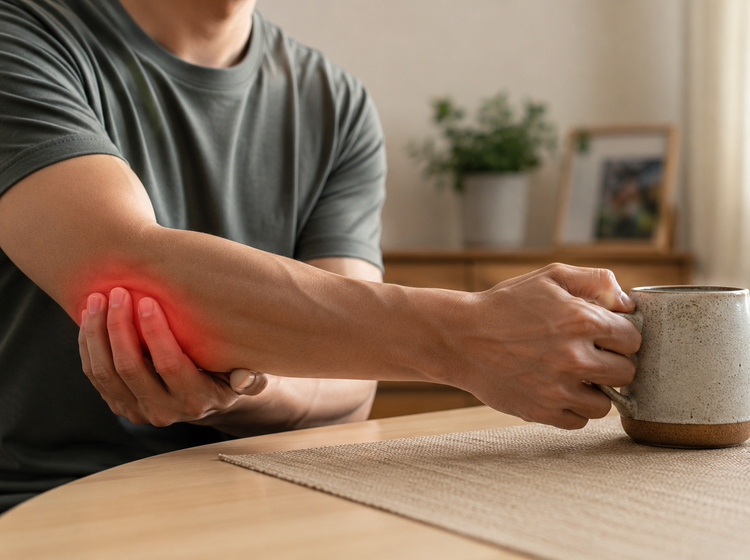
In the early stages, symptoms may only appear during the activity that triggered the injury. As the condition progresses, pain can occur with everyday tasks and, if left untreated, may persist even at rest.
 Not sure if your elbow pain is tennis elbow? Book a consultation with our shoulder and elbow
specialists for a proper diagnosis and tailored treatment plan.
Not sure if your elbow pain is tennis elbow? Book a consultation with our shoulder and elbow
specialists for a proper diagnosis and tailored treatment plan.
Tennis Elbow vs Golfer's Elbow: Knowing the Difference
Tennis elbow and golfer's elbow are both forms of elbow tendinopathy caused by overuse, but they affect opposite sides of the elbow and involve different muscle groups.
| Feature | Tennis Elbow (Lateral Epicondylitis) | Golfer's Elbow (Medial Epicondylitis) |
|---|---|---|
| Location of pain | Outside of the elbow, radiating into the forearm | Inside of the elbow, sometimes extending to the wrist |
| Tendons affected | Wrist extensors (muscles that straighten the wrist and fingers) | Wrist flexors and pronators (muscles that bend the wrist and rotate the forearm) |
| Aggravating movements | Bending the wrist back, backhand strokes, lifting with the palm down (such as carrying a tray) | Gripping, bending the wrist down, rotating the forearm |
| Common activities | Tennis, painting, carpentry, plumbing, typing, gym work | Golf swing, forehand and serve strokes in tennis, throwing (baseball pitching, javelin), weightlifting, manual labour |
| Pain on examination | Worsens when bending the wrist back against resistance | Worsens when bending the wrist down against resistance |
| How common | More common (affects roughly 1–3% of the population) | Less common |
Although the two conditions differ in location and triggering movements, they share similar
underlying causes, and the treatment principles, including rest, physiotherapy, and progressive
tendon loading, are broadly similar.
In some cases, particularly in people whose jobs involve repetitive gripping or heavy tool use, both
conditions can occur together.
How Is Tennis Elbow Diagnosed?
Tennis elbow is typically diagnosed from your symptoms and a physical examination of the elbow. Imaging is only needed in persistent, severe, or atypical cases.
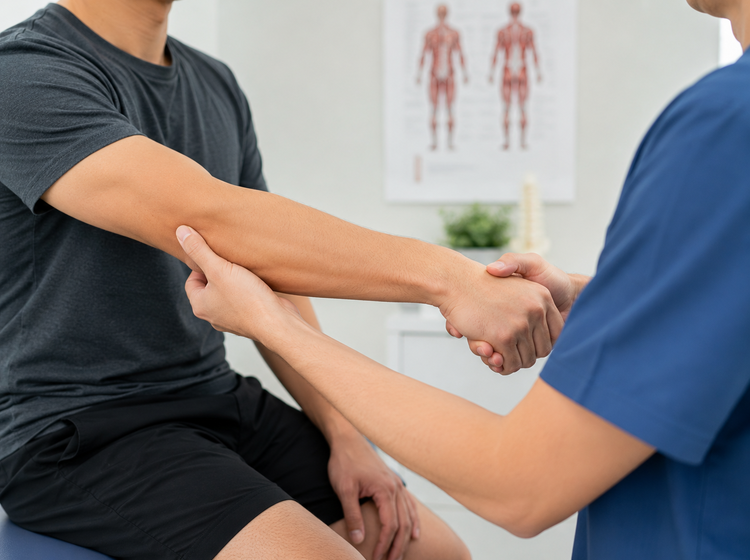
- Medical History and Symptom Review – Discussion of your symptoms, daily activities, sports, occupation, and the patterns of pain to identify likely contributing factors.
- Physical Examination – Checking for tenderness on the outer elbow, performing movement tests such as Cozen's and Mill's tests, and measuring grip strength to confirm involvement of the extensor tendons.
-
Diagnostic Imaging – Used to confirm the diagnosis or rule out
other conditions that can cause similar pain, such as radial tunnel syndrome, cervical
nerve compression, or arthritis:
- X-ray (bone imaging): Helps exclude bone-related causes such as arthritis or calcification within the tendon.
- Ultrasound (soft tissue imaging): Visualises tendon thickening, tears, and signs of degeneration. The most useful scan for confirming tennis elbow.
- MRI (detailed bone and soft tissue imaging): Reserved for chronic or unclear cases to assess soft tissue damage in detail.
Tennis Elbow Treatment Options
Most cases of tennis elbow improve with conservative care, and surgery is rarely required. Treatment
focuses on relieving pain, reducing tendon irritation, and restoring strength to support
long-term recovery.
A combination of approaches is often used, tailored to the severity and duration of symptoms.
1. Conservative (Non-Surgical) Treatments
Rest and Activity Modification
Reduces tendon strain by limiting repetitive gripping, lifting, or racquet sports during the acute phase. Complete rest is generally avoided, as it can weaken the tendon further.
Ice and Pain Relief
Cold therapy and short courses of oral non-steroidal anti-inflammatory drugs (NSAIDs) can help reduce pain in the early stages, particularly within the first two weeks.
Tennis Elbow Brace or Counterforce Strap
A forearm strap worn just below the elbow offloads pressure from the tendon attachment, allowing it to heal while you continue daily activities.
Physiotherapy and Eccentric Exercises
Physiotherapy combining guided stretching and progressive eccentric loading (such as flexbar twists and wrist extensions) can help rebuild tendon strength and flexibility. This is widely considered the most effective long-term treatment for tennis elbow.
Shockwave Therapy
Shockwave therapy uses non-invasive sound waves to stimulate blood flow and tissue repair. Widely used for chronic tennis elbow that has not responded to physiotherapy.
Corticosteroid Injection
A steroid injection can provide effective short-term pain relief within the first few weeks. However, current evidence shows that cortisone injections often lead to higher recurrence rates and poorer outcomes at 12 months compared to physiotherapy or a wait-and-see approach, so they are used selectively and not as a first-line treatment.
Platelet-Rich Plasma (PRP) Therapy
Platelet-rich plasma (PRP) injections deliver concentrated platelets from your own blood into the affected tendon to support healing in long-standing cases.
2. Surgical Intervention
Tennis Elbow Release Surgery
Tennis elbow release surgery removes the damaged portion of the extensor tendon at the outer elbow,
allowing healthy tissue to regenerate. It is typically considered when symptoms persist beyond six
to twelve months despite conservative treatment.
The procedure can be performed through open surgery, arthroscopically (keyhole), or via percutaneous tenotomy (a minimally invasive needle-based
technique), depending on the severity of the condition.
Tennis Elbow Recovery and Healing Time
Tennis elbow typically takes anywhere from a few weeks to several months to resolve,
depending on severity and how early treatment begins. Most patients recover
within a year, though some chronic cases may take up to 18 to 24 months.
Recovery is rarely linear. You may notice good days followed by flare-ups, particularly
after resuming sport or repetitive work too early. Gradual return to activity, combined with
continued strengthening, helps reduce the risk of recurrence.
Surgical recovery, when needed, usually involves a few weeks of restricted movement, gradual
return to daily activities within 2 to 6 weeks, and return to sports between 4 to 6 months.
Full strength recovery may take 6 to 12 months.

It is best to discuss the expected recovery timeline for your specific case with your doctor, specialist, or physiotherapist.
How to Prevent Tennis Elbow
Preventing tennis elbow focuses on reducing repetitive strain on the forearm tendons and
strengthening the muscles that support the elbow.
While not all cases can be prevented, here are some practical steps you can take to reduce your risk
of developing tennis elbow or experiencing a recurrence:
- Warm up before activity – Gentle stretching of the wrist, forearm, and elbow before sports or repetitive tasks helps prepare the tendons for load.
- Strengthen the forearm and wrist – Regular eccentric and grip-strengthening exercises improve tendon resilience and reduce overuse injury risk.
- Use proper technique – In racquet sports, work with a coach to refine your stroke mechanics; in the gym, avoid overloading with poor wrist position.
- Check your equipment – Use racquets, tools, and gym equipment that are appropriately sized and weighted for your grip and frame.
- Set up an ergonomic workstation – Keep your wrist in a neutral position when typing or using a mouse, and take regular micro-breaks during long sessions.
- Avoid sudden increases in load – Whether starting a new sport, training programme, or manual task, increase intensity and duration gradually.
- Rest at the first sign of discomfort – Early pain is a signal to reduce load. Pushing through discomfort is the most common path to chronic tendinopathy.
- Address other contributing factors – Maintaining shoulder, neck, and core strength helps offload the forearm and reduces compensatory strain on the elbow.
If you work in a high-risk occupation or play racquet sports regularly, periodic check-ins with a physiotherapist or sports specialist can help identify early signs of overload before they progress into a full injury.
When Should You Seek Medical Evaluation?
Most cases of tennis elbow improve with rest and self-care, but certain signs suggest it is time to
see a doctor.
Consider seeking medical evaluation if you experience any of the following:
- Pain that persists for more than two to three weeks despite rest and self-care.
- Pain that interferes with daily activities such as gripping, lifting, typing, or sleeping.
- Worsening pain or weakness, particularly grip strength loss.
- Visible swelling, redness, or warmth around the elbow (these are not typical of tennis elbow and may indicate another condition).
- Numbness, tingling, or shooting pain into the forearm or hand.
- Sudden or severe pain following an injury or fall.
- Symptoms that recur after previous treatment, including after a steroid injection.
Most tennis elbow cases recover fully without surgery. With early diagnosis and a targeted plan of physiotherapy, bracing, and activity changes, patients are usually back to their normal grip strength and daily activities within a few months.
Dr Foo Gen Lin
Find a Shoulder and Elbow Specialist in Singapore
Apex Novena
Why Do Patients Choose Apex Sports Clinic?
Sports Doctor in Singapore: Personalised & Affordable Care
One-Stop Sports Clinic
We provide comprehensive care in one clinic, from consultation, imaging, and injections through to physiotherapy, sports massage, and surgery when needed.
Keyhole Surgery Expertise
We specialise in arthroscopic keyhole surgery to treat sports injuries with precision and minimal tissue disruption, supporting faster recovery and restored joint function.
Specialist in Sports Injury Management
We combine evidence-based injury management with a proactive approach to maintaining your body's strength and function, so you can recover fully and perform at your peak.
Patient Journey
1 . Schedule Your Appointment

2 . Expert Diagnosis & Consultation

3 . Customised Treatment Plan

Schedule an Appointment

Our Insurance Partners




Frequently Asked Questions (FAQs)
Tennis elbow typically takes a few weeks to several months to resolve, with most people recovering within a year. The exact timeline depends on severity, how early treatment begins, and how consistently strain on the tendon is reduced. Chronic cases can take 18 to 24 months. If progress stalls after several weeks of self-care, having it assessed by a sports doctor or physiotherapist can help guide next steps.
Tennis elbow is usually managed through a combination of rest, activity modification, and physiotherapy focused on progressive tendon loading. Counterforce bracing, ice, and short courses of anti-inflammatory medication can help in the early stages, while shockwave therapy or injections may be considered for stubborn cases. Surgery is rarely required. Because recovery depends on the severity and duration of symptoms, it is best to have a sports doctor or physiotherapist assess your elbow and tailor a treatment plan.
Tennis elbow can often be managed without medication or invasive treatment by reducing the activities that triggered the strain, applying cold therapy in the early stages, and following a routine of stretching and forearm exercises that gradually build tendon strength. A counterforce strap and ergonomic adjustments to your workstation, grip, or technique also help reduce daily stress on the tendon. If pain persists beyond a few weeks, an assessment by a sports doctor or physiotherapist can help identify whether further treatment is needed.
Common ways to relieve tennis elbow pain include cold therapy, rest from gripping or lifting tasks, and short-term use of oral non-steroidal anti-inflammatory drugs (NSAIDs). A counterforce brace can offload pressure on the tendon during daily activities, and gentle wrist and forearm stretches may ease tightness. If pain interferes with sleep or daily tasks, a sports doctor or physiotherapist can assess your elbow and recommend appropriate treatment options.
Ice is generally more useful in the early or flare-up stages of tennis elbow, as it can reduce pain and swelling around the irritated tendon. Heat is often better suited to chronic stages, where it helps relax stiff muscles and improve circulation before activity or stretching. Many people use a combination, applying ice after exertion and heat before stretching or exercise. Either can be applied for short periods of 10 to 15 minutes at a time. If pain persists despite this, seek an assessment from a sports doctor or physiotherapist for proper medical treatment.
Sleeping with tennis elbow can be more comfortable when you avoid lying on the affected arm and support the elbow with a pillow in a slightly bent, neutral position. Some people find that wearing a soft brace or wrist splint overnight prevents the wrist from flexing and irritating the tendon. Applying ice or gentle warmth before bed may also reduce evening pain. If night pain regularly disrupts your sleep, consider seeking an assessment from a sports doctor or physiotherapist.
Push-ups place direct load on the wrist extensors and the affected tendon, which can aggravate tennis elbow, particularly in the active phase. Whether they are advisable depends on the severity of your symptoms, your stage of recovery, and how the movement is performed. Variations using closed fists or parallel bars may reduce wrist strain in milder cases. Before resuming, having a physiotherapist or sports doctor review your symptoms can help determine what loading is appropriate.
Exercises to limit with tennis elbow are those that load the wrist extensors (the muscles on the back of the forearm that straighten the wrist) and involve heavy gripping. These include pull-ups, reverse curls, push-ups, deadlifts with a pronated grip, and racquet sports played with poor backhand technique. Whether an exercise is appropriate depends on the severity of your symptoms and stage of recovery. If you are already seeing a medical professional, follow their guidance. Otherwise, consult a sports doctor or physiotherapist before continuing high-load exercises.
A tennis elbow brace, also known as a counterforce strap, is a band worn around the upper forearm just below the elbow. By applying pressure across the wrist extensor muscles, it redirects some of the force generated during gripping away from the irritated tendon attachment at the lateral epicondyle. This allows you to continue daily activities with less pain while the tendon heals. It is typically used alongside rest and rehabilitation rather than as a standalone treatment.
Tennis elbow pain often worsens at night because lying still allows the muscles and tendons to stiffen, and sleeping on the affected arm can compress the irritated area. Morning stiffness occurs for similar reasons, as reduced movement and lower circulation during sleep make the tendon feel tighter and more sensitive when you first start using your arm. Gentle warmth and easy wrist movements after waking can help ease the initial discomfort.
Tennis elbow can cause pain that spreads beyond the elbow itself. The wrist extensor muscles (which run along the back of the forearm) connect the elbow to the wrist, so pain often radiates into the forearm and wrist, and grip weakness can be felt in the hand. Shoulder pain is less common but can develop when people change how they use the arm to avoid elbow pain. If symptoms include numbness or tingling, a medical assessment can help rule out nerve-related conditions.
Tennis elbow is a form of tendon disorder, but the term tendonitis is technically a misnomer. Tendonitis implies active inflammation, whereas tennis elbow is now understood to be primarily a degenerative tendon problem, technically called a tendinopathy or tendinosis. The changes in the tendon involve micro-tears and disorganised collagen fibres rather than the inflammatory cells seen in true tendonitis. This distinction matters because management focuses on progressive loading and tendon repair rather than purely anti-inflammatory treatment.
Yes. Gym training and pickleball are two of the most common non-tennis causes of tennis elbow. In the gym, heavy gripping during deadlifts, rows, pull-ups, and reverse curls overloads the wrist extensor tendons, particularly with overhand grip work. Pickleball involves repeated gripping and wrist movements, and is an increasingly common cause as the sport grows in popularity. Reviewing your technique, grip size, and training load can help reduce the risk of recurrence.
Surgery for tennis elbow is considered only when symptoms persist beyond six to twelve months of consistent conservative treatment, including physiotherapy, bracing, and activity modification. It is also an option when pain significantly limits daily activities or work despite a structured rehabilitation plan. The procedure removes the damaged portion of the extensor tendon and can be performed open, arthroscopically, or via percutaneous tenotomy.
There is no single best cure for tennis elbow, as recovery depends on the severity of the condition, how long it has been present, and how well the underlying triggers are addressed. Most cases improve with a combination of activity modification, physiotherapy focused on progressive eccentric loading, and counterforce bracing. Shockwave therapy and platelet-rich plasma (PRP) injections may help chronic cases. If you are experiencing symptoms, consult a sports doctor or physiotherapist for personalised treatment to support optimal recovery.
Tennis elbow is mainly caused by repeated stress on the wrist extensor tendons at the outer elbow, which leads to small tears and gradual breakdown of the tissue. This typically results from repetitive gripping, twisting, or lifting movements rather than a single injury. While racquet sports give the condition its name, common triggers include manual labour, gym training, computer and phone use, and any activity involving sustained or forceful forearm work.
Tennis elbow pain is typically felt on the outer side of the elbow and often radiates into the forearm. The discomfort tends to develop gradually rather than appear suddenly, and it worsens when gripping, lifting, twisting the wrist, or shaking hands. Many people also notice grip weakness and tenderness when pressing on the bony bump on the outer elbow. If symptoms persist beyond a few weeks, having it assessed can help confirm the diagnosis and guide appropriate treatment.
Tennis elbow can resolve on its own in many cases, particularly mild ones, but recovery often takes months and depends on whether the activities causing the strain are reduced. Without treatment, symptoms can persist for a year or longer and may become chronic. Combining rest with physiotherapy, eccentric loading exercises, and bracing usually leads to faster improvement than waiting passively. If pain disrupts daily activities, having it reviewed by a sports doctor or physiotherapist can clarify the next steps.
Conditions commonly mistaken for tennis elbow include radial tunnel syndrome (compression of a nerve in the forearm), referred pain from a cervical nerve in the neck, osteoarthritis or instability of the elbow joint, bursitis, ligament injuries, and stress fractures. These conditions can cause pain in or around the outer elbow that resembles tennis elbow. A clinical examination and, where needed, ultrasound or magnetic resonance imaging (MRI) can usually distinguish tennis elbow from these conditions.
Tennis elbow cannot be fully resolved in three days, as tendon recovery is a gradual process that usually takes weeks to months. In the short term, you can reduce pain by resting the arm from gripping and lifting, applying ice, and using a counterforce brace during essential activities. Over-the-counter anti-inflammatory medication may also ease early discomfort. Lasting improvement requires consistent activity modification and structured rehabilitation, which is best guided by a medical professional.
There is no single worst exercise for tennis elbow, but movements that load the wrist extensors with heavy gripping tend to aggravate it the most. Common culprits include reverse curls, pull-ups, push-ups with the wrists flexed back, heavy deadlifts with a pronated grip, and racquet sports played with poor technique. The wrist extension component is usually what causes pain. Modifying grip, load, and form is often more useful than avoiding individual exercises altogether.
Untreated tennis elbow can persist for a year or longer and gradually become chronic, with pain that occurs even at rest and grip strength that progressively weakens. Over time, the affected tendon undergoes further degeneration, making the condition harder to reverse with conservative treatment. Recurrence after future activity becomes more likely, and daily tasks such as lifting, typing, and gripping may become difficult. Seeking an assessment early can support a smoother recovery.
Red flag symptoms in suspected tennis elbow include: numbness, tingling, or shooting pain into the forearm or hand; visible swelling, redness, or warmth around the elbow; sudden or severe pain following an injury or fall; and rapid loss of grip strength. Pain that does not improve after several weeks of rest, or that recurs after a previous steroid injection, also warrants assessment. These features can indicate nerve involvement, infection, or another underlying condition that requires evaluation.
Tennis elbow is usually confirmed through a clinical examination rather than imaging. The diagnosis is based on the location of pain over the outer elbow, tenderness on pressing the lateral epicondyle, and characteristic movement tests such as Cozen's and Mill's tests, which reproduce symptoms when the wrist is extended against resistance. Ultrasound can support the diagnosis by visualising tendon thickening or tears, while magnetic resonance imaging (MRI) is reserved for persistent or unclear cases. X-rays exclude bone-related causes.
Activities to avoid with tennis elbow include heavy gripping, repetitive wrist twisting, lifting with the palm down, and exercises that load the wrist extensors such as reverse curls and pull-ups. Pushing through pain, ignoring symptoms, and relying solely on painkillers without addressing the underlying load can prolong recovery. Repeated cortisone injections are also discouraged, as they may weaken the tendon over time. If you are already seeing a medical professional, follow their advice. Otherwise, consider consulting one for personalised guidance on what to avoid and how to support your recovery.
There is no single best exercise for tennis elbow, though eccentric strengthening of the wrist extensors is widely considered the most useful approach. A common method uses a rubber flexbar twisted with the affected wrist, slowly releasing the resistance to load the tendon under controlled lengthening. Wrist extension exercises with a light dumbbell also target the same muscles. These movements should be progressed gradually under guidance from a physiotherapist to avoid further irritation.
Tennis elbow rarely appears overnight, even when it feels sudden. The underlying tendon damage usually builds up gradually from repetitive strain over weeks or months, and pain often becomes noticeable only after a specific activity tips the tendon past its threshold. Common triggers include a recent increase in gym training, a new sport such as pickleball, intensive manual work, or prolonged computer and phone use. Reviewing recent activity changes is often the first step in identifying the cause.
Massage can help tennis elbow by easing tightness in the forearm muscles that pull on the irritated tendon, although it does not directly repair the damaged tissue. Techniques such as deep soft-tissue massage of the forearm extensors are commonly used alongside stretching and strengthening exercises. Direct, firm massage over the painful tendon attachment can sometimes worsen symptoms, particularly in the acute phase. A sports doctor or physiotherapist can assess your situation and combine massage with other approaches.
Tennis elbow rarely requires complete rest, as extended immobilisation can weaken the tendon further. Most rehabilitation guidelines suggest reducing the activities that triggered the strain for around two weeks, while continuing gentle movement and gradually introducing strengthening exercises. The exact period depends on severity and how the pain responds to load reduction. If pain remains persistent after three to four weeks of relative rest, a sports doctor or physiotherapist can suggest a more structured recovery plan.