
Dry Needling in Singapore
Information reviewed by: Dr Foo Gen Lin | Last updated:
Tight, painful muscles that keep limiting your training or your workday? At Apex Sports Clinic, our physiotherapists use dry needling alongside exercise-based treatment to ease them, so you can move and train comfortably again.

MBBS (University of London) | MMed (Ortho) | FRCSEd (Ortho) | FAMS (Ortho)

What Is Dry Needling?
Dry needling is a treatment that uses thin, solid needles inserted into tight, tender bands of muscle, known as trigger points, to reduce pain and muscle tightness.
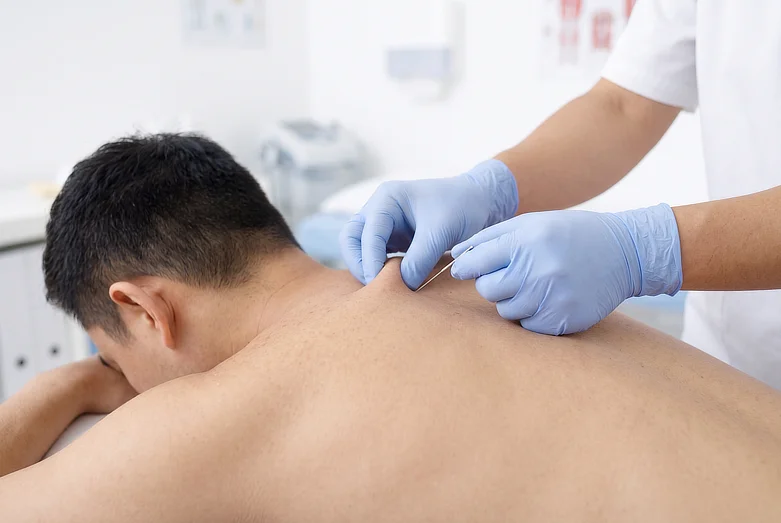
A trigger point feels like a small knot that hurts when pressed, and it can cause pain in
another area, such as the side of the head. Long-lasting pain caused by trigger points is
known as myofascial pain syndrome.
The needles are single-use and similar to those used in acupuncture, and nothing is injected
through them, which is why the treatment is called "dry". It is sometimes also called dry
needle therapy or trigger point dry needling. Dry needling is one form of trigger point
therapy, which also includes sustained hands-on pressure and assisted stretching.
How Does Dry Needling Work?
Dry needling is thought to work by making the tight band of muscle relax and by changing how
the nerves in the area send pain signals.
The muscle often gives a brief, involuntary twitch as the needle reaches a trigger point. This local
twitch response, sometimes felt as a short cramp-like spasm, usually shows that the needle has
reached the tight band.
Needling may also lower the levels of chemicals linked to pain and
inflammation around a trigger point and increase blood flow to the area, although the exact
mechanism is still being researched.
A mild electrical current can also be passed through the needles to make the muscle contract gently
during treatment. This is known as dry needling with electrical stimulation.
Dry Needling Physiotherapy at Apex Sports Clinic
1. Focus on the Underlying Cause
Our aim is to identify and treat the underlying cause of your pain, providing dry needling only when it is suitable, so you receive the right care.
2. Holistic Treatment Plan
Our treatment plans include more than dry needling, adding strengthening exercises, stretching and hands-on therapy for longer-lasting relief.
3. Multidisciplinary Team
At Apex Sports Clinic, we are a multidisciplinary team of physiotherapists, sports medicine doctors and orthopaedic specialists, so your care stays in one place.
Meet Our Physiotherapists
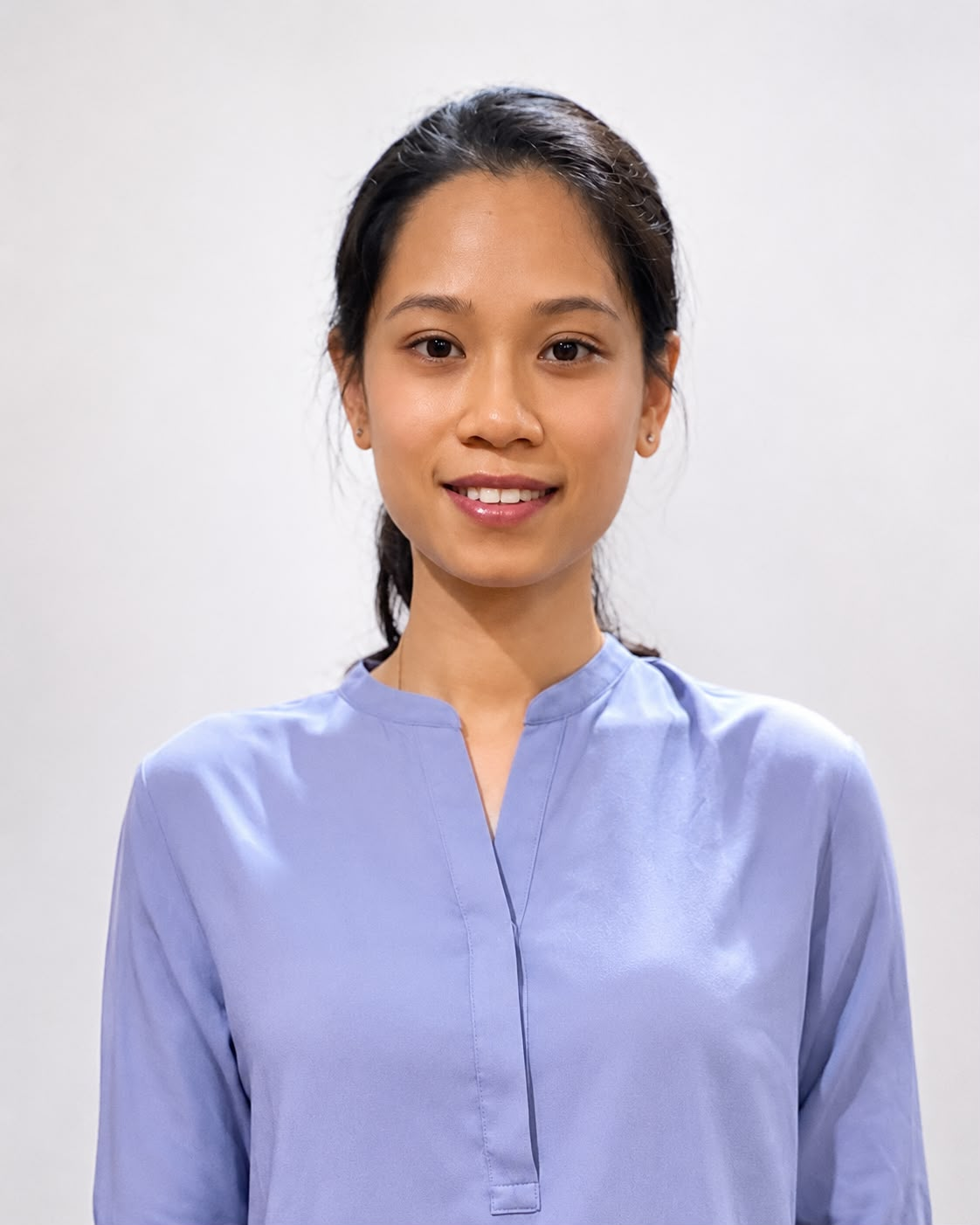
BSc (Physiotherapy) (Hons I), Curtin University
Fully Registered Physiotherapist (AHPC, Singapore)
Languages: English and Mandarin
Sarita is a senior physiotherapist who treats musculoskeletal injuries across all ages and activity
levels.
She focuses on identifying the root cause of symptoms rather than treating pain alone, with a
particular interest in post-operative rehabilitation and exercise-based therapy.
Working alongside the orthopaedic and sports medicine team at Apex Sports Clinic, she helps
patients recover and return confidently to the activities they enjoy.
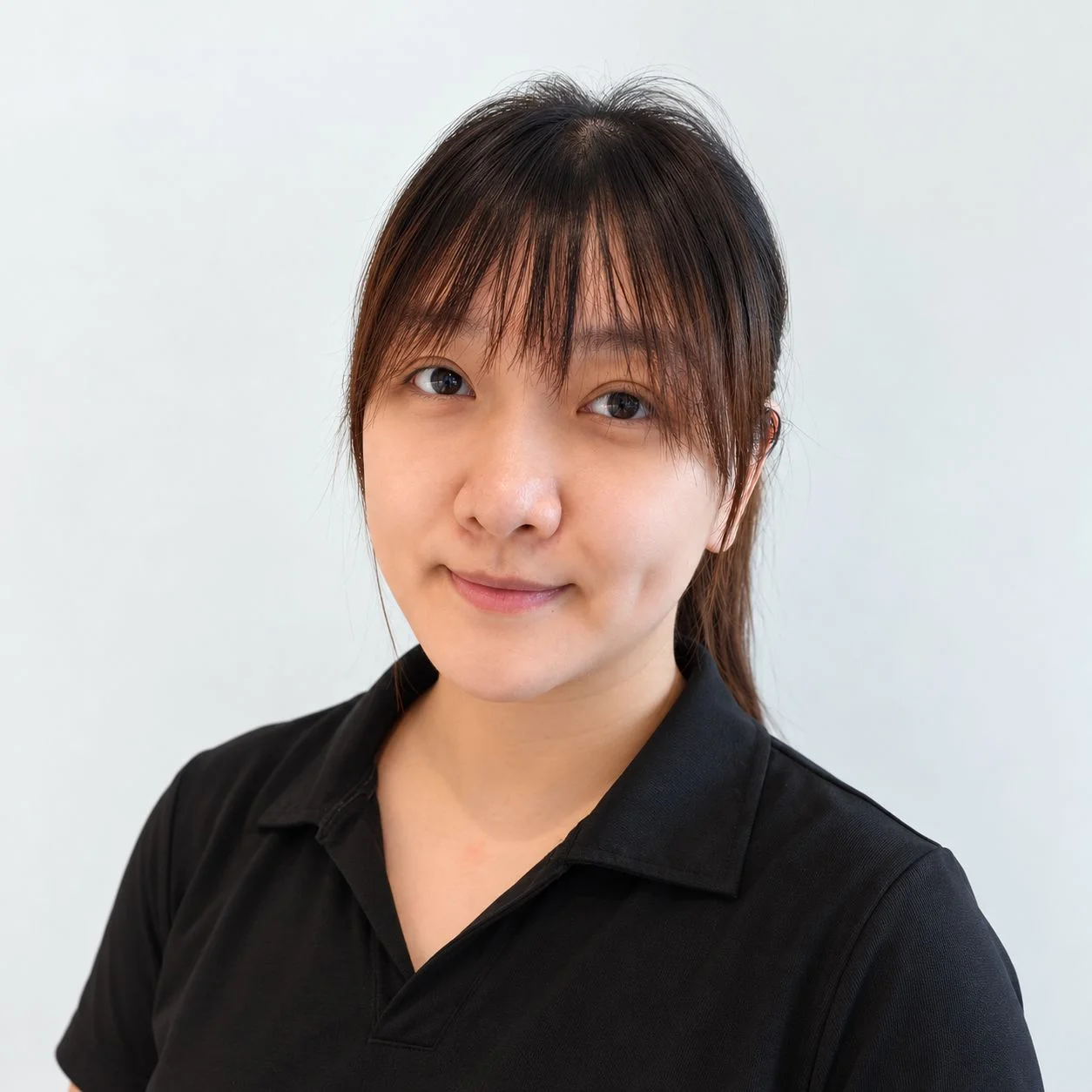
BSc (Physiotherapy), Curtin University
Fully Registered Physiotherapist (AHPC, Singapore)
Languages: English and Mandarin
Anna-Belle is a physiotherapist who treats sports injuries and persistent musculoskeletal pain, and
guides patients through rehabilitation after surgery.
She combines manual therapy, exercise and progressive strengthening, with a particular interest in
ankle conditions, frozen shoulder and post-operative rehabilitation.
Having experienced back pain and recurrent ankle sprains herself, she explains each injury clearly
and gives patients practical strategies to manage it as they return to exercise and sport.
What Are the Benefits of Dry Needling?
The benefits of dry needling include:
- Less muscle pain – Dry needling can ease pain in the neck, shoulders, back and heels in the days and weeks after treatment.
- Less tenderness at trigger points – Treated trigger points often become less painful to press, which can make everyday positions such as sitting at a desk or sleeping on one side more comfortable.
- Easier movement – Reducing tightness in a muscle can increase how far the nearby joint moves, for example how far you can lift your arm.
- Preparation for rehabilitation – Less pain can make rehabilitation exercises easier to do, so strengthening can begin sooner.
Dry needling does not strengthen a weak muscle or repair a damaged tendon, and its relief is often short term on its own. It is therefore usually combined with exercise that addresses the cause of the pain.
Common Conditions Dry Needling Can Help With
Dry needling is commonly used for muscle-related pain in the neck and shoulders, headaches, buttock and hip pain, tendon problems such as tennis elbow, as well as knee pain and shin splints, usually as part of a wider physiotherapy plan. It is also sometimes used on the calf muscles for plantar fasciitis and heel pain.
Neck and Shoulder Pain
Neck and shoulder pain from muscle tension is a common reason for dry needling. It often
develops from long hours at a desk, stress, or sports such as swimming and racquet sports.
The upper trapezius (the muscle running from the neck to the shoulder) frequently has tender
trigger points.
Dry needling the neck and upper shoulder muscles can reduce neck pain and stiffness,
particularly when combined with neck and shoulder exercises. For shoulder pain, the
muscles over the shoulder blade are also commonly treated.

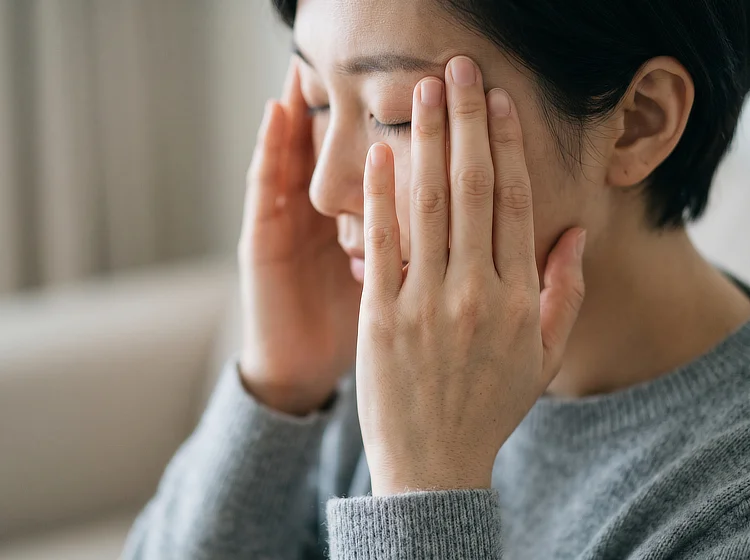
Headaches and Migraines
Tension-type headaches are the most common type of headache,
causing a pressing or tight pain across the forehead, temples or back of the head.
Trigger points in the neck, shoulder and jaw muscles can cause pain felt in the head, and dry
needling these muscles can make the headaches less intense. Dry
needling of the neck muscles may also ease migraine pain in some people, although it is not
a standard migraine treatment.
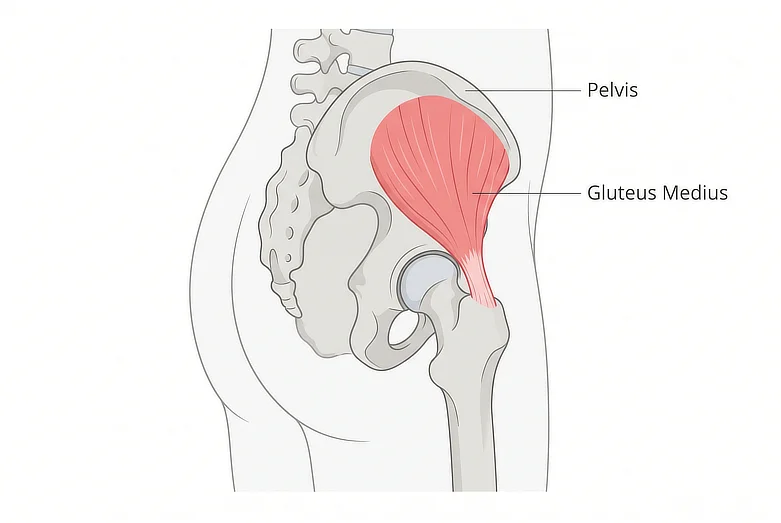
Gluteus Medius and Buttock Pain
The gluteus medius is a muscle on the outer side of the hip that helps keep your pelvis level
as you walk, run or stand on one leg. Trigger points in this muscle can cause pain in the
buttock, the outer hip and the lower
back, and sometimes down the side of the thigh. This pain commonly affects runners
and people who sit for long periods.
Dry needling of the gluteal muscles can reduce this pain, and it is usually combined with hip-strengthening
exercises.
Tennis Elbow and Achilles Tendonitis
Tennis elbow and Achilles tendonitis are both overuse
injuries of a tendon, the tough cord that joins muscle to bone.
Tennis elbow causes pain on the outer side of the elbow, often when gripping or lifting, while
Achilles tendonitis causes pain and stiffness at the back of the heel, typically in runners.
Both are now often called tendinopathy, because the tendon usually shows wear rather than
inflammation.
Dry needling of the forearm or calf muscles that pull on these tendons may ease pain, while exercise-based rehabilitation usually remains the main treatment.
Knee Pain and Shin Splints
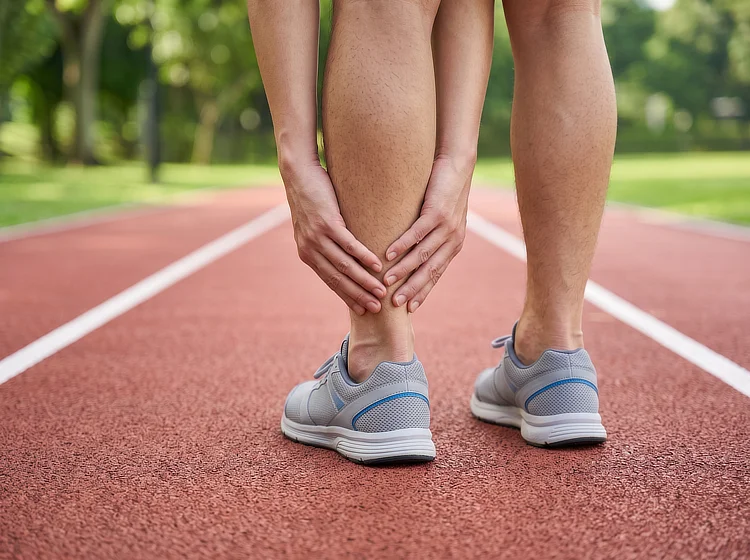
Knee pain around the kneecap in runners (patellofemoral
pain) can come partly from tight thigh and hip muscles. Shin splints cause aching
along the inner edge of the shinbone, typically after an increase in running or jumping.
Dry needling of the thigh or calf muscles can reduce muscle pain and tightness in both
conditions, alongside changes to training load and strengthening exercises. Knee pain from
the joint itself, such as osteoarthritis or a cartilage tear, usually
needs other treatment.
 Unsure whether dry needling suits your pain? Book an
appointment with our physiotherapists for an assessment and a treatment plan built around
your injury and your activity.
Dry Needling vs Acupuncture
The main difference between dry needling and acupuncture lies in the reasoning behind where the needles go. Dry needling targets trigger points in painful muscles, based on modern anatomy, while acupuncture places needles at set points along energy pathways (meridians) described in Traditional Chinese Medicine (TCM).
| Dry Needling | Acupuncture | |
|---|---|---|
| Approach | Modern anatomy and the study of trigger points | TCM, which aims to restore the flow of energy (qi) along the meridians |
| Needle placement | In trigger points in the tight or painful muscle, often near the pain | At acupuncture points, which may be far from the painful area |
| Duration | A few seconds to several minutes, often moved gently to produce a twitch | Usually around 10 to 30 minutes |
| Common uses | Muscle and tendon pain, and movement problems | Pain, and a wider range of health concerns depending on the practitioner |
| Practitioners | Usually physiotherapists with additional training in the technique | Registered TCM practitioners and acupuncturists |
The choice usually depends on what is causing the pain. Dry needling suits pain from a specific tight muscle as part of a physiotherapy plan, while acupuncture is an option for people who prefer a TCM approach.
Does Dry Needling Hurt?
Dry needling usually causes little pain as the needle goes through the skin, but you
may feel a deep ache, a cramp or a brief twitch as it reaches a trigger point. The needles are much
thinner than those used for injections or blood tests, so many people barely feel them go in.
The twitch can feel strong or surprising for a second or two, and the muscle may then feel heavy or
achy. Tell your physiotherapist if the discomfort becomes more than you can tolerate, and the needle
can be adjusted or removed.
Potential Side Effects and Risks of Dry Needling
Most side effects of dry needling are mild and settle within a few days, with soreness and bruising the most common. Serious complications are rare.
- Soreness – An ache in the treated muscle, similar to the stiffness after hard exercise, that usually settles within one to three days.
- Bruising and minor bleeding – A small spot of blood or a bruise where the needle went in, more likely in people who bruise easily or take blood-thinning medication.
- Tiredness – Some people feel tired or drowsy for a few hours afterwards.
- Headache – Can follow needling of the neck and upper shoulder muscles, and usually settles within a day.
- Feeling faint or light-headed – A brief drop in blood pressure during or just after treatment, more likely in people who are anxious about needles or have not eaten.
- Nerve irritation – A sharp, electric or shooting sensation if the needle touches a nerve, sometimes followed by tingling that usually fades.
- Infection – Rare, as the skin is cleaned beforehand and each needle is sterile and used once.
Tell your physiotherapist before your session if any of these apply:
- You take blood-thinning medication or have a bleeding disorder
- You have a fear of needles or have fainted during an injection before
- You are pregnant or trying to conceive
- You have an infection, wound or rash over the area to be treated
- You have diabetes or a weakened immune system
- You have lymphoedema (long-term swelling of a limb), for example after breast cancer surgery
- You have a pacemaker or other implanted device, or an allergy to metals such as nickel
Dry needling can ease a tight, painful muscle and give patients the relief they need to start moving properly again. Pairing that relief with the right strengthening work can help them return to training with confidence and lower the chance of the same pain coming back.
Dr Foo Gen Lin
Dry Needling Cost in Singapore
At Apex Sports Clinic, we offer dry needling and ultrasound-guided dry needling, with prices as follows:
| Treatment & Service | Estimated Cost (SGD)* |
|---|---|
| Dry Needling (Physiotherapist-Led) | From $100 per session |
| Ultrasound-Guided Dry Needling | From $350 |
| Physiotherapy | $212.55 per 45-minute session |
| Physiotherapy (Home Visit) | $272.50 per 45-minute session |
| Other Non-Invasive Treatments | |
| Sports Massage / Conditioning | $160 per 60-minute session |
| Shockwave Therapy | From $100 per session |
| Diagnostic Services | |
| Ultrasound Imaging | From $100 |
| MRI Scan | From $1,000 |
Dry needling is generally not MediSave-claimable, as it is an outpatient treatment, but some Integrated Shield Plans or private insurance policies may cover part of the cost. It is best to check with your insurer or employer benefits provider before treatment.
*Prices listed above are estimates and may vary depending on the complexity of the condition, type of procedure, and other clinical considerations.
Find Dry Needling Near Me
Apex Novena
Why Do Patients Choose Apex Sports Clinic?
Sports Doctor in Singapore: Personalised & Affordable Care
One-Stop Sports Clinic
We provide comprehensive care in one clinic, from consultation, imaging, and injections through to physiotherapy, sports massage, and surgery when needed.
Keyhole Surgery Expertise
We specialise in arthroscopic keyhole surgery to treat sports injuries with precision and minimal tissue disruption, supporting faster recovery and restored joint function.
Specialist in Sports Injury Management
We combine evidence-based injury management with a proactive approach to maintaining your body's strength and function, so you can recover fully and perform at your peak.
Patient Journey
1 . Schedule Your Appointment

2 . Expert Diagnosis & Consultation

3 . Customised Treatment Plan

Schedule an Appointment

Our Insurance Partners




Frequently Asked Questions (FAQs)
Self dry needling is not advisable, as it takes clinical training to find trigger points accurately and to avoid the nerves, blood vessels and organs beneath the muscle. A needle placed too deeply over the upper back or chest can reach the lung, and needling without sterile technique raises the risk of infection. Physiotherapists who offer dry needling usually complete additional training in the technique first. Between sessions, stretching, gentle strengthening and pressing a massage ball into a tight muscle can ease tension without a needle.
A dry needling needle that touches a nerve usually causes a sudden sharp, electric or shooting sensation that can travel along the nerve. The needle is then withdrawn or redirected, and the sensation typically stops straight away. Some tingling or mild numbness can follow, and this usually fades within hours to a few days. Lasting nerve damage is rare, as dry needling needles are very thin and solid.
A headache after dry needling can occur when the neck and upper shoulder muscles are treated, as trigger points in these muscles can send pain into the head, and the treated muscles may stay sore. Tension, dehydration or not eating before the session may also play a part. The headache usually eases within a day with rest, fluids and gentle neck movement. If it is severe, lasts more than two days, or comes with fever, a stiff neck, vomiting or vision changes, you should contact your physiotherapist or see a doctor promptly.
Temporomandibular joint (TMJ) pain, which affects the hinge joint in front of each ear, may ease with dry needling when it comes mainly from tight, tender chewing muscles in the cheek and at the side of the head. Needling these muscles can reduce jaw pain and tenderness in some people, usually alongside jaw exercises and a night guard (a mouthguard worn during sleep) from a dentist to reduce clenching or grinding. Pain from the TMJ itself, such as a displaced disc (the cushion inside the joint) or arthritis, typically needs other treatment.
Health insurance in Singapore may cover dry needling when a registered physiotherapist provides it as part of physiotherapy treatment, but this depends on the plan. Many corporate and personal outpatient plans include physiotherapy, sometimes only with a doctor's referral or up to a yearly limit, while others exclude it. It is best to check with your insurer or employer benefits provider before treatment. At Apex Sports Clinic, we offer dry needling: Dry Needling (Physiotherapist-Led) from $100 per session, and Ultrasound-Guided Dry Needling from $350.
Dry needling can reduce muscle pain and trigger point tenderness in the days and weeks after treatment, for problems such as neck, shoulder and lower back pain. The relief tends to fade over time when dry needling is used on its own, and results vary from person to person. It generally works as one part of a physiotherapy plan, with stretching and strengthening exercises addressing the muscle weakness or training load behind the pain, so the benefit is more likely to last.
Neither dry needling nor massage suits every problem, as they work in different ways. Dry needling uses a thin needle to reach a specific trigger point deep in a muscle, and can suit a tight band that pressure alone has not eased. Massage uses the hands across a wider area, easing general tightness and soreness after training. People who dislike needles may prefer massage, and the two can also be combined. At Apex Sports Clinic, we offer both physiotherapist-led and ultrasound-guided dry needling, as well as sports massage, as part of holistic treatment plans.
Acupuncture and dry needling each suit different needs, and the choice usually depends on the cause of the pain and personal preference. Dry needling targets trigger points in tight, painful muscles based on modern anatomy, and is typically part of a physiotherapy plan with exercises. Acupuncture follows Traditional Chinese Medicine (TCM), placing needles at set points along energy pathways called meridians, and is also used for a wider range of health concerns.
The relief from dry needling can last from a few days to several weeks, depending on the cause of the pain and how long it has been present. Relief tends to fade when the habit or strain behind the tight muscle continues, such as long hours at a desk or a sudden increase in training. Combining dry needling with stretching, strengthening and changes to those habits usually helps the improvement last. The needling itself usually takes up only part of a physiotherapy appointment, with each needle left in for a few seconds to several minutes.
The risks of dry needling are mostly minor, with soreness in the treated muscle for one to three days and small bruises or spots of bleeding the most common. Some people feel tired, light-headed or faint during or after treatment, or develop a headache after needling of the neck and shoulders. A needle touching a nerve can cause a brief electric sensation and temporary tingling. Serious complications, such as infection, are rare, as each needle is sterile and used once.
People with an infection, wound or rash over the area to be treated are generally advised not to have dry needling there, as are those with lymphoedema (long-term limb swelling) in that limb. It may need extra care, or may not be suitable, for people who take blood-thinning medication or have a bleeding disorder, are pregnant, have diabetes or a weakened immune system, or have a pacemaker or an allergy to metals such as nickel. A strong fear of needles is worth mentioning, as other treatments can be used instead. Your physiotherapist or doctor will assess whether dry needling suits you before treatment.
Chiropractic care and dry needling are different treatments, so one is not simply a substitute for the other. Chiropractors mainly use hands-on adjustments to move the joints of the spine and limbs, while dry needling targets trigger points in tight, painful muscles and is usually part of a physiotherapy plan. Some chiropractors in Singapore also use dry needling. The choice usually depends on whether the pain comes mainly from a joint or a muscle, which a physical examination can establish.
Calf, buttock and upper shoulder muscles often produce the strongest sensations during dry needling, since these large muscles commonly have deep, tender trigger points that give a strong twitch or cramp-like ache. Needling close to bone, and in the hands and feet, can also feel sharper. Most of the discomfort lasts only a second or two for each needle. You should tell your physiotherapist if any sensation feels too strong, sharp or unusual, so the technique can be adjusted or the needle removed.
Heavy training or intense exercise of the treated muscle is generally avoided for about a day after dry needling, since the muscle is often sore. Gentle movement and stretching tend to ease the soreness more than keeping still. Vigorous self-massage of the area, and drinking alcohol, may make soreness or bruising worse. Anyone who felt light-headed during treatment should rest before driving. Soreness usually eases within one to three days, and pain that keeps increasing instead should be reported to the physiotherapist.
Some people notice a change after one dry needling session, while longer-standing pain typically needs a few sessions over several weeks. The number also depends on the cause of the pain and how the muscle responds. Dry needling is usually one part of physiotherapy alongside exercises, so progress is reviewed at each visit, and needling may be reduced or stopped once the exercises can manage the problem.
No, dry needling does not remove knots, as a muscle knot is not a lump that can be taken out. A knot, or trigger point, is a tight and tender band within the muscle, and a needle placed into it can make the band relax, often after a brief twitch. The area then usually feels looser and less tender. The tightness can return if its cause, such as posture or training load, continues, which is why needling is usually combined with exercise.
No single treatment suits every type of muscle or tendon pain, so the alternatives to dry needling depend on the cause. Exercise-based rehabilitation (gradually strengthening and stretching the affected area) is usually the main treatment for muscle and tendon problems. Massage and other hands-on therapy can ease muscle tightness without needles, and shockwave therapy (sound waves applied through the skin) may be used for long-standing tendon pain. Medication or injections are sometimes considered when pain limits rehabilitation.
Dry needling usually goes deeper than acupuncture, as the needle has to reach a trigger point inside the muscle. In a large muscle such as the buttock, this can mean several centimetres below the skin, while needling over the neck and upper back is kept shallow or angled so the needle stays within the muscle. Acupuncture needles are often inserted less deeply, commonly a few millimetres to one or two centimetres, depending on the point. Both use similarly thin, solid needles.