
Knee Pain After Football: Causes and What to Do
Information reviewed by: Dr Foo Gen Lin | Last updated:
Knee pain or swelling after a football match? At Apex Sports Clinic, our sports doctors and physiotherapists assess and treat knee injuries, so you can get back on the pitch comfortably.

MBBS | MMed (Ortho) | FRCSEd (Ortho) | FAMS (Ortho)

Is It Normal to Have Knee Pain After Playing Football?
A mild ache or stiffness around the knee after a hard football or futsal match, or a hard training session, is common, and it usually settles within a few days.
This ache usually comes from the muscles around the knee working harder than usual.
Pain that is sharp, gets worse, comes with swelling or returns every time you play is more likely to be an injury that needs checking.
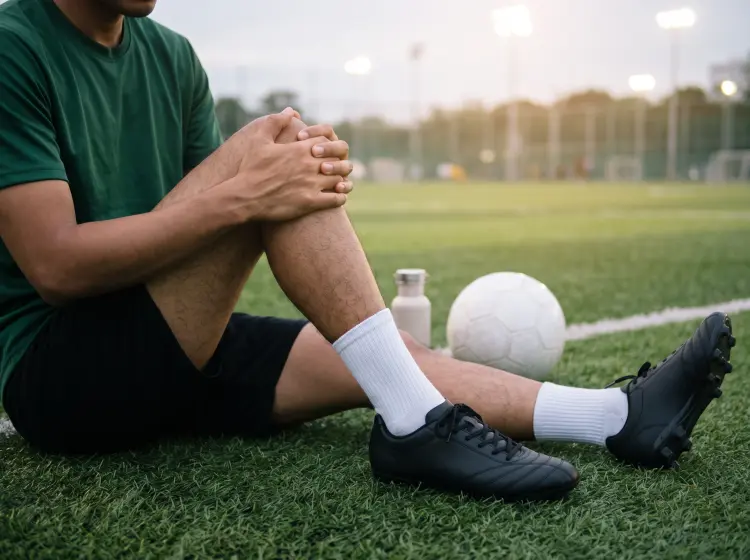
Common Causes of Knee Pain Due to Football
Everyday knocks and strains, such as a bruise, a strained muscle or a mild sprain, are a common cause of knee pain after football and usually settle with rest. Other causes usually need checking, such as a torn ligament or meniscus, or a tendon overloaded by repeated running and jumping.
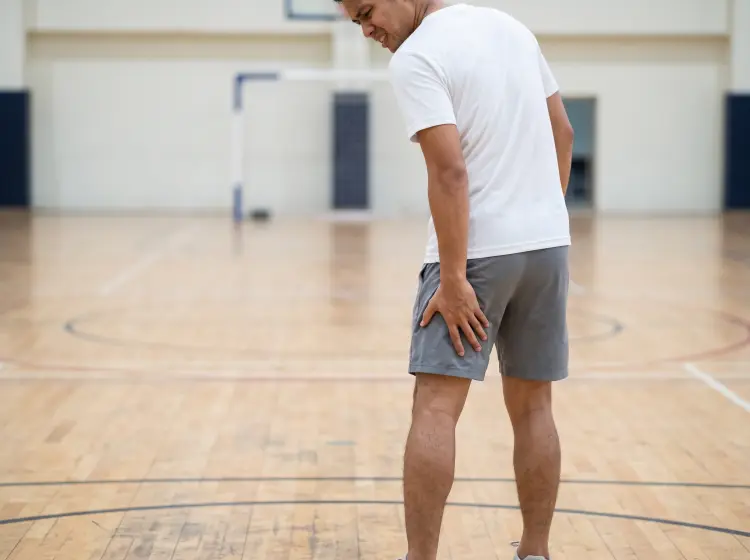
Bruise or Muscle Strain
A knee bruise is caused by a knock that damages small blood vessels under the skin, such as a tackle, a hit from the ball or a fall. Most bruises fade within two weeks without treatment.
A muscle strain is an overstretched or torn muscle, such as a hamstring or another thigh muscle near the knee. A strained hamstring usually causes a sudden, sharp pain at the back of the thigh, often during a sprint, and the pain can spread towards the back of the knee.
Ligament Sprain
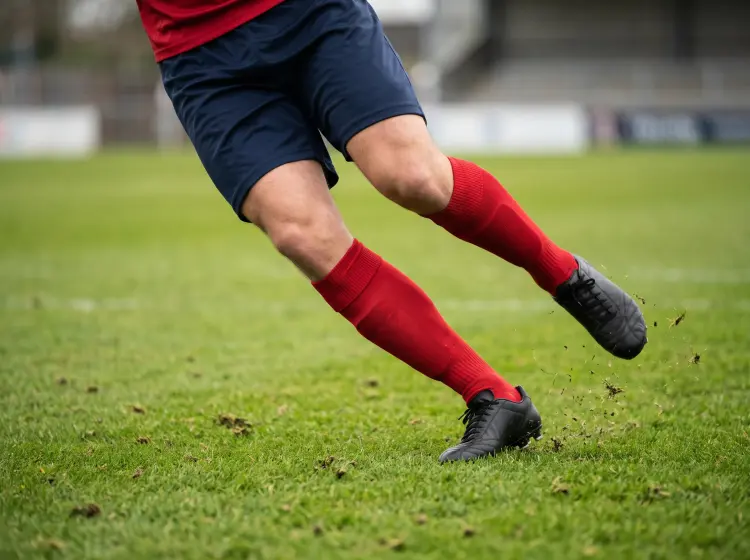
A knee sprain is a stretched or torn ligament, the tough tissue that holds the knee bones together. On the football pitch, a sprain usually happens during a twist, a sudden change of direction or a tackle.
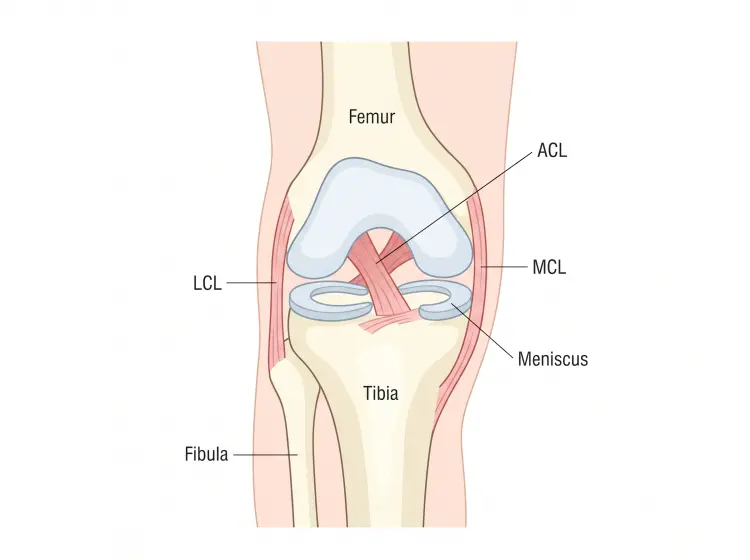
The medial collateral ligament (MCL), on the inner side of the knee, is sprained more often than the lateral collateral ligament (LCL) on the outer side. An MCL sprain usually follows a blow to the outer side of the knee and causes pain and swelling on the inner side.
An anterior cruciate ligament (ACL) tear, deep in the middle of the knee, usually happens when a player changes direction quickly, stops suddenly or lands awkwardly. Many players hear a pop and feel the knee give way, and the knee usually swells within 24 hours.
Meniscus Tear
A meniscus tear is a tear in one of the two rubbery cushions between the thigh bone and shin bone, and in football it usually happens during a twist or a sharp change of direction.
Many players feel a pop and can still walk or keep playing at first. Over the next few days, the knee may become stiffer and more swollen, and it can catch, lock or give way.
Tendon and Kneecap Pain
Pain at the front of the knee that builds up over weeks of football training is often caused by overloading the tendon below the kneecap or the joint behind the kneecap.
Jumper's knee (patellar tendinopathy) is pain in the tendon just below the kneecap, commonly brought on by repeated jumping and sprinting, especially after a sudden increase in training. The pain usually starts during or after activity and eases with rest, but it often returns if the tendon keeps being overloaded.
Runner's knee (patellofemoral pain) is a dull ache around or behind the kneecap, made worse by running, jumping, squatting, using stairs or sitting for a long time with the knees bent. Weak thigh muscles and a sudden increase in activity can make it more likely.
Osgood-Schlatter Disease
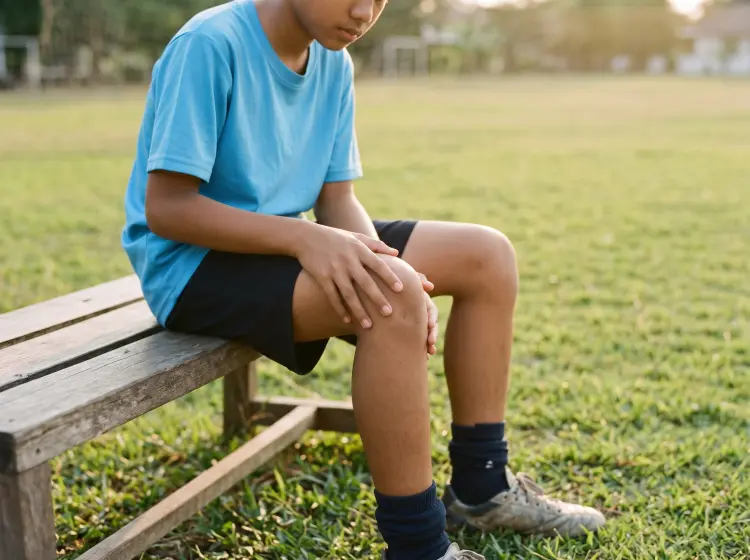
Osgood-Schlatter disease is a common cause of knee pain in growing children and teenagers who play running and jumping sports such as football.
The thigh muscles pull on the tendon below the kneecap, which pulls on a growth area at the top of the shin bone, and this repeated pulling can cause pain, swelling and a tender bump just below the kneecap. The pain usually stops once the child finishes growing, although the bump can remain.
What Does Knee Pain After Football Feel Like?
Knee pain due to football can feel like a dull ache that comes on gradually with training, or a sharp pain that starts suddenly after a twist, a tackle or an awkward landing.
The part of the knee that hurts, and when it hurts, can point to the likely cause:
| Where It Hurts | When It Usually Hurts | Possible Cause |
|---|---|---|
| Front of the knee, around or behind the kneecap | During running, squatting or using stairs, or after sitting with your knees bent | Runner's knee (patellofemoral pain) |
| Just below the kneecap | During or after jumping and sprinting, with a tender bump in growing children | Jumper's knee (patellar tendinopathy), or Osgood-Schlatter disease in children and teenagers |
| Inner side of the knee | After a tackle, a blow to the outer side of the knee or a twist | Medial collateral ligament (MCL) sprain or a meniscus tear |
| Outer side of the knee | After a twist or a blow to the inner side of the knee | Lateral collateral ligament (LCL) sprain or a meniscus tear |
| Back of the knee | After a sudden twist, or a sharp pain that starts during a sprint | Meniscus tear or a hamstring strain |
| Deep inside the knee, with swelling | A sharp pain soon after a twist, sudden stop or awkward landing, often with a pop | Anterior cruciate ligament (ACL) tear or a meniscus tear |
 Unsure what is causing your knee pain after football? Book a consultation for an assessment and a recovery plan built around your symptoms and your training.
How to Relieve Knee Pain From Football
Knee pain from a knock, a strain or a mild twist in football usually eases with a few days of rest and simple first aid at home.
A knee with any of the warning signs in the next section should be medically assessed, not managed with first aid alone. The first-aid steps include the RICE method (rest, ice, compression and elevation):
- Stop playing – Leave the pitch as soon as your knee hurts, rather than playing through the pain.
- Rest the knee – Put as little weight on it as you can, for example by avoiding long periods of standing.
- Apply ice – Hold an ice pack wrapped in a towel on the knee for up to 20 minutes every 2 to 3 hours.
- Use compression and raise the leg – Wrap a bandage around the knee for support during the day, and keep the leg raised on a pillow when you can.
- Take pain relief – Paracetamol, or ibuprofen gel or tablets, can ease the pain.
- Keep the knee moving gently – Gentle movement, once the pain allows, can help prevent the knee from becoming stiff.
When Should You See a Doctor About Your Knee?
If your knee hurts after football, it should generally be medically assessed when the pain gets worse, has not improved after a few weeks of rest and home treatment, or comes back every time you play. The same applies to a growing child who has a tender bump just below the kneecap that hurts during or after football.
Have the knee assessed promptly if you notice:
- Swelling – The knee swells up within hours of the injury, or the swelling keeps growing.
- A pop at the time of injury – You heard or felt a pop when you twisted, stopped or landed.
- Giving way – The knee feels unstable or gives way when you stand, turn or go down stairs.
- Locking or catching – The knee gets stuck, will not straighten fully, or catches painfully when you move it.
Seek urgent medical attention if you cannot put any weight on the leg, the knee looks out of shape, the leg feels numb or cold, or the knee is hot and red and you have a fever.
How Is Knee Pain From Football Treated?
Treatment for knee pain after football depends on what is causing it. Bruises, strains and mild sprains usually get better with rest, ice and time to recover, while tendon and kneecap pain, Osgood-Schlatter disease and more serious ligament or meniscus injuries usually need physiotherapy and a gradual return to play.
An injection or surgery is considered only for some injuries, such as tendon pain that does not settle, an ACL tear or a meniscus tear that keeps locking the knee.
Physiotherapy
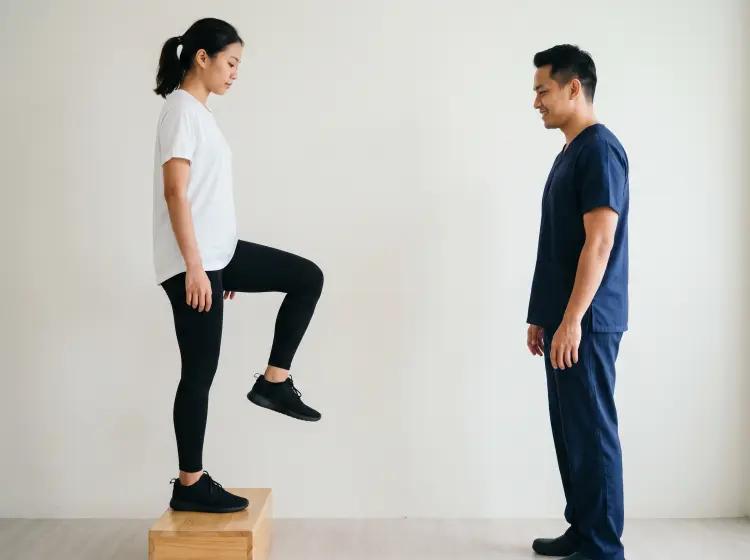
Physiotherapy aims to rebuild strength in the thigh and hip muscles, restore the knee's movement and prepare you for a gradual return to football.
For some ligament sprains, a hinged knee brace may be worn to support the knee while it heals.
Injection or Surgery
An injection may be considered to ease the pain of a tendon problem or a meniscus tear that does not settle with physiotherapy.
A platelet-rich plasma (PRP) injection uses a concentrate of the player's own blood. A cortisone injection can ease pain for a time, but it is used with care near a tendon, as it can weaken the tendon.
Surgery may be recommended for some injuries, such as an ACL tear in a player who wants to return to football, or a meniscus tear that repeatedly locks the knee or still causes pain after physiotherapy. An ACL tear that needs surgery is usually reconstructed, and a meniscus tear can be repaired or trimmed through keyhole surgery (knee arthroscopy).
Gradual Return to Football
Going back to football gradually, after the pain has eased and the knee feels strong and stable, can make the pain less likely to return.
Recovery time varies, as mild sprains and strains usually feel better after about two weeks, while a severe ligament injury can take several months. A return to football after ACL surgery usually takes 9 to 12 months.
How to Prevent Knee Injuries in Football
A few habits before and between matches and training sessions can lower the chance of a knee injury:
- Warm up before every match and training – Spend 10 to 15 minutes on light running and dynamic stretches, such as leg swings and lunges.
- Strengthen the thigh and hip muscles – Regular strengthening exercises for the quadriceps, hamstrings and hip muscles can help control the knee during running and landing.
- Practise landing and changing direction – Keep the knee in line with the foot, as a knee that collapses inwards can put extra strain on its ligaments.
- Build up training gradually – Increase how often and how hard you train step by step, allow recovery between hard sessions, and restart below your usual level after a break.
- Wear suitable boots – Choose boots designed for the surface you play on, such as studded boots for grass.
A knee strap, strapping tape or a brace may make the knee feel more stable for some players, for example with tendon pain or after a ligament injury, but these do not replace strengthening exercises.
Knee pain from a football knock or strain often settles within days if you rest early instead of playing on. Building strength around the knee can then help you return to the pitch and keep playing with confidence.
Dr Foo Gen Lin
Find a Knee Specialist Near Me
Apex Novena
Why Do Patients Choose Apex Sports Clinic?
-
16+
-
30,000+
-
3,000+
Sports Doctor in Singapore: Personalised & Affordable Care
One-Stop Sports Clinic
Consultation, imaging and injections through to physiotherapy, sports massage and surgery, all in one clinic.
Keyhole Surgery Expertise
Arthroscopic keyhole surgery for sports injuries, using small incisions to limit tissue disruption, with open surgery available when an injury needs it.
Specialist in Sports Injury Management
Evidence-based injury care that also builds your strength and function, to support your recovery and return to sport.
Your Patient Journey at Apex Sports Clinic
-
 1
Schedule Your Appointment
Book online or WhatsApp us, and our team will get back to you as soon as we can.
-
 2
Consultation & Diagnosis
We assess your condition and explain what is causing your symptoms, in plain terms.
-
 3
Customised Treatment Plan
A plan matched to your condition, your goals and the activities you want to return to.
Schedule an Appointment

Our Insurance Partners




Frequently Asked Questions (FAQs)
Your knees may hurt badly after football because of a sudden injury, such as a twist or tackle, or because repeated running, jumping and kicking have overloaded them. A sprained ligament or a torn meniscus (the cushioning cartilage inside the knee) often hurts at the time and may swell over the following hours or days. Pain from overloading the knee tends to build up over weeks of training and is often worse during or after a match. Treatment usually starts with rest and first aid.
Knee injuries in football that can be serious include an anterior cruciate ligament (ACL) tear, a meniscus tear that locks the knee and a dislocated kneecap. The ACL, the ligament in the middle of the knee, may tear completely when a player twists, stops suddenly or lands awkwardly. Some players need surgery to rebuild it. A torn meniscus (cushioning cartilage inside the knee) can stop the knee straightening fully. A dislocated kneecap, where the kneecap slips out of place, can happen after a collision or a sudden change of direction.
An anterior cruciate ligament (ACL) tear usually makes the knee swell within 24 hours and give way, while with a meniscus tear (torn cushioning cartilage inside the knee) the knee can become stiffer and more swollen over a few days and may catch or lock. Both can start with a pop during a twist. With a meniscus tear, you may be able to keep playing at first. The two can happen together and their signs overlap, so a knee with signs of either injury should be assessed promptly.
Signs that a knee injury may be serious include swelling within hours, a pop or the knee giving way at the time of injury, and locking or catching. These signs can point to a torn ligament or meniscus, so a knee with any of them should be assessed promptly. Pain that keeps getting worse should also generally be assessed. Seek urgent medical attention if the leg cannot take any weight, the knee looks misshapen, the leg is numb or cold, or the knee is hot and red with a fever.
Knee pain that has not improved after a few weeks of rest and home treatment has generally lasted too long and should be medically assessed. Muscle soreness after a hard match usually eases within a few days, and most bruises fade within two weeks. Pain that returns with every match should also generally be assessed, even if it settles in between. A knee that swelled up within hours of an injury, or that locks or gives way, should be assessed promptly, without waiting.
Relieving knee pain after football usually starts with stopping play and using the RICE method (rest, ice, compression and elevation) for the first two to three days. A painkiller such as paracetamol, or ibuprofen gel or tablets, can ease the pain. Pain that keeps coming back usually needs its cause treated, often with exercises to strengthen the thigh and hip muscles so the knee can cope with football again. Consult a sports doctor or physiotherapist for advice tailored to your knee.
Ice is usually more suitable for knee pain in the first two to three days after football, as cold can ease pain and swelling. Heat can increase swelling at this stage, but it tends to suit later stiffness or aching muscles once any swelling has gone down. Wrap the ice pack or heat pack in a towel, and use ice for up to 20 minutes at a time. If the pain has not improved after a few weeks, or keeps getting worse, have your knee assessed.
A sprained knee is usually best rested as straight as is comfortable, rather than bent. A knee that stays bent can become hard to straighten fully. Raising the leg on a pillow can help reduce swelling in the first few days. Once the pain allows, gently bending and straightening the knee can help prevent stiffness, as long as the movement does not cause sharp pain. It is best to consult a sports doctor or physiotherapist for advice suited to your sprain, including how to wear any knee brace.
Playing football with knee pain is generally not advisable, as carrying on through the pain can make a minor injury worse and get in the way of proper healing. Some injuries, such as a torn meniscus, may not stop a player at first but can become more painful and swollen afterwards. Resting from football until the pain has settled, then returning gradually once the knee feels strong and stable, can make the pain less likely to come back.
Yes, a sore knee often heals by itself when the cause is muscle soreness, a bruise or a mild sprain, usually within days to a few weeks. A torn ligament, or a torn meniscus (the cushioning cartilage inside the knee), usually needs to be assessed and treated, for example with physiotherapy and sometimes surgery. Tendon pain may ease with rest but can return when training resumes if the knee has not been strengthened. A sore knee that is no better after a few weeks should be medically assessed.
Early rest and treatment of the cause can help a knee injury heal faster, as playing on through the pain can make the injury worse and stop it healing properly. Physiotherapy can help by restoring the knee's movement and building strength in the thigh and hip muscles that support it. Returning to football gradually, once the knee feels strong and stable, can also help avoid a setback. It is best to speak to a sports doctor or physiotherapist about a recovery plan suited to your injury.
A knee support can be worn while playing football, but it does not replace warming up and strengthening the thigh and hip muscles, which can help protect the knee. After a ligament injury, a brace may be suggested during sport to help protect the knee while it regains strength. A knee strap or tape may also ease tendon pain below the kneecap. It is best to ask a sports doctor or physiotherapist whether a support suits your knee and which type to use.