
Shoulder Impingement: Symptoms, Causes, Tests and Treatment
Information reviewed by: Dr Foo Gen Lin | Last updated:
Shoulder pain when you lift your arm or reach overhead? At Apex Sports Clinic, our shoulder specialist and physiotherapists can assess the cause and plan your treatment in one clinic.

MBBS | MMed (Ortho) | FRCSEd (Ortho) | FAMS (Ortho)

What Is Shoulder Impingement?
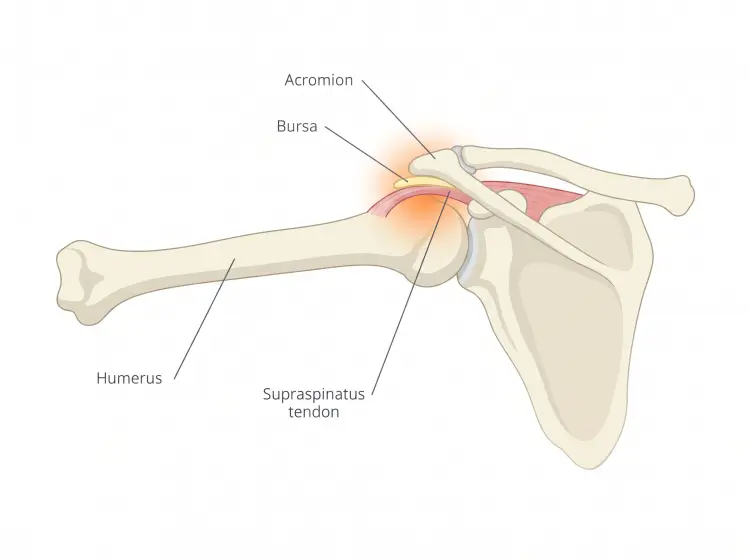
Shoulder impingement is a common cause of shoulder pain in which a rotator cuff tendon is pinched against the top of the shoulder blade when you raise your arm.
It is also called subacromial impingement or shoulder impingement syndrome, and it is one of the shoulder problems sometimes called swimmer's shoulder.
The rotator cuff is a group of four muscles whose tendons join the upper arm bone to the shoulder blade. These tendons pass through a narrow gap under the top of the shoulder blade (the acromion), called the subacromial space, where a fluid-filled sac (bursa) cushions them.
The subacromial space becomes smaller each time you raise your arm, so repeated pinching can irritate the tendons, most often the supraspinatus tendon at the top of the shoulder, and inflame the bursa.
What Causes Shoulder Impingement?
Shoulder impingement happens when the space under the acromion narrows or the tendons in it swell, and this can be caused or made more likely by:
- Repeated overhead movements – Sports such as badminton, swimming, tennis and volleyball, or overhead work such as painting, can irritate the tendons, especially after a sudden increase in activity.
- Weak or tired shoulder muscles – The rotator cuff muscles keep the top of the upper arm bone centred as the arm is lifted, and if they are weak or tired, the bone can rise towards the acromion and pinch the tendons.
- Posture – Rounded shoulders and changes in the way the shoulder blade moves can narrow the space under the acromion.
- Bone shape and bone spurs – A curved or hooked acromion, or bone spurs from wear or arthritis in the acromioclavicular (AC) joint above, can leave less room for the tendons.
- An injury – Less often, a fall or another injury to the shoulder can bring on impingement, although sudden pain after a fall can also mean a tear or a broken bone.
The risk also rises with age, as the tendons wear and bone spurs become more likely.
What Are the Symptoms of Shoulder Impingement?
If you have shoulder impingement, the pain usually builds up gradually, and common symptoms include:
- Pain when lifting the arm – The pain is often worse when you raise your arm out to the side or above your head, especially partway up, which is called a painful arc.
- Pain at the front or outer side of the shoulder – The pain can spread down the side of the upper arm.
- Pain at night – The pain may be worse at night, especially when you lie on the affected shoulder.
- Pain reaching behind your back – Putting your hand behind your back, such as when getting dressed, can also be painful.
- Weakness or stiffness – The arm may feel weak or stiff, and marked weakness can point to a rotator cuff tear.
Irritation of the tendons under the acromion is called rotator cuff tendinitis (also spelt tendonitis), and inflammation of the bursa is called subacromial bursitis. The swelling from either can leave even less room under the acromion.
Shoulder impingement that is left untreated can get worse and may raise the risk of a rotator cuff tear.

When to Seek Medical Attention
Shoulder pain that has not improved after about 2 weeks, disturbs your sleep or stops you from doing your usual activities should generally be medically assessed.
Have the shoulder assessed promptly if the pain keeps getting worse or you have difficulty moving the arm normally.
Seek urgent medical attention if you notice any of these:
- Sudden, severe shoulder pain
- Chest pain, shortness of breath or sweating with the shoulder pain
- Being unable to move your arm
- Swelling or a change in the shape of your shoulder
- Numbness or pins and needles that do not go away
- Feeling feverish or unwell
Shoulder Impingement vs Rotator Cuff Tear vs Frozen Shoulder
Shoulder impingement, a rotator cuff tear and frozen shoulder can all cause pain around the shoulder, but they differ in what is affected and in how the arm moves:
| Feature | Shoulder Impingement | Rotator Cuff Tear | Frozen Shoulder |
|---|---|---|---|
| What is affected | A rotator cuff tendon, or the bursa above it, is pinched under the acromion | One or more rotator cuff tendons are partly or fully torn | The capsule around the shoulder joint becomes thickened, inflamed and tight |
| How it usually starts | Gradually with repeated overhead use, or after a sudden increase in activity | After a fall or injury, or gradually through overuse and wear | Gradually over several months, often after a period of reduced shoulder movement |
| Movement and strength | Raising the arm is painful, often partway up (a painful arc) | The arm is often weak when lifting or turning it, and lifting may be difficult | Movement is restricted in all directions, even when someone else moves the arm |
An examination, sometimes with a scan, is usually needed to tell these conditions apart.
 Shoulder still painful when you raise your arm, even after resting it? Book a consultation with our shoulder specialist for an assessment and a treatment plan.
How Is Shoulder Impingement Diagnosed?
Shoulder impingement is usually diagnosed from your symptoms and an examination of the shoulder, sometimes with a scan.
- Physical examination to check where the shoulder is tender, how far and how strongly the arm moves, and whether lifting or turning the arm in certain positions brings on the pain, as in the Neer and Hawkins-Kennedy tests. The neck may also be examined to rule out a trapped nerve.
- X-ray to show bone spurs or other changes in the bones, although an X-ray does not show the tendons themselves.
- Ultrasound or magnetic resonance imaging (MRI) scan, sometimes arranged to show inflammation in the tendons or bursa, or a rotator cuff tear.
- Local anaesthetic injection into the space under the acromion, sometimes given during the examination to check whether numbing the area eases the pain, which supports the diagnosis.
How Is Shoulder Impingement Treated?

Shoulder impingement is usually treated without surgery, with rest from the movements that cause pain, pain relief and physiotherapy exercises, and a cortisone injection may be considered if the pain does not settle. Surgery is rarely needed.
Rest and Pain Relief
Easing off the sport or activity that brings on the pain can allow it to settle. Stopping shoulder movement completely can slow recovery, so gentle movement is usually encouraged.
An ice pack wrapped in a towel, held on the shoulder for up to 20 minutes 2 to 3 times a day, may ease the pain. Paracetamol may be prescribed to ease the pain, or an anti-inflammatory painkiller such as ibuprofen to ease pain and swelling.
Physiotherapy
Physiotherapy is usually the first-line treatment for shoulder impingement, starting with an assessment of how your shoulder moves.
An exercise programme is then set to strengthen the muscles around the shoulder and shoulder blade, and it is progressed as the pain settles. The programme often comes with hands-on therapy and advice on posture and on adapting how you play sport or work.
Cortisone Injection
A corticosteroid (steroid) injection, often called a cortisone injection, may be offered if rest and exercises do not ease the pain on their own. The steroid is usually injected into the bursa under the acromion, sometimes with ultrasound guidance, to reduce inflammation.
The pain relief is usually short term, often around 4 to 8 weeks, and physiotherapy generally continues during this time to build up strength. Repeat injections are possible, but the number given into the same area each year is usually limited.
Surgery
Surgery is rarely needed for shoulder impingement. It may be considered if the pain continues despite physiotherapy and other non-surgical treatment.
Subacromial decompression, the main operation for shoulder impingement, widens the space for the tendon by removing the inflamed bursa and smoothing the underside of the acromion. It is usually performed by keyhole (arthroscopic) surgery through a few small cuts, and physiotherapy follows for several months.
How Long Does Shoulder Impingement Take to Heal?
With treatment, shoulder impingement usually starts to improve within a few weeks, although it can take a few months to heal completely. Some people need treatment and rehabilitation for up to a year.
Recovery tends to take longer when symptoms have been present for a long time or are severe, or when exercises and advice are not kept up.
After subacromial decompression, the pain usually takes 2 to 4 months to ease, but it can take up to a year, and some people still have some pain afterwards.
How to Prevent Shoulder Impingement
The risk of shoulder impingement can be lowered by reducing repeated strain on the shoulder:
- Warm up first – Stretch before sport or physical work, and cool down afterwards.
- Build up gradually – Increasing training or overhead work step by step helps avoid the sudden increase in activity that often brings on shoulder impingement.
- Keep up your shoulder exercises – Continuing the exercises prescribed by your physiotherapist after the pain settles can help keep the rotator cuff and shoulder blade muscles strong.
- Use good posture and technique, and take breaks – Good posture and technique in sport and work, regular breaks from overhead tasks and not playing through pain can all help reduce strain on the shoulder.
Shoulder impingement often settles when you ease off early from the movements that pinch the tendon. Strengthening the muscles around the shoulder blade can then help you return to your sport and daily activities.
Dr Foo Gen Lin
Find a Shoulder Specialist Near Me
Apex Novena
Why Do Patients Choose Apex Sports Clinic?
-
16+
-
30,000+
-
3,000+
Sports Doctor in Singapore: Personalised & Affordable Care
One-Stop Sports Clinic
Consultation, imaging and injections through to physiotherapy, sports massage and surgery, all in one clinic.
Keyhole Surgery Expertise
Arthroscopic keyhole surgery for sports injuries, using small incisions to limit tissue disruption, with open surgery available when an injury needs it.
Specialist in Sports Injury Management
Evidence-based injury care that also builds your strength and function, to support your recovery and return to sport.
Your Patient Journey at Apex Sports Clinic
-
 1
Schedule Your Appointment
Book online or WhatsApp us, and our team will get back to you as soon as we can.
-
 2
Consultation & Diagnosis
We assess your condition and explain what is causing your symptoms, in plain terms.
-
 3
Customised Treatment Plan
A plan matched to your condition, your goals and the activities you want to return to.
Schedule an Appointment

Our Insurance Partners




Frequently Asked Questions (FAQs)
Shoulder impingement is not usually serious, and it often improves within a few weeks to months with rest from painful movements, pain relief and physiotherapy exercises. It can get worse if the movements that pinch the tendon continue, which may raise the risk of a rotator cuff tear (a tear in one of the tendons that move and steady the shoulder). If the pain has not improved after about 2 weeks, consider having it assessed by a shoulder specialist or physiotherapist.
Pain from an impinged shoulder ranges from a mild ache during overhead movements to sharp pain when lifting the arm. As the condition goes on, it can become a dull ache at rest or at night. With pain relief, physiotherapy exercises and a break from the movements that bring it on, the pain usually starts to ease within a few weeks. Seek prompt medical assessment if the pain keeps getting worse, or urgent medical attention if it is sudden and severe.
Yes, shoulder impingement is often worse at night, as lying down, especially on the affected side, can put more strain on the shoulder. With fewer distractions at night, the pain can also feel more noticeable and disturb sleep. Treatment usually involves easing off overhead movements, pain relief and physiotherapy exercises to strengthen the shoulder.
Several shoulder and neck problems can be mistaken for shoulder impingement, as they also cause pain around the shoulder and upper arm. These include a rotator cuff tear, frozen shoulder (thickening and tightening of the capsule around the shoulder joint) and arthritis in the shoulder. A trapped nerve in the neck can also cause similar shoulder and upper arm pain. An examination, sometimes with an X-ray or scan, is generally needed to tell these conditions apart.
A rotator cuff tear is generally the more serious problem, because the tendon itself is torn rather than pinched and irritated. Shoulder impingement typically causes pain when lifting the arm and at night, which often eases over weeks to months with rest and, if needed, physiotherapy. A tear can cause similar pain, often with weakness when lifting or turning the arm. Many partial tears improve without surgery, but some tears need surgery to repair the tendon.
Numbness in the hand is not a typical sign of shoulder impingement, which mainly causes pain around the shoulder and upper arm. Tingling is not typical either. Numbness or tingling in the hand or fingers can point to a trapped nerve in the neck instead, so it should be assessed promptly, and urgently if the pins and needles or numbness do not go away.
Neck pain is not a typical symptom of shoulder impingement, which mainly causes pain at the front and outer side of the shoulder that can spread down the upper arm. A trapped nerve in the neck can cause similar shoulder and arm pain, so the two can be mistaken for each other, and occasionally both are present. Shoulder pain that comes with neck pain should generally be medically assessed, with an examination of both the neck and the shoulder to find where the pain is coming from.
You cannot confirm shoulder impingement at home, but pain when you raise your arm out to the side, especially partway up, is a common sign. Pain when lying on that shoulder at night or reaching behind your back can also point to it. A rotator cuff tear and other shoulder problems can cause similar pain, so diagnosis usually needs an examination, sometimes with a scan. If you are experiencing symptoms of impingement, it is best to have your shoulder assessed by a shoulder specialist or physiotherapist.
You can see a sports doctor, a shoulder specialist (an orthopaedic surgeon who treats shoulder problems) or a physiotherapist to have shoulder impingement assessed. A physiotherapist can diagnose it and plan an exercise programme, while a doctor can also arrange an X-ray or scan, prescribe medicines, and discuss a cortisone injection, or rarely surgery, if the pain does not settle. At Apex Sports Clinic, we have a team comprising a shoulder specialist, sports doctors and physiotherapists who assess shoulder impingement in one clinic.
Shoulder impingement often improves on its own over a few weeks or months, especially when the movements that cause the pain are eased and the shoulder keeps moving gently. Continuing overhead sport, work or heavy lifting through the pain can make it worse. Ice and shoulder exercises can help it settle. If the pain lingers despite easing those movements, it is advisable to see a shoulder specialist or physiotherapist.
Shoulder impingement often settles well with treatment, although this can take a few months, and occasionally up to a year. Most people improve with physiotherapy exercises and by easing off painful movements, and a cortisone injection may be considered if the pain does not settle, while surgery is rarely needed. In some people the pain becomes long-standing, although it can often be well controlled with continued exercises. If your shoulder pain is not settling, see a shoulder specialist or physiotherapist about treatment options.
Untreated shoulder impingement can get worse, with more pain, weakening of the shoulder muscles and less movement, which can make everyday activities harder. What starts as a minor problem can then take longer to heal, and long-standing impingement may raise the risk of a rotator cuff tear, a tear in one of the tendons that move and steady the shoulder. Shoulder pain that is not getting better should generally be assessed by a shoulder specialist or physiotherapist.
Easing off painful movements early and starting shoulder exercises as soon as the pain allows can help shoulder impingement settle. Painkillers may be prescribed to ease the pain, and an ice pack can also help. Gentle movement can help stop the shoulder becoming weak. If the pain does not settle, consider consulting a shoulder specialist or physiotherapist for an assessment and treatment.
There is no set number of days to rest for shoulder impingement, and it usually starts to improve within a few weeks. Complete rest is usually not advised, as keeping the shoulder still can weaken it and slow recovery, so ease off the movements that bring on the pain while moving it gently within a pain-free range. If your shoulder is no better after about 2 weeks, see a shoulder specialist or physiotherapist.
Massage may help ease muscle tightness and pain around the shoulder, but it is not usually a treatment for shoulder impingement on its own. Massage can be used alongside strengthening exercises, which are a main part of treatment. Firm massage over an irritated shoulder can leave it sorer, so massage is best given by a trained therapist who can adjust the pressure. At Apex Sports Clinic, we offer sports massage alongside physiotherapy and sports medicine as part of treatment plans for shoulder pain.
Heat can help some people with shoulder impingement, as a hot shower, bath or heat pack can ease aching and loosen the shoulder. An ice pack wrapped in a towel, held on for up to 20 minutes at a time, is often used instead when the shoulder is painful and swollen. Both ease symptoms rather than the cause, so they are generally used alongside rest from painful movements and shoulder exercises. A shoulder specialist or physiotherapist can advise on whether heat or ice suits your shoulder.
Exercising with shoulder impingement may be possible within a pain-free range, but which exercises are suitable depends on how irritated the shoulder is. Overhead weight training and heavy lifting are usually reduced until the pain settles. Staying active can help recovery. It is advisable to consult a physiotherapist or sports doctor for personalised advice on how much to train.
Shoulder impingement exercises aim to strengthen the rotator cuff and shoulder blade muscles and stretch the back of the shoulder. They include shoulder blade squeezes, turning the forearm outwards with the elbow at the side, a crossover arm stretch, pendulum swings and, later on, wall slides. Some discomfort during the exercises can be normal, but pain that lasts more than half an hour afterwards usually means they need easing back. It is best to consult a shoulder specialist or physiotherapist on the most suitable exercises for your shoulder condition.
With shoulder impingement, the movements that bring on your pain are best avoided, such as working with your arms above shoulder level for long periods, lifting heavy loads away from your body or overhead, and playing sport through pain. Stopping all shoulder movement is not advised either, as gentle movement and exercises help recovery. For advice on which activities to reduce and for how long, consult a shoulder specialist or physiotherapist.
Sleeping on the back, or on the side that is not painful, is usually more comfortable with shoulder impingement, and resting the painful shoulder on a couple of pillows may help. Lying on the affected shoulder is best avoided, as night pain is often worse in that position. Sleeping on the same arm night after night can also contribute to the problem. It is best to consult a shoulder specialist or physiotherapist for personalised advice on the most suitable sleeping position for your shoulder.