
Shoulder Pain After Badminton: Causes & Treatment
Information reviewed by: Dr Foo Gen Lin | Last updated:
Shoulder pain after badminton that keeps coming back? At Apex Sports Clinic, our doctors and physiotherapists treat shoulder injuries to help you play and train comfortably again.

MBBS | MMed (Ortho) | FRCSEd (Ortho) | FAMS (Ortho)

Is It Normal to Have Shoulder Pain After Badminton?
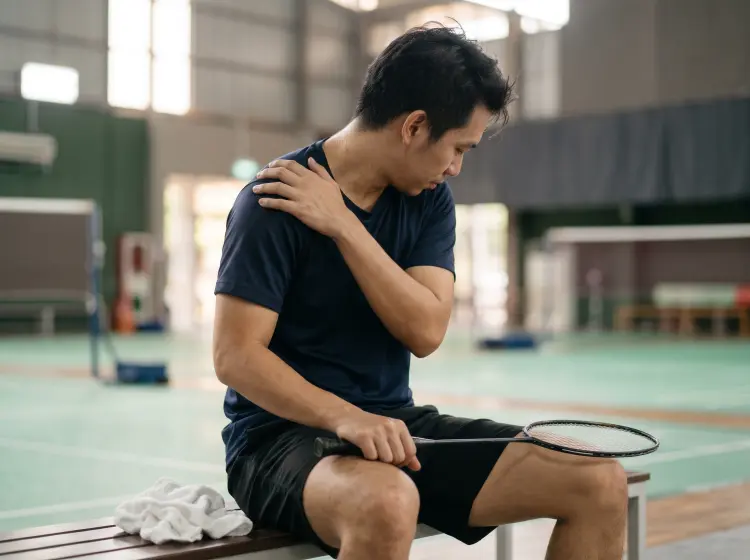
Mild, dull shoulder soreness after badminton is common, especially after a long session or a harder game than usual, and it usually eases within a few days.
Muscle pain after playing badminton usually comes from muscles working harder than they are used to. This type of soreness tends to start later that day or the next day, feels like an ache or stiffness rather than a sharp pain, and is often relieved by gentle movement.
Badminton shoulder pain that does not follow this pattern may be a sign of an injury rather than normal soreness, and it should generally be medically assessed if you notice:
- Pain that lasts or keeps returning – The pain has not started to ease after about two weeks, or it comes back every time you play.
- Pain at night – The pain wakes you up or makes it hard to lie on the painful side.
- Weakness – Lifting your arm, reaching overhead or holding the racket up feels weak or difficult.
- A sudden sharp pain or pop – The pain started during a single stroke, often a smash, sometimes with a popping feeling.
- Numbness or tingling – Pins and needles or numbness spreads down the arm, a symptom that can also come from a trapped nerve in the neck.
Why Does Badminton Cause Shoulder Pain?
Badminton can cause shoulder pain, commonly from a rotator cuff injury, shoulder impingement or a muscle strain, because overhead strokes, especially the smash, put repeated, fast loads on the rotator cuff and the other tissues around the shoulder joint.
The rotator cuff is a group of four muscles and their tendons that hold the ball of the upper arm bone steady in the shoulder socket.
Shoulder problems are common badminton injuries, alongside ankle and knee injuries. With many smashes, clears and overhead drops in a single game, shoulder pain after a badminton smash can be a sign that the rotator cuff and the tissues around it are not recovering fully between sessions.
Less often, repeated overhead strokes can stretch the tissues that hold the shoulder joint in place, which may lead to shoulder instability (a shoulder that feels loose or slips) or a tear in the labrum, the rim of cartilage around the socket.
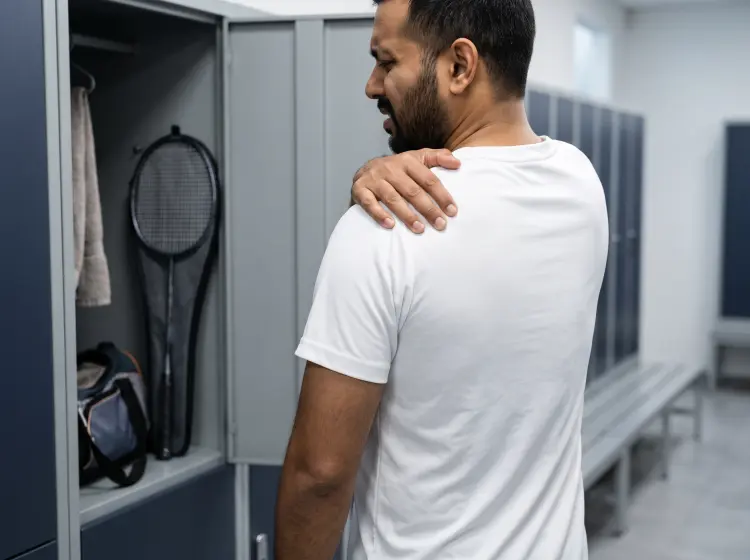
Rotator Cuff Injury
A rotator cuff injury in badminton is usually an overuse problem called rotator cuff tendinopathy, in which the tendons become irritated and painful from repeated smashing and overhead play. Each smash makes the rotator cuff muscles work hard to lift and turn the arm, and then to slow it down after the hit.
Over time, the tendons can wear and thicken, and in some cases this leads to a partial tear.
A rotator cuff injury may be more likely when you suddenly play more often or harder than usual, such as before a tournament or after a break. A smash powered mainly by the arm, instead of by turning the hips and trunk, may also add to the risk.
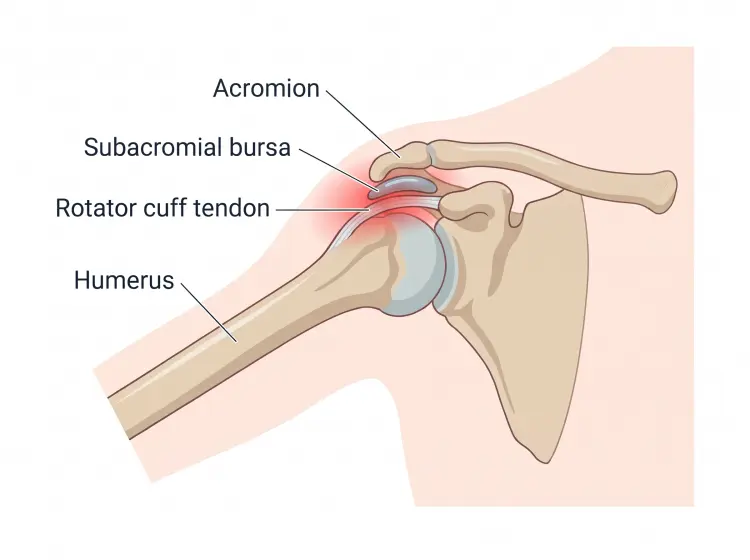
Shoulder Impingement
Shoulder impingement happens when the rotator cuff tendons and the bursa above them are pinched under the bony tip of the shoulder, called the acromion, as the arm is raised.
The bursa is a small fluid-filled cushion that lets the tendons glide smoothly, and the pinching can make it swollen and painful, a condition called subacromial bursitis.
Badminton players raise the arm overhead many times in each game, so this pinching can happen repeatedly. Weak or poorly coordinated muscles around the shoulder blade can make impingement more likely, as the shoulder blade may not rotate enough to keep the space under the acromion open when you reach up.
Muscle Strain
A shoulder muscle strain is an overstretch or tear of the muscle fibres, often caused by a sudden forceful stroke such as a hard smash or a long reach for the shuttle. It is also called a pulled shoulder muscle.
A shoulder strain is more likely late in a long session, when the muscles are tired, or when play starts without a proper warm-up. A strain usually hurts at the moment it happens, unlike the soreness that builds up later that day or the next day.
What Does Badminton Shoulder Pain Feel Like?
Badminton shoulder pain usually feels like an ache or a sharp pain that comes on with overhead strokes, and where it hurts often suggests the type of injury.
| Where It Hurts | When It Usually Hurts | Possible Cause |
|---|---|---|
| Front of the shoulder | When you reach overhead or across your body, and during smashes | Shoulder impingement or a rotator cuff injury |
| Outer shoulder | A dull ache when you lift your arm out to the side, often spreading to the upper arm, or a sharp pain around shoulder height that eases once the arm is higher or lower | Rotator cuff injury (dull ache) or shoulder impingement (sharp pain around shoulder height) |
| Back of the shoulder | During the follow-through of smashes and clears, as your arm slows down after the hit | Rotator cuff injury or a muscle strain at the back of the shoulder |
| Deep inside the shoulder | During overhead strokes, often with a clunk, a catch or a feeling that your shoulder is slipping | Shoulder instability or a labral tear |
Several of these problems can cause pain in the same place, so an assessment is usually needed to confirm the cause.
 Unsure what is causing your shoulder pain after badminton? Book a consultation for an assessment and a treatment plan built around your symptoms and your game.
How Is Shoulder Pain After Badminton Diagnosed?
The cause of shoulder pain after badminton can usually be identified from your symptoms and a physical examination, with an X-ray, ultrasound or magnetic resonance imaging (MRI) scan if needed.
Diagnosis generally involves:
-
Questions about your pain
Your symptoms and playing routine are reviewed, including when the pain started, where it hurts, which strokes bring it on and how often you play. -
Physical examination
The shoulder's movement and strength are tested in different positions to find out which tendon, muscle or joint structure is painful. -
Imaging, if needed
An X-ray, ultrasound or MRI scan can help confirm the cause of shoulder pain when it does not improve with treatment or a tear is suspected. An X-ray shows the bones, while an ultrasound or MRI shows the tendons, muscles and bursa, and an MRI can also show the labrum.
How Is Shoulder Pain From Badminton Treated?
Shoulder pain after badminton is usually treated with rest, pain relief and physiotherapy, followed by a gradual return to play, and an injection or surgery is considered only if the pain does not settle.
Rest and Pain Relief
Smashes, clears and other movements that cause pain are avoided for a while, but gentle everyday use of the arm continues to help keep the shoulder from becoming stiff.
Ice and medicines such as paracetamol or ibuprofen (an anti-inflammatory) may provide short-term shoulder pain relief in the first few days. Always follow your doctor's or pharmacist's advice on how to take these medicines.
Physiotherapy
Physiotherapy for shoulder pain usually focuses on exercises that strengthen the rotator cuff and the muscles around the shoulder blade, along with hands-on treatment and advice on your stroke technique.
Suitable shoulder pain exercises depend on the cause, so always follow the programme your physiotherapist prescribes.

Injection or Surgery
A corticosteroid (steroid) injection, sometimes given under ultrasound guidance, may be considered when pain from shoulder impingement or bursitis does not settle with physiotherapy.
Surgery is considered only in some cases, such as a large rotator cuff tear or shoulder instability that does not improve with physiotherapy.
Gradual Return to Badminton
Returning to badminton gradually, once the pain has settled and the shoulder moves freely, can help stop the pain from coming back. Many players start with light rallies and add smashes last.
Recovery time depends on the cause. Overuse shoulder pain usually improves over several weeks to months, while recovery after surgery for a tear can take several months or longer.
How Can You Prevent Badminton Shoulder Pain?
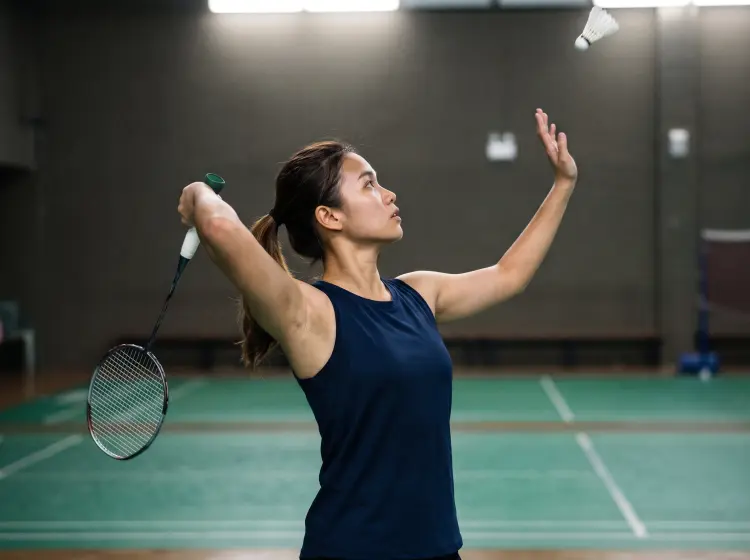
Shoulder pain from badminton can often be prevented by preparing your shoulder for the load of overhead strokes. Steps that can lower the risk include:
- Warm up before every session – A few minutes of easy jogging or skipping, followed by shoulder warm-up exercises such as arm circles and gentle practice swings, can help prepare the muscles for overhead play.
- Strengthen the rotator cuff and shoulder blade muscles – Badminton shoulder exercises, such as resistance-band rotations and shoulder blade squeezes, can help the shoulder cope with repeated smashes.
- Build up playing time gradually – Adding sessions or extra time on court in small steps gives the tendons time to adapt to the extra load.
- Get your technique checked – A coach can check how you hit your overhead strokes. Generating smash power from the hips and trunk can lower the strain on the shoulder.
- Plan rest days – Rest days between hard sessions give the shoulder muscles and tendons time to recover before the next game.
These habits can also help prevent other sports injuries.
Badminton shoulder pain often settles when you ease off early. If it persists, physiotherapy that strengthens the shoulder can help you get back on court and keep playing the strokes you enjoy.
Dr Foo Gen Lin
Find a Shoulder Specialist Near Me
Apex Novena
Why Do Patients Choose Apex Sports Clinic?
-
16+
-
30,000+
-
3,000+
Sports Doctor in Singapore: Personalised & Affordable Care
One-Stop Sports Clinic
Consultation, imaging and injections through to physiotherapy, sports massage and surgery, all in one clinic.
Keyhole Surgery Expertise
Arthroscopic keyhole surgery for sports injuries, using small incisions to limit tissue disruption, with open surgery available when an injury needs it.
Specialist in Sports Injury Management
Evidence-based injury care that also builds your strength and function, to support your recovery and return to sport.
Your Patient Journey at Apex Sports Clinic
-
 1
Schedule Your Appointment
Book online or WhatsApp us, and our team will get back to you as soon as we can.
-
 2
Consultation & Diagnosis
We assess your condition and explain what is causing your symptoms, in plain terms.
-
 3
Customised Treatment Plan
A plan matched to your condition, your goals and the activities you want to return to.
Schedule an Appointment

Our Insurance Partners




Frequently Asked Questions (FAQs)
Common shoulder injuries caused by badminton include rotator cuff tendinopathy, shoulder impingement and muscle strains. Rotator cuff tendinopathy is irritation of the tendons that steady the upper arm bone in its socket, typically from repeated smashes. Shoulder impingement is pinching of those tendons under the bony tip of the shoulder as the arm is raised. A muscle strain is an overstretch or tear of muscle fibres, often from one forceful stroke. Less often, overhead play can loosen the shoulder (instability) or tear the labrum, the cartilage rim around the socket.
Your right shoulder usually hurts after badminton because of repeated strokes, especially smashes, clears and other overhead shots. Each overhead stroke loads the rotator cuff tendons, which hold the shoulder joint steady, and repeating it many times can irritate or pinch these tendons. A single hard stroke or a long reach can also strain a muscle. If the pain has not started to ease after about two weeks or comes back each time you play, it should generally be assessed by a sports doctor or physiotherapist.
Contact and collision sports, such as rugby and wrestling, tend to have the most shoulder injuries. Many happen in falls and tackles, which can dislocate the shoulder. Overhead and throwing sports, such as swimming, volleyball, tennis, baseball and badminton, are more often linked to overuse injuries of the rotator cuff, the muscles and tendons that keep the shoulder joint steady. These injuries build up because the arm is raised above the head many times in each session.
A torn shoulder tendon is more likely than a muscle strain to cause weakness when lifting the arm. A strain, an overstretch or tear of muscle fibres, typically hurts most when it happens and then gradually eases. A tendon tear is also more likely if you felt a pop at the time of injury. Confirming a tear usually needs a physical examination and sometimes a scan. If your arm feels weak or the pain began with a pop, you should have your shoulder assessed promptly.
Your shoulder may hurt more at night after badminton because lying on it presses on tendons or a bursa (a small fluid-filled cushion) that repeated overhead strokes have already irritated. Night pain that keeps waking you should generally be assessed by a sports doctor or physiotherapist, so the cause can be identified. Treatment usually involves resting from overhead strokes, then physiotherapy to strengthen the shoulder.
Sleeping positions that are generally suitable for shoulder pain are lying on the back or on the pain-free side, as both keep weight off the sore shoulder. On the back, a pillow under the sore arm keeps it supported. On the pain-free side, hugging a pillow stops the sore arm dropping across the chest. Lying on the painful side, or with the arm above the head, can press on or pinch irritated tendons. Consult a sports doctor or physiotherapist for advice tailored to your shoulder.
Shoulder pain can go away by itself when it comes from muscle soreness or a minor strain, usually within days to a few weeks. A large tendon tear or a shoulder that keeps slipping out of place is less likely to heal on its own. Overuse tendon pain may ease with rest but can return when play resumes if the shoulder has not been strengthened. Arm weakness should be assessed promptly, and pain that has not eased after about two weeks should generally be checked.
Healing a damaged shoulder usually takes from a few weeks to several months, depending mainly on which tissue is injured and how badly. A mild muscle strain often improves within a few weeks. Overuse tendon problems, such as rotator cuff tendinopathy (irritated, painful tendons around the shoulder joint), commonly take several weeks to months to recover fully with physiotherapy. After surgery for a torn tendon or an unstable shoulder, recovery often takes several months or longer.
Relieving shoulder pain after badminton usually starts with pausing smashes and other overhead strokes for a few days, while still using the arm gently. Once the pain improves, strengthening the rotator cuff (the muscles that stabilise the shoulder joint) and shoulder blade muscles can help the shoulder cope with overhead play again. If the pain persists despite rest, it is advisable to seek medical evaluation, so the cause can be assessed and exercises suited to your injury recommended.
Shoulder pain usually takes less time to heal when its cause is treated early, as healing time depends mainly on what is causing the pain. A mild muscle strain or overuse pain tends to recover sooner than a tendon tear. Continuing to play through the pain keeps stressing the injured tissue, so recovery often takes longer. Easing off the movements that hurt and using ice in the first few days are common first steps.
Ice is usually more suitable for shoulder pain in the first few days after it starts, as cold can ease pain and any swelling. Heat tends to suit later stiffness or aching muscles, because warmth can help them relax. Wrap the ice pack or heat pack in a towel and use it for up to 20 minutes at a time, never directly on the skin. If the pain is not easing, have your shoulder assessed for personalised advice.
Gentle exercise is generally suitable for your sore shoulder if the soreness is a mild, dull ache after playing, but sharp pain may signal an injury that exercise could worsen. Light movement often eases mild muscle aches, while keeping the shoulder completely still can leave it stiff. If your pain began during a single stroke or comes with weakness, an injury is also more likely. In that case, rest from badminton and see a physiotherapist before returning to exercise.
Exercises for shoulder pain after badminton depend on the cause and how recent the injury is, so always follow the programme a physiotherapist sets after assessing the shoulder. Early exercises generally aim to keep the joint moving without loading it. Examples include pendulum swings, where the arm hangs down and moves in small circles, and walking the fingers slowly up a wall. Strengthening exercises are usually added once the pain settles. Stop any exercise that causes sharp pain and check with a physiotherapist.
Any exercise that brings on sharp pain should be avoided when you have a shoulder injury, especially movements that load your arm overhead or behind your body. Common examples include overhead presses, upright rows, behind-the-neck pulldowns, dips and heavy bench presses, because these positions can pinch or strain the tendons around the shoulder joint. Smashes and clears are commonly paused for the same reason. It is best to ask a physiotherapist which movements to pause and when to restart them, based on your injury and how recent it is.
Shoulder exercises for badminton typically strengthen the rotator cuff (the muscles that keep the upper arm bone in its socket) and the muscles around the shoulder blade. Examples include resistance-band rotations, turning the forearm outwards and inwards against a band with the elbow by the side. Rows and shoulder blade squeezes work the muscles that draw the shoulder blades back. Hip and trunk exercises can also help by taking some strain off the shoulder in a smash. If your shoulder already hurts, follow the programme a physiotherapist sets instead.
A shoulder support may let you keep playing badminton with a mild injury, but it does not treat what is causing the pain. Supports such as a brace or kinesiology tape (a stretchy tape applied to the skin) may reduce discomfort for some players. Some braces also limit how far the arm can be raised, which can make smashes and clears difficult. It is best to discuss with a sports doctor or physiotherapist whether playing is suitable for now and, if so, which type of support to use.