
Knee Sports Injury: Common Types, Symptoms and Treatment Options
Information reviewed by: Dr Foo Gen Lin | Last updated:
Knee pain or instability affecting your ability to stay active? Dr Foo provides thorough assessment and personalised treatment for knee sports injuries to help you recover and return to your sport.

MBBS (University of London) | MMed (Ortho) | FRCSEd (Ortho) | FAMS (Ortho)

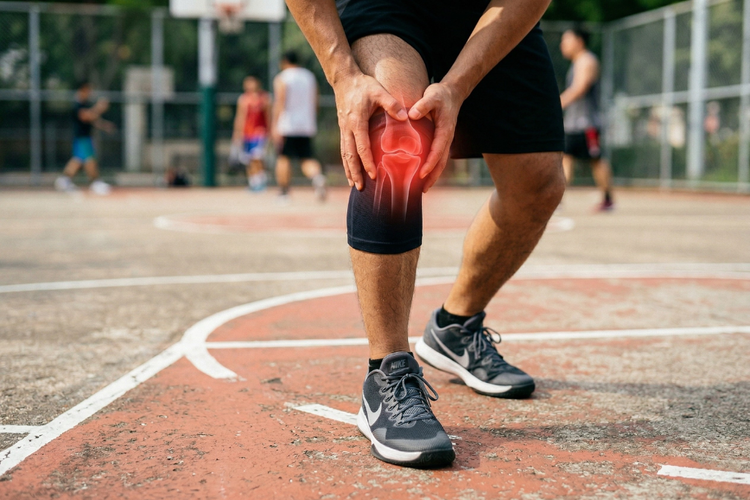
Your knee handles a lot during sport. It absorbs impact when you land, stabilises your body
when you pivot, and powers movements like jumping, sprinting, and changing direction. With
that much demand placed on a single joint, it is not surprising that knee sports injuries
are among the most common reasons athletes and active individuals seek medical attention.
Whether it is a sudden twist on the football pitch, a rough landing during basketball, or a
gradual ache that builds over weeks of training, knee injuries can sideline you from the
activities you enjoy. Some settle with rest and structured rehabilitation, while others may
need more targeted treatment or surgery.
This guide covers the most common types of knee sports injuries, how they are diagnosed, what treatment options are available, and what you can do to support your recovery and reduce the risk of future injury.
What Are Knee Sports Injuries?
Knee sports injuries are injuries affecting the ligaments, cartilage, tendons, or
bones of the knee that occur during sports or physical activity. They rank among the
most common sports injuries
because the knee bears significant load while also needing to twist, pivot, and absorb impact
during movement.
These injuries range from mild sprains that may settle with rest and rehabilitation to more severe
conditions such as complete ligament tears or cartilage damage that may require surgical
intervention.
Common Types of Knee Sports Injuries
The most common knee sports injuries involve the ligaments, meniscus, and tendons because these structures absorb the twisting, pivoting, and impact forces that sport demands.
1. ACL Tear
What it is: A partial or complete tear of the anterior
cruciate ligament (ACL), which stabilises the knee and prevents the shin bone from
sliding forward while controlling rotation.
Cause: Often occurs during non-contact movements such as landing awkwardly,
cutting sharply, or sudden deceleration.
Frequently seen in: Sports involving pivoting and jumping, such as
football, basketball, and netball.
Common symptoms: A "pop" at the time of injury, rapid swelling,
instability, and a feeling that the knee may give way.
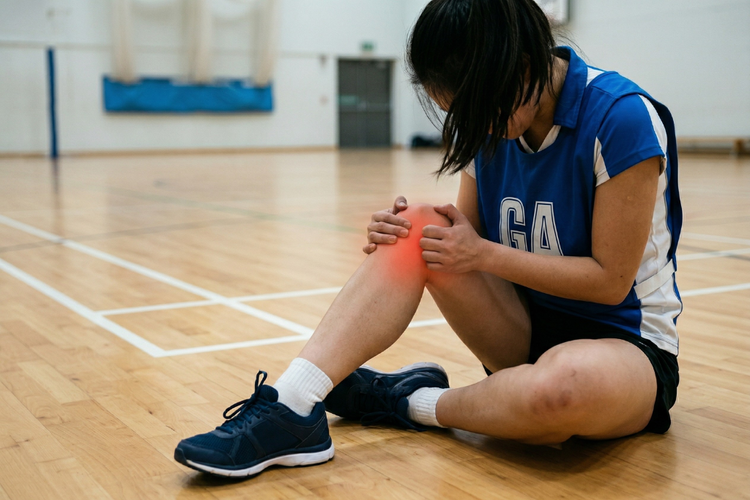
2. Meniscus Tear
What it is: Damage to the meniscus,
the C-shaped cartilage that cushions and stabilises the knee joint. Each knee has a medial (inner)
and lateral (outer) meniscus.
Cause: Twisting the knee while the foot is planted, such as during pivoting or
sudden turns.
Frequently seen in: Football, tennis, and other sports involving quick directional
changes.
Common symptoms: Joint line pain, swelling, clicking or catching, and difficulty
fully bending or straightening the knee. In some cases, the knee may lock.
3. MCL Injury
What it is: A sprain or tear of the medial
collateral ligament (MCL), which supports the inner side of the knee and prevents it from
collapsing inward.
Cause: Direct force to the outer knee that pushes it inward.
Frequently seen in: Contact sports such as rugby and football, as well as martial
arts involving takedowns or lateral knee stress, such as judo, Brazilian Jiu-Jitsu, and taekwondo.
Common symptoms: Inner knee pain, tenderness, swelling, and a sense of looseness or
instability.
4. Patellar Tendinopathy (Jumper's Knee)
What it is: An overuse condition affecting the patellar
tendon, which connects the kneecap to the shin bone and helps with jumping and running.
Cause: Repeated loading that causes micro-damage to the tendon faster than it can
heal.
Frequently seen in: Jumping sports such as basketball, volleyball, and badminton.
Common symptoms: Pain just below the kneecap that worsens with activity and
improves with rest, though it may become persistent over time.
5. Patellofemoral Pain Syndrome (Runner's Knee)
What it is: Pain around or behind
the kneecap caused by improper movement of the kneecap within its groove on the thigh bone.
Cause: Often linked to muscle imbalances, overtraining, flat feet, or poor movement
patterns.
Frequently seen in: Running and endurance sports.
Common symptoms: Front knee pain that worsens with running, squatting, climbing
stairs, or prolonged sitting.
6. Iliotibial Band Syndrome (ITBS)
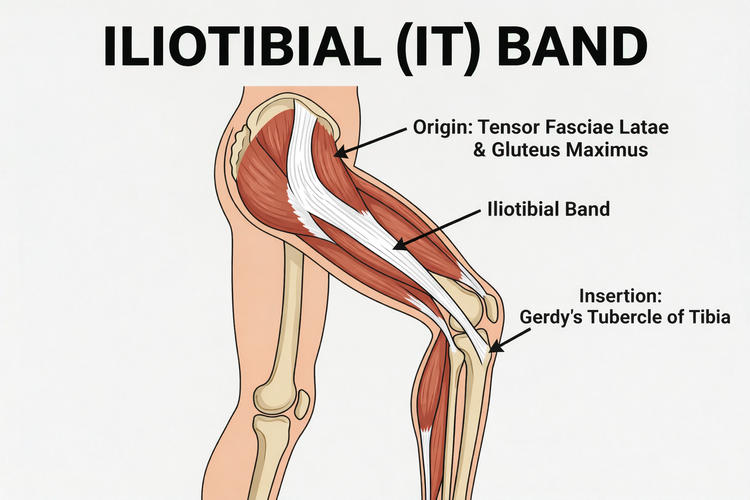
What it is: An overuse condition where the iliotibial
band, a thick band of tissue running from the hip to the shin, irritates the outer
knee.
Cause: Repetitive friction over the outer knee, often due to increased
training load or poor biomechanics.
Frequently seen in: Long-distance running and cycling.
Common symptoms: Outer knee pain that starts after a certain distance or
duration of activity and eases with rest.
Other Knee Sports Injuries
Less common knee sports injuries include patellar dislocation, where the kneecap shifts out of its groove, posterior cruciate ligament (PCL) injuries from direct impact to the front of the shin, and articular cartilage damage from impact or twisting forces. Repeated or untreated cartilage injuries may eventually contribute to knee osteoarthritis over time.
Symptoms of a Knee Sports Injury
In addition to condition-specific symptoms, several general signs are commonly seen across different knee sports injuries.
- Pain and swelling are the most common features and may occur suddenly after an injury or develop gradually with overuse, such as during long-distance activities like marathon running.
- Difficulty with movement, such as walking, squatting, or climbing stairs, is often one of the earliest functional limitations.
- Reduced range of motion may limit your ability to fully bend or straighten the knee, often due to swelling, pain, or internal joint issues.
- Instability or giving way can occur when the supporting structures of the knee are compromised, particularly during weight-bearing or directional changes.
- Mechanical symptoms, such as clicking, catching, or locking, may indicate disruption within the joint, such as cartilage or meniscus injury.
 Experiencing knee pain or instability after sport? Consult our knee specialists for a thorough
assessment and personalised treatment plans for knee sports injuries. Book your appointment today.
Experiencing knee pain or instability after sport? Consult our knee specialists for a thorough
assessment and personalised treatment plans for knee sports injuries. Book your appointment today.
How Are Knee Sports Injuries Diagnosed?
Knee sports injuries are diagnosed through a combination of clinical examination and
imaging to identify the affected structure and determine the severity of the
injury.
A clinical examination typically includes evaluation of range of motion, stability,
tenderness, and swelling.
Specific tests help identify the structure involved. For example,
the Lachman test evaluates the ACL, the
McMurray test assesses for
meniscus tears, and the valgus
stress test assesses the MCL.
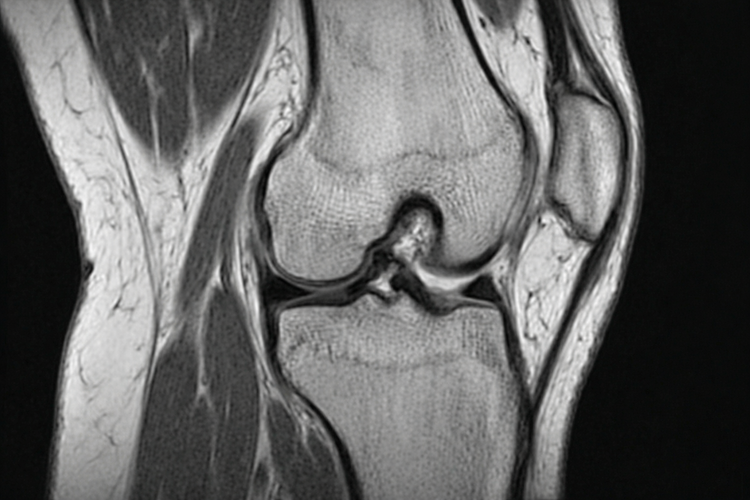
Imaging is often used alongside the physical examination to confirm the diagnosis and assess the extent of injury:
- X-rays assess bone alignment and help rule out fractures but do not show soft tissue injuries such as ligament or meniscus tears.
- MRI (magnetic resonance imaging) provides detailed images of ligaments, menisci, cartilage, and tendons, and is commonly used for knee sports injuries.
- Ultrasound is used to assess tendons and superficial structures and may be useful for conditions such as patellar tendinopathy.
In some cases, diagnosis may be confirmed during knee arthroscopy, a minimally invasive surgical procedure in which a small camera is inserted into the joint. This allows direct visualisation of internal structures and, where appropriate, treatment during the same procedure.
Treatment Options for Knee Sports Injuries
Treatment for knee sports injuries depends on the type of injury, its severity, and your
activity level, and may include both non-surgical treatments and surgical procedures.
Most knee sports injuries can be managed without surgery, while surgical treatment is considered
when stability, function, or symptoms do not improve with conservative care.
| Treatment | Description & Purpose |
|---|---|
| Non-Surgical Treatments | |
| Rest, Ice, Compression, Elevation (RICE) | Used in the early phase to reduce pain and swelling after an acute injury. |
| Bracing and Taping | Provides external support to improve stability and reduce strain on injured structures during recovery. |
| Physiotherapy | Structured rehabilitation programme to restore range of motion, strength, and movement control. |
| Shockwave Therapy (ESWT) | Uses acoustic waves to stimulate healing, commonly used for chronic tendon conditions such as patellar tendinopathy. |
| Hyaluronic Acid Injection | Improves joint lubrication and may reduce friction in cases involving cartilage wear. |
| Cortisone Injection | Helps reduce inflammation and pain in the short term, particularly in cases with significant irritation. |
| Platelet-Rich Plasma (PRP) Injection | Uses concentrated growth factors from your own blood to support tissue healing in tendons or ligaments. |
| Common Surgical Procedures | |
| ACL Reconstruction | Reconstruction of the anterior cruciate ligament using a tendon graft to restore knee stability, particularly for individuals returning to pivoting or high-demand sports. |
| Meniscus Surgery |
Procedures to treat meniscus tears depending on the type and location of the injury.
This may include:
|
| Other Ligament Surgery (Repair or Reconstruction) |
Procedures to restore stability when other knee ligaments are severely damaged. This may
include:
|
| Cartilage Surgery (Repair or Restoration) | Techniques used to treat damaged articular cartilage (the smooth tissue that covers the ends of the bones), helping the knee joint move smoothly and function properly. |
| Other Knee Procedures |
Less common procedures for specific conditions. This may include:
|
Typical Recovery Timeline for Knee Sports Injuries
Recovery from a knee sports injury can take anywhere from a few weeks to several months, depending on the type and severity of the injury. A personalised rehabilitation plan helps guide your recovery and support a gradual and smooth return to activity.
| Injury Type | Estimated Recovery Time |
|---|---|
| Mild ligament sprains (e.g. MCL Grade I–II) | 2 to 6 weeks |
| Meniscus injuries (non-surgical) | 4 to 8 weeks |
| Overuse conditions (e.g. patellar tendinopathy, ITBS) | 4 to 12 weeks depending on severity |
| Severe ligament injuries (e.g. ACL tear, multi-ligament injury) | Several months |
| Post-surgical recovery (e.g. ACL reconstruction, meniscus repair) | 6 to 12 months depending on procedure |
| Cartilage injuries or procedures | Several months to 1 year |
It is important to follow the guidance of your specialist and physiotherapist throughout each stage of recovery. Returning to sport too early may increase your risk of re-injury or delay your recovery.
How to Reduce the Risk of Knee Sports Injuries
You can reduce your risk of knee sports injuries by preparing your body for the demands of your sport. While not all injuries are preventable, several sports injury prevention strategies can help lower your risk.
- Strengthen the muscles around the knee — strong quadriceps, hamstrings, glutes, and calf muscles help absorb forces and reduce strain on the knee.
- Improve balance and proprioception — balance, neuromuscular, and plyometric training improve joint control and reduce the risk of awkward landings and twisting injuries.
- Progress training gradually — sudden increases in training volume, intensity, or frequency can increase injury risk. A general guideline is to increase load by no more than 10% per week.
- Warm up before activity — a proper warm-up increases blood flow and prepares the joints for movement. Dynamic stretches and sport-specific drills are generally more effective than static stretching alone.
- Use appropriate footwear and equipment — shoes suited to your sport and foot type provide better support and shock absorption. Bracing or taping may offer additional support for previously injured knees.
Knee sports injuries can vary widely in severity, from mild sprains to complete ligament tears, and each requires a different approach. With a thorough assessment and a well-structured recovery plan, many patients can return to the activities they enjoy.
Dr Foo Gen Lin
Find a Knee Specialist and Sports Doctor Near Me
Apex Novena
Why Do Patients Choose Apex Sports Clinic?
Sports Doctor in Singapore: Personalised & Affordable Care
One-Stop Sports Clinic
We provide comprehensive care in one clinic, from consultation, imaging, and injections through to physiotherapy, sports massage, and surgery when needed.
Keyhole Surgery Expertise
We specialise in arthroscopic keyhole surgery to treat sports injuries with precision and minimal tissue disruption, supporting faster recovery and restored joint function.
Specialist in Sports Injury Management
We combine evidence-based injury management with a proactive approach to maintaining your body's strength and function, so you can recover fully and perform at your peak.
Patient Journey
1 . Schedule Your Appointment

2 . Expert Diagnosis & Consultation

3 . Customised Treatment Plan

Schedule an Appointment

Our Insurance Partners




Frequently Asked Questions (FAQs)
The most common knee injuries in sports are ligament sprains and meniscus tears. Among these, anterior cruciate ligament (ACL) injuries and meniscus tears are frequently seen in sports involving pivoting, jumping, or sudden changes in direction. Overuse conditions such as patellar tendinopathy and runner's knee are also common, especially in endurance and repetitive activities.
A knee injury may be serious if you experience severe pain, rapid swelling, instability, inability to bear weight, or the knee locking or giving way. These symptoms may indicate ligament tears, fractures, or significant cartilage damage. If you are experiencing these signs or symptoms that do not improve, you should consult a knee doctor or specialist for assessment.
Whether you can continue exercising with a knee sports injury depends on the type and severity of the injury. Mild conditions may allow modified activity, but exercising through pain or instability can worsen the injury. It is generally advisable to reduce or adjust activity and consult a healthcare professional for appropriate guidance to support recovery.
Most knee sports injuries do not require surgery and can be managed with non-surgical treatments such as rest, physiotherapy, bracing, and targeted injections. Surgery is usually considered when there is significant instability, structural damage, or when symptoms do not improve with conservative care. The appropriate approach depends on the specific injury and your individual activity goals.
You should seek medical evaluation if knee pain persists, worsens, or is associated with swelling, instability, reduced movement, or difficulty bearing weight. Early assessment can help identify the cause and guide appropriate management. If you suspect a significant injury such as a ligament tear or fracture, it is advisable to seek medical attention promptly.
An untreated knee sports injury may lead to ongoing pain, instability, reduced function, or worsening damage over time. Minor injuries can become chronic, while more serious conditions such as ligament or cartilage injuries may increase the risk of further joint damage or early osteoarthritis. If symptoms persist or affect daily activities, it is advisable to consult a knee specialist or sports doctor for assessment.
Full recovery from an ACL tear depends on the severity of the injury, treatment approach, and individual rehabilitation progress. Partial ACL tears may heal with structured rehabilitation, while complete tears do not heal on their own and may require reconstruction, especially for active individuals. Regardless of the type of tear, rehabilitation is essential to restore strength, stability, and function, and many patients can return to their previous level of activity, although some may have ongoing limitations.
An ACL tear is often suspected if there is a sudden "pop" in the knee followed by rapid swelling, pain, and a feeling of instability or giving way. Difficulty continuing activity or bearing weight is also common. These symptoms can overlap with other injuries, so if you suspect an ACL tear, you should consult a knee specialist for proper evaluation.
No single sport is considered the worst for the knees, but activities involving frequent jumping, pivoting, and contact, such as football, basketball, and netball, tend to carry a higher risk of knee injuries. The risk also depends on factors such as training load, technique, and previous injuries, rather than the sport alone.
A ligament tear in the knee is often indicated by a popping sensation at the time of injury, followed by pain, swelling, instability, or the knee giving way. You may also have difficulty bearing weight or continuing activity. These symptoms can overlap with other injuries, so if you suspect a ligament tear, you should consult a knee specialist for proper assessment.
ACL surgery is typically associated with moderate pain in the initial recovery period, especially in the first few days after the procedure. Pain levels vary between individuals and are usually managed with medication and rehabilitation. Discomfort generally improves as healing progresses and movement is gradually restored.
Recovery after an ACL injury or surgery is supported by a structured rehabilitation programme that focuses on restoring strength, movement, and stability. Factors such as following physiotherapy guidance, maintaining appropriate activity levels, and allowing adequate time for healing all play a role. Always follow the advice of your specialist and physiotherapist throughout recovery.
Red flags for a knee injury include severe pain, rapid swelling, inability to bear weight, significant instability, or the knee locking or being unable to move. These symptoms may indicate serious conditions such as ligament tears, fractures, or cartilage injury. If you experience these signs, it is advisable to seek medical attention promptly.
There is no quick way to fix a knee injury, as recovery depends on the type and severity of the condition. Early management with rest, appropriate treatment, and a structured rehabilitation plan can support recovery, but returning too quickly may worsen the injury. If symptoms do not improve or worsen, it is best to consult a doctor for assessment.
ACL pain is usually felt deep within the knee or around the centre of the joint, and may be accompanied by swelling and a sense of instability. Some people may experience more general knee discomfort rather than a specific point of pain. If you experience these symptoms or suspect an ACL tear, it is best to consult a knee specialist for assessment.
There is no reliable way to confirm an ACL tear through self-testing, as proper assessment requires specific clinical tests and imaging. While signs such as a popping sensation, swelling, and instability may raise suspicion, these are not definitive. If you suspect an ACL injury, it is best to seek medical evaluation and treatment to prevent further complications.
Sports that involve frequent pivoting, jumping, and sudden changes in direction are more prone to ACL tears. These include football, basketball, netball, rugby, and skiing. The risk is influenced not only by the sport itself but also by factors such as technique, conditioning, and previous injuries.
Common signs of a meniscus tear include joint line pain, swelling, and mechanical symptoms such as clicking, catching, or locking of the knee. You may also have difficulty fully bending or straightening the knee. These symptoms can vary depending on the type and severity of the tear.
Knee injuries can take anywhere from a few weeks to several months to heal, depending on the type and severity of the injury. Mild sprains and overuse conditions may improve within weeks, while more serious injuries or those requiring surgery may take several months or longer. Recovery is influenced by factors such as treatment approach and rehabilitation progress.