
Occupational Therapy vs Physiotherapy: What's the Difference?
Information reviewed by: Dr Foo Gen Lin | Last updated:
Not sure whether you need a physiotherapist or an occupational therapist? Dr Foo provides assessment and guidance to help you understand which type of care suits your recovery, and how the two can work together.

MBBS (University of London) | MMed (Ortho) | FRCSEd (Ortho) | FAMS (Ortho)

A physiotherapist helps you restore movement, strength, and physical function, while an occupational therapist helps you regain independence in everyday tasks such as dressing, cooking, and working. The two professions overlap and often work side by side, which is why they are easy to confuse.
The simplest way to tell them apart is by their goal: physiotherapy focuses on how your body moves, and occupational therapy focuses on what you are able to do with that movement in daily life.

Both are recognised allied health professions, both involve hands-on assessment and structured therapy, and both aim to improve your quality of life after injury, illness, or surgery. Here is a quick breakdown before we look at each in detail:
| Aspect | Physiotherapy | Occupational Therapy |
|---|---|---|
| Main focus | Movement, strength, and physical function | Daily activities and independent living |
| Primary goal | Restore mobility and reduce pain | Restore independence in everyday tasks |
| Typical methods | Exercise therapy, manual therapy, gait training | Task practice, adaptive equipment, home and workplace modifications |
| Common settings | Clinics, sports facilities, hospitals | Homes, schools, workplaces, rehabilitation centres |
What Is Physiotherapy?
Physiotherapy is the treatment of injury, pain, and
movement problems through physical methods such as exercise and manual techniques. A physiotherapist
assesses how your joints, muscles, and nerves work together, then designs a programme to restore
movement, build strength, and reduce pain.
You might see a physiotherapist after a sports
injury, a fracture, joint replacement surgery, or for ongoing problems such as back pain or
tendon injuries. The aim is to get the affected part of your body working as well as possible, and
to lower the risk of the problem returning.
What Is Occupational Therapy?
Occupational therapy is the treatment of
difficulty with everyday activities, or "occupations," that fill your day, from dressing and cooking
to working and caring for children. An occupational therapist assesses the tasks you need or want to
do, identifies what is getting in the way, and finds practical ways to make those tasks possible
again.
You might see an occupational therapist for arthritis, a developmental condition, or age-related
decline, after a hand injury, or following a stroke or brain injury. The aim is to help you live as
independently as possible in your daily activities.
Occupational Therapy vs Physiotherapy: Key Differences
The key difference is that physiotherapy treats the physical problem, while occupational therapy
helps you live with or work around it. A physiotherapist asks, "How well does this part of your body
move?"
An occupational therapist asks, "What do you need to do today, and how can we make that
happen?" These differences play out across four areas.
Focus
Physiotherapy targets the body; occupational therapy targets the task.
Physiotherapy works on movement, strength, and pain, centring on how a
joint bends, how a muscle contracts, and how freely you can move without discomfort.
Occupational therapy works on your ability to complete daily activities,
looking past the individual joint or muscle to whatever is standing in the way of the task
you are trying to do.

Approach
Physiotherapy changes the body; occupational therapy changes the task or environment.
A physiotherapist builds strength and mobility over time through gradually
increasing exercises and hands-on techniques, aiming to resolve the physical limitation itself.
An occupational therapist makes an activity achievable by adjusting how or where it
is done, even when the underlying limitation remains.
Application
Physiotherapy improves a specific physical function; occupational therapy puts that function
to use in real life. One builds the capacity, the other turns it into everyday independence.
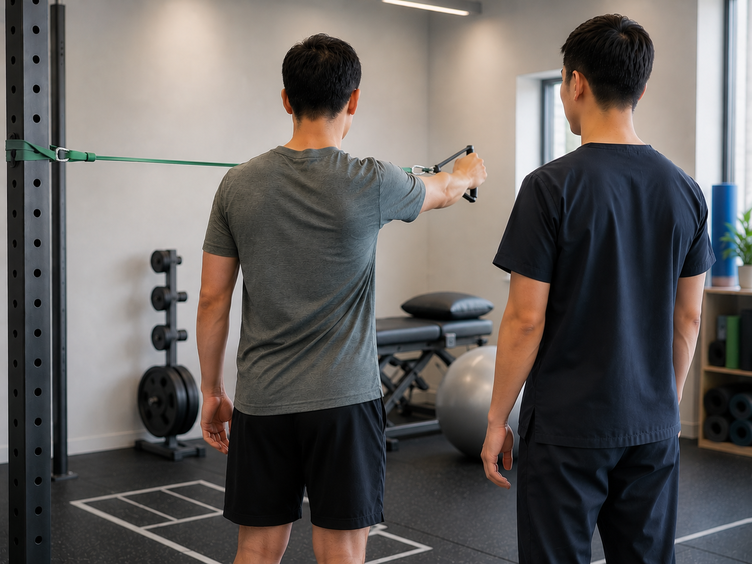
A physiotherapist may spend a session improving shoulder range of motion
through stretches and strengthening.
An occupational therapist may take that same shoulder movement and apply it
to a practical goal, such as reaching overhead to dress, lifting a pot in the kitchen, or
hanging washing without strain.
Progress Tracking
Physiotherapy measures physical change; occupational therapy measures daily independence.
Physiotherapy tracks strength, range of motion, walking distance, and pain levels,
charting how the body improves session by session.
Occupational therapy tracks whether you can now bathe unaided, prepare a meal, or
manage a full day at work.
How Physiotherapy and Occupational Therapy Work Together
Physiotherapy and occupational therapy often complement each other as part of one rehabilitation
plan. The two professions share a goal of restoring function, so it is common for a
patient to see both, each addressing a different aspect of recovery.
After a stroke, for example, a physiotherapist may work on regaining balance and the
ability to walk, while an occupational therapist helps the person relearn how to bathe,
dress, and prepare meals safely. After a serious hand injury, a physiotherapist may restore grip
strength and finger movement, and an occupational therapist may adapt work tasks so the person can
return to their job.
The strength and movement that physiotherapy restores give occupational therapy a foundation to
build practical independence on. When both are involved, the therapists coordinate so their plans
support each other rather than overlap.
Examples of Physiotherapy and Occupational Therapy in Practice
Hand, Wrist, and Elbow Conditions
For conditions such as carpal tunnel syndrome, tennis elbow, golfer's elbow, or trigger finger, a
physiotherapist treats the underlying pain and weakness with exercises, manual therapy, and
load management.
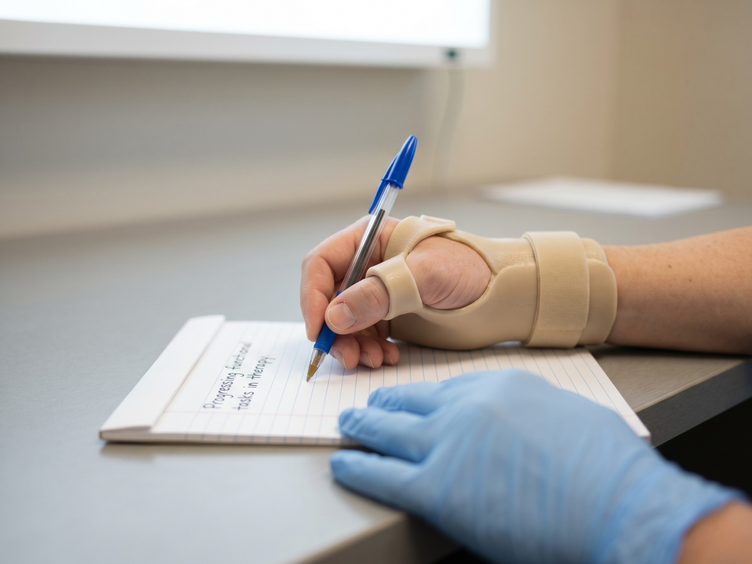
An occupational therapist, sometimes a specialised hand therapist, may provide a custom
splint and adjust how you use your hand during work or hobbies to prevent the problem
returning.
Orthopaedic Surgery and Sports Injuries
A physiotherapist leads
recovery after procedures such as ACL
reconstruction, knee
replacement, or rotator
cuff repair, rebuilding strength, flexibility, and movement so you can return to sport or
activity.
Occupational therapy plays a smaller role and is usually involved only when an injury affects your
ability to manage everyday tasks.
Children's Development
A physiotherapist helps children with gross motor skills like crawling, walking, and coordination,
including in conditions such as cerebral palsy
or developmental delay.
An occupational therapist helps with fine motor and daily skills such as holding a pencil, using
cutlery, and managing sensory needs at school,
often for children with autism or developmental coordination difficulties.

Stroke and Neurological Conditions
For stroke and other neurological conditions such as Parkinson's disease, multiple
sclerosis, or spinal cord injury, a physiotherapist focuses on regaining movement, balance,
and walking ability.
An occupational therapist focuses on daily living skills such as eating, dressing, and
returning to work, and may recommend home modifications. Many stroke patients work with
both.
Which Therapy Is More Suitable for You?
Physiotherapy is usually more suitable when your main problem is pain, stiffness, weakness, or
difficulty moving a part of your body. Occupational therapy is usually more suitable when your main
difficulty is completing everyday tasks, whether because of a physical, cognitive, or developmental
challenge.
If you are recovering from a sports injury, a fracture, or joint surgery, or you have ongoing back,
knee, or shoulder pain, physiotherapy is usually the right starting point. If you are unsure, a
physiotherapist or doctor can assess you and refer you to occupational therapy if your needs extend
beyond movement into daily function.
Physiotherapy plays a central role in recovery from sports injuries and surgery, restoring movement and strength in a structured way. Where recovery also affects daily function, occupational therapy has an important part to play alongside it.
Dr Foo Gen Lin
Book a Physiotherapy or Orthopaedic Consultation
Apex Novena
Why Do Patients Choose Apex Sports Clinic?
Sports Doctor in Singapore: Personalised & Affordable Care
One-Stop Sports Clinic
We provide comprehensive care in one clinic, from consultation, imaging, and injections through to physiotherapy, sports massage, and surgery when needed.
Keyhole Surgery Expertise
We specialise in arthroscopic keyhole surgery to treat sports injuries with precision and minimal tissue disruption, supporting faster recovery and restored joint function.
Specialist in Sports Injury Management
We combine evidence-based injury management with a proactive approach to maintaining your body's strength and function, so you can recover fully and perform at your peak.
Patient Journey
1 . Schedule Your Appointment

2 . Expert Diagnosis & Consultation

3 . Customised Treatment Plan

Schedule an Appointment

Our Insurance Partners




Frequently Asked Questions (FAQs)
No, occupational therapy and physiotherapy are different professions, though they overlap and often work together. Physiotherapy focuses on restoring movement, strength, and physical function, while occupational therapy focuses on helping you carry out everyday activities such as dressing, cooking, and working. Physiotherapy treats how your body moves, while occupational therapy helps you complete daily tasks despite any remaining limitation.
Physiotherapy is usually more suitable when your main problem is pain, stiffness, weakness, or difficulty moving part of your body, while occupational therapy suits difficulty with everyday tasks. If you are unsure which fits your situation, it may be worth seeing a doctor or physiotherapist who can assess you and point you towards the appropriate care.
Yes, physiotherapy and occupational therapy are commonly used together as part of one recovery plan, particularly after a stroke, brain injury, or major surgery. Physiotherapy rebuilds physical capacity such as strength and balance, while occupational therapy turns that capacity into practical independence at home or work. When both are involved, the therapists usually coordinate so their plans support each other.
Carpal tunnel syndrome can often be managed with both, depending on your needs. Physiotherapy may address pain and weakness through exercises and manual therapy, while occupational therapy, sometimes from a specialised hand therapist, may provide a splint and adjust how you use your hand during work or hobbies. If symptoms persist or worsen, it is advisable to have the cause assessed.
Neither therapy is inherently better for tennis elbow; the suitable option depends on your symptoms and goals. Physiotherapy is commonly used to treat the underlying pain and weakness through gradually increasing exercises and manual therapy. Occupational therapy may help by adjusting how you use the arm during daily tasks. If you are not sure where to start, seeing a doctor or physiotherapist can help you find the option best matched to your needs.
Children may benefit from either, depending on the difficulty. Physiotherapy helps with gross motor skills such as crawling, walking, and coordination, while occupational therapy helps with fine motor and daily skills such as holding a pencil, using cutlery, and managing sensory needs at school. If you have concerns about a child's development, raising them with a doctor or paediatrician, such as at a routine developmental check, is a good first step.
Occupational therapy is not better or worse than physiotherapy, because the two serve different purposes. Physiotherapy treats physical problems such as pain, stiffness, and weakness, while occupational therapy helps you manage everyday activities, whether the barrier is physical, cognitive, or developmental. Many people benefit from both, so the more useful question is which suits your particular situation rather than which is superior overall.
Occupational therapy (OT) can often help people living with nerve damage by making daily activities more manageable, though it does not repair the nerve itself. An occupational therapist may recommend adaptive equipment, adjust how tasks are done, and work on regaining hand or limb function for activities such as dressing and cooking. OT is often used alongside other treatments, since nerve damage may also need medical or surgical care.
No, occupational therapists and physiotherapists are separate professions with different training, though their work overlaps. Occupational therapists focus on everyday activities and independence, while physiotherapists focus on movement, strength, and pain. Some occupational therapists use exercise within their treatment, but they do not replace a physiotherapist where physical rehabilitation is the main need.
A common example of occupational therapy is helping someone relearn to cook safely after a stroke by adapting the kitchen and breaking the task into manageable steps. Other examples include providing a custom splint after a hand injury, recommending grab rails at home, or helping a child improve the fine motor skills needed to hold a pencil at school.
Occupational therapy (OT) can often help you manage daily life with back pain, though physiotherapy is usually the main treatment for the pain itself. An occupational therapist may adjust how you sit, work, and lift, and suggest changes to your workspace so everyday tasks place less strain on your back. For ongoing back pain, OT is typically one part of a wider plan rather than a standalone treatment.
Occupational therapy (OT) can often help you carry out daily activities with less pain, rather than treating the pain directly. An occupational therapist may adjust how tasks are performed, recommend adaptive equipment, and pace activities so symptoms are easier to manage at home and work. Where pain is persistent or limiting, it may be worth seeking a proper assessment to clarify the cause.