
A Complete Guide to Ski Exercises for Bad Knees
Information reviewed by: Dr Foo Gen Lin | Last updated:
Want to ski but have bad knees? Dr Foo provides assessment and personalised advice to help you prepare for the slopes.

MBBS (University of London) | MMed (Ortho) | FRCSEd (Ortho) | FAMS (Ortho)

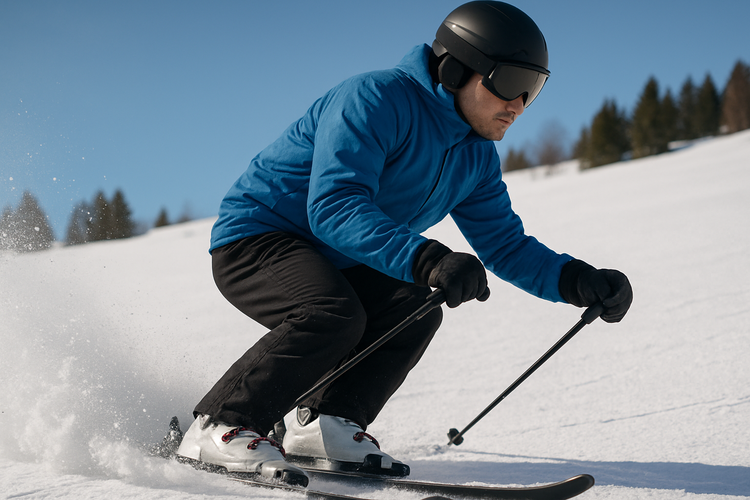
Enjoy skiing but feel like your knees are holding you back? You're not alone. Whether due to
a past injury, ongoing discomfort, or age-related changes, knee issues are one of the most
common reasons skiers scale back or stop altogether.
The good news is that with the right preparation, many individuals with "bad knees" can
continue to enjoy skiing with greater confidence and comfort.
In this article, we will cover ski exercises that may benefit individuals with bad knees,
who they are suitable for, key training principles to keep in mind, and specific low-impact
movements that help support and protect your knees on the slopes.
Why Skiing Places Stress on the Knees
Skiing places significant stress on the knees because the joint must manage repeated
bending, twisting, and impact forces throughout each run.
The knee also acts as the main shock absorber during changes in terrain, speed, and
direction, which increases the demand on the surrounding muscles and ligaments.
Key factors that contribute to knee stress during skiing include:
- Frequent knee flexion – The semi-squat posture maintained during skiing places continuous load on the quadriceps and patellofemoral joint.
- Variable terrain – Bumps, uneven surfaces, and icy patches require quick adjustments, increasing the load on the knee's stabilising muscles.
- Fatigue – As your legs tire, muscle support decreases, making it harder to maintain proper alignment and smooth movement control.
- Rotational forces – Turning and edging involve controlled twisting at the knee, which increases strain on ligaments such as the anterior cruciate ligament (ACL) and medial collateral ligament (MCL).
- Cold weather stiffness – Lower temperatures can reduce muscle flexibility, affecting how well you absorb force and control movements.
For individuals with pre-existing issues such as cartilage wear, ligament injuries, or long-standing knee pain, these combined forces can further increase vulnerability to discomfort or irritation on the slopes.
Who Should Consider Ski Exercises for Their Knees?
Ski exercises are suitable for individuals who need additional knee strength and
stability before returning to the slopes.
These exercises may be beneficial if you have:
- a previous knee injury such as an ACL, MCL, or meniscal injury
- chronic knee pain or stiffness
- reduced joint stability or muscle weakness
- early osteoarthritis
- lower activity levels, are older, or ski infrequently
Disclaimer: This article is for informational purposes. If you are unsure, or if you are already seeing a physiotherapist or knee specialist, consult them for personalised guidance on the exercises most appropriate for your condition and goals.
5 Ski Exercises for Bad Knees
Ski exercises for bad knees should focus on building strength, improving joint stability, and enhancing movement control, as these qualities help the knees manage the physical demands of skiing.
1. Wall Sits

Wall sits build quadriceps and gluteal strength, which helps the knees tolerate the
semi-squat position commonly used during skiing.
How to perform:
- Stand with your back against a wall and slide down until your thighs are nearly parallel to the ground.
- Keep your knees aligned with your ankles.
- Hold for 20 to 45 seconds and repeat 2 to 3 times.
2. Step-Ups (Low Platform)
Step-ups strengthen the legs and improve functional control, which supports more stable knee
alignment during turns and uneven terrain.
How to perform:
- Use a step no higher than mid-shin.
- Step up with one leg and bring the other up to meet it.
- Step down slowly and alternate legs.
- Perform 10 repetitions per side.
3. Glute Bridges
Glute bridges strengthen the posterior chain, which helps maintain proper knee alignment and reduces
strain when absorbing force on the slopes.
How to perform:
- Lie on your back with knees bent and feet flat.
- Lift your hips to form a straight line from shoulders to knees.
- Hold for 2 to 3 seconds and lower.
- Repeat 10 to 15 times.
4. Standing Terminal Knee Extensions (TKEs)
Standing terminal knee extensions activate the quadriceps and improve knee control, which
may help reduce discomfort when stabilising during skiing movements.
How to perform:
- Loop a resistance band behind one knee and anchor it to a fixed object.
- Bend slightly and then straighten the knee by tightening the quadriceps.
- Repeat 12 to 15 repetitions per side.
5. Seated Leg Raises
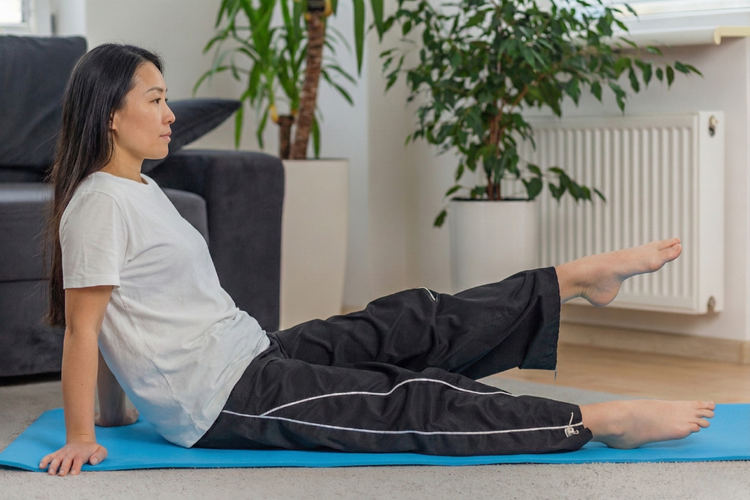
Seated leg raises strengthen the quadriceps with minimal load, supporting better knee
endurance for longer skiing sessions.
How to perform:
- Sit on a chair with good back support.
- Extend one leg fully and hold for 3 to 5 seconds.
- Lower slowly and repeat 10 to 12 times per leg.
How Often to Do These Exercises
Aim to perform these exercises 3 to 4 times per week for 6 to 8 weeks prior to a ski
trip, gradually increasing duration and intensity. Start with low reps and short holds,
and increase volume only if your knees respond well.
Recovery days between sessions are important to allow tissues to adapt without overstress.
What to Avoid if You Have Bad Knees
When exercising with bad knees, it is important to avoid movements that place excessive impact, deep bending, or sudden rotational force on the joint, as these can increase strain and aggravate existing symptoms. Examples include:
- deep squats or lunges beyond 90 degrees
- jump squats or explosive lateral jumps
- running downhill or abrupt twisting movements
To exercise more safely, focus on controlled, low-impact movements, maintain proper knee alignment during each exercise, and progress the intensity gradually.
Targeted exercises can help strengthen the muscles around the knee and improve stability on the slopes. We work with patients to develop a conditioning plan suited to their needs.
Dr Foo Gen Lin
Find a Knee Specialist Near Me
Apex Novena
Why Do Patients Choose Apex Sports Clinic?
Sports Doctor in Singapore: Personalised & Affordable Care
One-Stop Sports Clinic
We provide comprehensive care in one clinic, from consultation, imaging, and injections through to physiotherapy, sports massage, and surgery when needed.
Keyhole Surgery Expertise
We specialise in arthroscopic keyhole surgery to treat sports injuries with precision and minimal tissue disruption, supporting faster recovery and restored joint function.
Specialist in Sports Injury Management
We combine evidence-based injury management with a proactive approach to maintaining your body's strength and function, so you can recover fully and perform at your peak.
Patient Journey
1 . Schedule Your Appointment

2 . Expert Diagnosis & Consultation

3 . Customised Treatment Plan

Schedule an Appointment

Our Insurance Partners




Frequently Asked Questions (FAQs)
You can strengthen your knees for skiing by focusing on exercises that build quadriceps, hamstring, gluteal, and core strength, as these muscles help stabilise the joint during turns and changing terrain. Wall sits, step-ups, glute bridges, and terminal knee extensions are commonly recommended because they apply controlled load without requiring deep bending. If you experience ongoing knee pain during strengthening, seek assessment from a physiotherapist or knee specialist for timely guidance.
Skiing with a bad knee depends on the type and severity of your condition, and for some individuals it may not be advisable due to the joint demands of the sport. If you choose to ski, selecting easier terrain, using a controlled stance, and avoiding deep or abrupt movements may help reduce strain, and supportive equipment may improve comfort. If you are unsure whether skiing is appropriate for you, seek guidance from a physiotherapist or knee specialist.
You can relieve knee pain from skiing by resting the joint, applying ice, and performing gentle movements to reduce stiffness. Mild discomfort may ease with temporary activity modification and simple measures such as elevation or over-the-counter pain relief if suitable for you. If swelling, instability, or sharper pain develops after skiing, consider seeing a knee specialist or sports doctor promptly to rule out a more significant injury.
The most common mistake that worsens bad knees during skiing is allowing the knees to collapse inward or bend too deeply, which increases strain on the joint and surrounding ligaments. This often happens with fatigue, incorrect technique, or limited leg strength. Maintaining proper alignment, choosing appropriate terrain, and building sufficient pre-ski conditioning may help reduce stress on the knees. Seek timely assessment if alignment issues cause pain or instability.
There is no single exercise that prepares you fully for skiing, but combining leg strengthening, core stability, and balance training may support better control on the slopes. Exercises such as step-ups, wall sits, and glute bridges are commonly used because they mimic the semi-squat and stabilising demands of skiing. Including low-impact cardiovascular activity can also help build endurance for longer sessions.
No single exercise is considered superior for strengthening weak knees for skiing, but movements that build quadriceps and gluteal strength are commonly recommended because they support knee alignment during turns and varied terrain. Terminal knee extensions or seated leg raises may be useful starting points, while step-ups and wall sits offer a ski-specific progression.
Knee joints cannot be directly "lubricated," but staying well hydrated, warming up before activity, and moving the joint through a comfortable range may help ease stiffness. Light cycling, gentle mobility work, or short dynamic movements can increase synovial fluid circulation, which supports joint comfort during skiing.
Skis that are more forgiving, lightweight, and easier to manoeuvre may be more comfortable for people with bad knees because they reduce the force needed to initiate turns and absorb uneven terrain. All-mountain or softer-flex skis are commonly preferred, while heavier or stiffer skis may place more load on the joints. The most suitable option varies by skill level and symptoms, so personalised fitting from an experienced ski technician can be helpful.
The fastest way to recover from knee pain from skiing depends on the type and severity of the injury, as different issues respond to different approaches. Many people find that resting the joint, applying ice, and using gentle movement to ease stiffness may help in the early phase, and elevation or over-the-counter pain relief may offer temporary comfort. If pain persists, worsens, or is accompanied by swelling or instability, prompt assessment by a physiotherapist or knee specialist is recommended.
Wearing a knee brace when skiing may help provide a sense of support or alignment, especially for individuals with previous ligament injuries or mild instability. However, braces vary in design and may not address the underlying cause of symptoms, so they are often used together with strengthening and conditioning. If you are unsure whether a brace is suitable for your knee condition, seek advice from a physiotherapist, knee specialist, or sports doctor before skiing.
Joint pain from skiing often feels deeper and may worsen with weight-bearing or twisting, while muscle-related pain is usually more localised and tender when the area is pressed. These patterns can overlap, especially after prolonged skiing or minor strain, which can make the cause unclear. If knee pain develops suddenly, persists, or is associated with swelling or instability, timely assessment by a knee specialist or sports doctor is recommended.
There is no single knee support that suits everyone, but sleeves, hinged braces, or straps are commonly used depending on the type of knee issue. Compression sleeves may help with comfort and warmth, while hinged braces are sometimes chosen for ligament-related concerns. The most suitable option depends on your symptoms and skiing ability, so guidance from a physiotherapist or knee specialist can help determine what is appropriate for your needs.
You can get stronger legs for skiing by focusing on exercises that target the quadriceps, hamstrings, gluteal muscles, and calves, as these muscle groups help stabilise the knees and support turning and absorbing force. Strengthening movements such as step-ups, wall sits, glute bridges, and controlled squats are commonly recommended, alongside balance and core work. Including low-impact aerobic exercise may also help with overall endurance for longer ski sessions.
You can train your knees for downhill skiing by strengthening the muscles that support alignment, improving control, and practising movements that reflect the demands of descending terrain. Exercises such as wall sits, step-ups, and terminal knee extensions may help with stability during turning, while balance training can improve responsiveness on uneven or changing surfaces.